German Influence on Chilean Science, Education, and Military
Following Chile's independence in 1818, the nation gradually looked toward Europe for institutional and intellectual models. By the second half of the 19th century, Imperial Germany effectively displaced France as the primary role model for Chile. This period of intense influence, which peaked in the decades leading up to World War I, touched nearly every facet of Chilean public life, from the classroom to the battlefield.
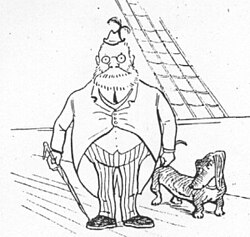
While the prestige of German culture remained high after the Great War, it never fully returned to its pre-war zenith. The era was not without controversy; some critics, such as Eduardo de la Barra, disparaged the trend as a "German bewitchment," leading his detractors to label him a "romanizer." Despite these tensions, the legacy of this era remains embedded in Chile's most fundamental institutions.
Key Facts
- Military Emulation: Chile systematically imitated Prussian military technology, organization, and doctrine starting in 1886.
- Educational Reform: The establishment of the Instituto Pedagógico de Santiago in 1899 was the culmination of efforts to adopt Prussian scientific education.
- Arms Race: Between 1892 and 1902, Chile purchased 100,000 Mauser rifles and Krupp artillery to maintain regional parity.
- Compulsory Service: In 1900, Chile became the first Latin American country to implement compulsory military service.
- Scientific Presence: German expatriates were the second most common group of foreign engineers in 19th-century Chile.
Science and Education
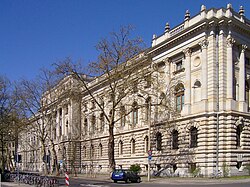
During the 19th century, German scientists played pivotal roles in Chile's National Museum of Natural History and the National Astronomical Observatory. The Sociedad Científica Alemana de Santiago served as a hub for German scientific activity in the capital.
In 1883, the Chilean government sent a delegation—consisting of Valentín Letelier, Claudio Matte, and José Abelardo Núñez—to Berlin. Their mission was to study the Prussian educational system to improve scientific training and reduce the influence of the Catholic Church, which was viewed as a barrier to scientific progress. This initiative led to the arrival of 180 German teachers in 1885, including linguist Rodolfo Lenz, geographer Hans Steffen, and pedagogists Augusto Tafelmacher and Jorge Schneider.
Hans Steffen's geographical research on the continental divide proved critical during the 1902 Arbitral award of the Andes, providing essential evidence for Chile's territorial arguments against Argentina. These educational reforms eventually led to the founding of the Instituto Pedagógico de Santiago in 1899.
Military Emulation of Imperial Germany
The shift toward German military models was driven by the lessons of the War of the Pacific. Officers like Emilio Sotomayor and Patricio Lynch recognized systemic flaws in strategic planning and officer training. This led to emulation—the deliberate systematic imitation of another country's military technology and doctrine—to prepare for potential conflict with Argentina.
The Role of Emil Körner
While Chile initially hired a French mission in 1858, the true "Prussianization" began in 1886 with the appointment of Captain Emil Körner, a graduate of Berlin's Kriegsakademie. Körner and 36 other Prussian officers were tasked with training cadets at the Chilean Military Academy. This process occurred in three phases: the initial period (1885–1891), the post-civil-war phase, and the 1906 reorganization.
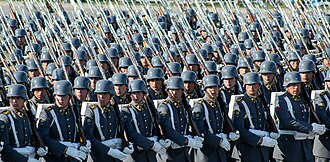
The emulation extended beyond strategy to include uniforms (adopted in 1904), marching styles, helmets, and military music. In 1886, the Academia de Guerra (War Academy) was founded to provide professional, technical instruction in artillery, infantry, cartography, and logistics based on the system developed by Helmuth von Moltke.
Arms and Conscription
The Chilean-Argentine Arms Race (1892–1902) saw massive investments in German hardware. Chile spent millions of marks on 100,000 Mauser rifles and Krupp artillery, while also establishing local ammunition and small arms plants.
In 1900, Chile introduced compulsory military service to create a robust reserve force. However, budgetary constraints meant that the burden fell primarily on the lower classes, and only about 20% of the required contingent was incorporated annually.
The General Staff and Civil War
During the 1891 Chilean Civil War, Emil Körner joined the Congressional forces in Iquique, becoming the chief architect of the rebel army. Following the conflict, he established a permanent General Staff in 1893-94 to replace the "Inspector General del Ejército," dividing military oversight into four sections: Instruction and Discipline, Military Schools, Scientific Works, and Administration.
Political and Geopolitical Influence
Despite the deep institutional ties, the German community and settlers in southern Chile did not function as a direct extension of the German state. Geopolitically, the German Empire viewed Chile as a useful regional counterweight to the United States. This diplomatic alignment was evident when Germany and Britain collaborated through Chilean diplomacy to ensure Ecuador denied the U.S. a naval base in the Galápagos Islands.
| Sector | Key Contribution/Institution | Primary Goal/Outcome |
|---|---|---|
| Education | Instituto Pedagógico de Santiago | Modernization of scientific education; reduction of religious influence. |
| Military | Academia de Guerra | Professionalization of the officer corps via the Moltke system. |
| Defense | Mauser & Krupp Armaments | Technological parity during the Chilean-Argentine Arms Race. |
| Diplomacy | Regional Counterweight | Limiting U.S. influence in the Galápagos Islands. |
Frequently Asked Questions
Who was Emil Körner?
Emil Körner was a Prussian Captain and graduate of the Kriegsakademie who led the large-scale emulation of the Prussian Army in Chile starting in 1886. He founded the War Academy and played a key role in the 1891 Civil War.
What was the "German bewitchment"?
The "German bewitchment" was a term used by critic Eduardo de la Barra to describe the intense and, in his view, excessive influence of German culture and institutions in Chile around the turn of the century.
How did German geographers help Chile?
Hans Steffen, a Prussian geographer, conducted work on the continental divide that provided the scientific basis for Chile's arguments during the 1902 Arbitral award of the Andes against Argentina.
Why did Chile adopt compulsory military service in 1900?
Chile adopted the system to move away from a small army of long-term professionals toward a structure that could quickly double its size using well-trained reserve forces, mirroring the German model.
What was the purpose of the Instituto Pedagógico de Santiago?
Founded in 1899, the institute was the result of efforts to import Prussian pedagogical methods to improve scientific education and decrease the influence of the Catholic Church in the school system.