German Concentration Camps Factual Survey: The Lost Documentary of Atrocities
In the immediate aftermath of World War II, cinema entrepreneur Sidney Bernstein sought to create a definitive visual record of the horrors committed by the Nazi regime. Having served as an advisor to the Ministry of Information since 1940, Bernstein was determined to ensure that German audiences could not deny the atrocities of the concentration camps. This ambition led to the creation of the German Concentration Camps Factual Survey, a project designed to provide undeniable evidence of inhumanity.
The project was commissioned by the Psychological Warfare Division (PWD), a unit of the Supreme Headquarters Allied Expeditionary Force (SHAEF). The PWD coordinated political activities in Germany for both the British Ministry of Information and the U.S. Office of War Information. Bernstein's resolve was solidified on April 22, 1945, during a visit to the Bergen-Belsen concentration camp, just one week after its liberation by British forces.
Key Facts
- Production Lead: Sidney Bernstein, supported by the U.S. Information Control Division.
- Scope: Footage from 14 locations, including 10 concentration camps such as Auschwitz, Buchenwald, and Majdanek.
- Advisory Role: Alfred Hitchcock served as a treatment advisor to ensure the film's credibility.
- Legal Impact: The footage served as evidence in the trials of Nazi war criminals, including Josef Kramer.
- Outcome: The full film was shelved and never officially released in its original form.
Production and Authenticity
To capture the reality of the camps, Bernstein combined silent footage from the British Army Film and Photographic Unit with sound recordings from British Movietone News. This allowed the team to conduct interviews with British officials and members of the German SS.
One such interview featured Fritz Klein, an SS member later executed for his crimes. The interview was conducted in a stark setting, with Klein positioned in front of a pile of bodies, some of whom were his own victims.
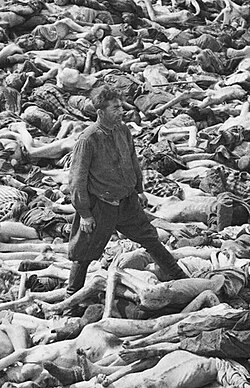
The production team included editors Stewart McAllister, Peter Tanner, and Marcel Cohen. While Bernstein later referred to Alfred Hitchcock as the director, records from the Imperial War Museum and testimony from Peter Tanner clarify that Hitchcock was a "treatment advisor." His involvement lasted one month and occurred after the footage had already been shot.
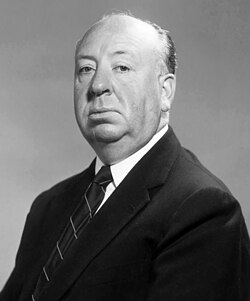
Hitchcock's contributions were focused on credibility. He advised against complex editing that might look "faked" and instead recommended long shots and panning. He specifically suggested showing German villagers visiting the camps and highlighting piles of personal effects—such as wedding rings, spectacles, and toothbrushes—to prove the scale of the slaughter. At the Majdanek camp, the film documented bags of hair and a massive pile of spectacles, with narration estimating that only one in ten victims wore glasses.
Legal Use and the "Beast of Belsen"
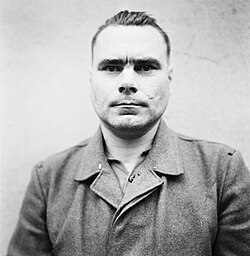
Although the film was not released to the public, it became a vital tool for justice. Footage was used during the Nuremberg trials and at Lüneburg during the trial of Josef Kramer, the commandant of Belsen known as the "Beast of Belsen." The visual evidence directly contradicted Kramer's claims that he lacked sufficient food to feed the inmates.
The Absence of the "Holocaust" Term
Notably, the term "Holocaust" was not used during production. This may have been due to a lack of full understanding regarding the scale of the "Final Solution." Additionally, a 1941 British Ministry of Information guideline had previously advised propagandists to focus on "indisputably innocent people" rather than Jews to maintain credibility with certain audiences.
The Shelving of the Project
A rough cut of five reels was screened in September 1945, but the film was subsequently shelved. Several factors contributed to this decision:
- Logistical Issues: Post-war shortages and difficulties in international cooperation.
- Political Shifts: Changes in occupation policy meant authorities no longer felt a one-hour atrocity film was appropriate.
- Diplomatic Concerns: British anxiety regarding the growing Zionist movement and a desire for more "congenial" relations with the German population.
- Technical Failures: Delays in receiving footage from the U.S. Army and a lack of available editing machinery.
The U.S. withdrew from the project in July 1945. Consequently, the joint effort split into two separate projects: the unreleased German Concentration Camps Factual Survey and Death Mills (Die Todesmühlen). Directed by Billy Wilder, Death Mills was a shorter, 22-minute version released in the American zone in January 1946, though it lacked the meditative tone Bernstein had envisioned.
| Project Title | Director/Lead | Status/Release | Primary Purpose |
|---|---|---|---|
| German Concentration Camps Factual Survey | Sidney Bernstein | Shelved (Abridged versions later) | Comprehensive record of atrocities |
| Death Mills (Die Todesmühlen) | Billy Wilder | Released 1946 | Shortened version for occupation zones |
| Memory of the Camps | N/A | Released 1984/1985 | Abridged retrospective version |
Abridged Versions and Legacy
The film's legacy survived through fragments. In 1984, the first five reels were shown at the Berlin International Film Festival. In 1985, a version titled Memory of the Camps aired on the PBS series Frontline, narrated by Trevor Howard, though it lacked synchronized sound. Footage from the original survey also appeared in the 1985 documentary A Painful Reminder and the 2014 film Night Will Fall.
Frequently Asked Questions
Did Alfred Hitchcock direct the film?
No. While Sidney Bernstein described him as the director, the Imperial War Museum and other team members identify him as a "treatment advisor." He provided guidance on editing and shot selection for one month after the footage was already captured.
Why was the film never fully released in 1945?
The film was shelved due to a combination of post-war resource shortages, shifts in British and American occupation policies toward Germany, and political concerns regarding the Zionist movement.
How was the film used in court?
The footage served as critical evidence in the prosecution of Nazi war criminals at Nuremberg and Lüneburg, specifically debunking the claims of Josef Kramer regarding food supplies at Belsen.
Which concentration camps were featured in the footage?
The film covered 14 locations, including ten camps such as Belsen, Dachau, Buchenwald, Auschwitz, and Majdanek.
What is the difference between this film and Death Mills?
The Factual Survey was intended as a long, meditative documentary. Death Mills was a much shorter (22-minute) version directed by Billy Wilder and released in the American zone of occupation.