Georgian Citizenship and Residency Laws
The legal framework governing who can call Georgia home is defined by the Organic Law of Georgia on Georgian Citizenship. Enacted by the Parliament of Georgia and signed by President Giorgi Margvelashvili on April 20, 2014, this legislation replaces the previous 1993 law. It provides a comprehensive structure for the acquisition, transmission, and loss of nationality, while also outlining the pathways for foreign nationals to obtain residency.
Key Facts
- Naturalization: Requires 10 years of residency and a proficiency test in language, history, and heritage.
- Marriage Pathway: Citizenship can be obtained after 5 years of marriage to a Georgian citizen.
- Residency Ladder: Temporary residence permits can lead to permanent residency after 6 years.
- Presidential Grant: The President can grant citizenship based on national interest, bypassing standard residence and language requirements.
- Visa-Free Entry: Citizens of many EU countries, the US, and others can stay up to 360 days without a visa.
Pathways to Georgian Citizenship
There are several legal avenues for foreign nationals to obtain Georgian nationality, ranging from long-term residency to special presidential decrees.
Naturalization through Residency
Individuals who have resided in Georgia for a total of ten years are eligible to apply for naturalization. To qualify, applicants must pass a proficiency test that evaluates their command of the Georgian language as well as their general knowledge of Georgia's history and cultural heritage.
Citizenship through Marriage
Foreign citizens married to a Georgian national may apply for citizenship after five years of marriage. Applicants must provide a marriage anniversary certificate. The presence of children born to the couple is noted as a factor that can strengthen the naturalization case.
Special Nationality and National Interest
The President of Georgia holds the authority to grant citizenship to any individual deemed important to the national interest of the state. This Special Nationality pathway allows the recipient to maintain their original nationality, effectively granting dual citizenship. This mechanism is frequently used to help ethnic Georgians who left during the Soviet era, and their descendants, reunite with their ancestral homeland.
Residency Permits and Visas
For those not yet seeking citizenship, Georgia offers a tiered system of residency permits to manage the stay of foreign nationals.
Temporary and Permanent Residence
A temporary residence permit is available to those entering with a valid passport (or ID card for citizens of Ukraine, Turkey, Switzerland, and the EU) and the required visa. These permits can be extended for up to six years, with approval granted by the municipal government of the applicant's area of residence. Business travelers and those seeking medical treatment are generally welcomed.
Once an individual has held a temporary residence permit for six consecutive years, they become eligible to apply for a permanent residence permit.
Visa Entry and Border Regulations
The Patrol Police of Georgia, a subdivision of the Ministry of Internal Affairs, can issue entry permits at border crossing points. These are available for 90 days (costing 50 GEL) or 360 days (costing 100 GEL) in specific cases determined by legislation.
Diplomatic and consular staff require visas for their initial entry but may subsequently use accreditation cards issued by the Ministry of Foreign Affairs for border crossings.
Visa-Free Access
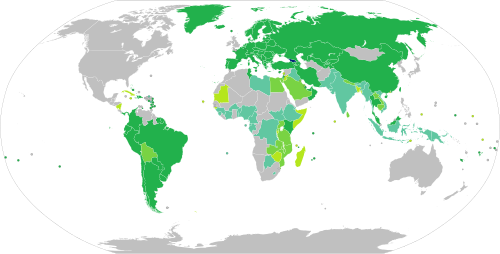
Georgia maintains generous visa-free policies for various nationalities. Citizens or permanent residents of the United States, Japan, Mexico, Saudi Arabia, and several European nations (including Germany, Spain, and Poland) may enter and stay for up to 360 days without a visa. Similarly, residents of Bahrain, Kuwait, Oman, and Qatar enjoy 360-day visa-free access.
Russian citizens and foreign nationals residing in Saudi Arabia with valid permits are permitted to stay for up to 90 days without a visa. Additionally, holders of United Nations Laissez-Passer travel documents may stay for up to 90 days.
Summary of Residency and Citizenship Requirements
| Status | Primary Requirement | Duration/Condition |
|---|---|---|
| Temporary Residence | Valid Passport/Visa | Up to 6 years |
| Permanent Residence | Temporary Residence Permit | 6 years of stay |
| Naturalization (General) | Residency + Language/History Test | 10 years of stay |
| Naturalization (Marriage) | Marriage to Georgian Citizen | 5 years of marriage |
| Special Nationality | Presidential Decree | National Interest |
Travel Freedom
The Georgian passport provides significant global mobility. As of October 1, 2019, Georgian citizens held visa-free or visa-on-arrival access to 114 countries and territories. According to the Henley Passport Index at that time, this ranked the Georgian passport 50th globally in terms of travel freedom.
Frequently Asked Questions
How long must I live in Georgia to apply for citizenship?
Generally, you must stay in Georgia for a total period of ten years to apply for naturalization, provided you also pass the required language and history tests.
Can I keep my original nationality if I become a Georgian citizen?
Dual nationality is permitted specifically for those granted citizenship via a presidential decree based on the national interest of the state.
What is the difference between a temporary and permanent residence permit?
A temporary residence permit is the initial authorization to stay, extendable up to six years. A permanent residence permit can be applied for only after six years of holding a temporary permit.
Do I need a visa if I am a citizen of the European Union?
Citizens of EU member states, as well as citizens of Switzerland, Turkey, and Ukraine, can enter Georgia using only their national ID card.
What are the costs for visas issued at the border?
Visas issued by the Patrol Police at border crossing points cost 50 GEL for a 90-day permit and 100 GEL for a 360-day permit.