George Staunton: The Life and Legacy of a Diplomat and Politician
Sir George Staunton was a man of diverse interests and significant influence, bridging the gap between the East and West during the 19th century. After spending considerable time in China, Staunton returned to Britain, where he established himself as a prominent landowner, a dedicated scholar, and a long-serving member of Parliament.
Establishing a Home in Hampshire
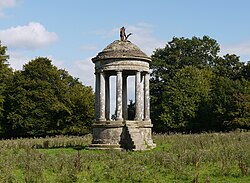
Upon his permanent return from China, Staunton sought a suitable country residence. In 1818, he attempted to purchase Newstead Abbey but was ultimately outbid by Thomas Wildman. This led him to acquire the Leigh estate in Hampshire in 1820, a property that now encompasses the area known as Staunton Country Park.
Staunton spent a portion of each year at the estate, where he invested heavily in the landscape and architecture, making substantial alterations to both the buildings and the surrounding grounds.
Contributions to Scholarship and the Arts
Beyond his private estates, Staunton was a pivotal figure in the promotion of Asian studies in Britain. In 1823, alongside Henry Thomas Colebrooke, he founded the Royal Asiatic Society of Great Britain and Ireland. His commitment to the society's mission remains recognized today through the annual Sir George Staunton Prize.
His passion for the arts and antiquity was further evidenced by his membership in the Society of Dilettanti—a group of connoisseurs of art and archaeology—which he belonged to from 1829 until 1856.
A Career in British Politics
Staunton maintained a lengthy political career, serving as a Member of Parliament (MP) for various English constituencies between 1818 and 1852, eventually representing Portsmouth. In his early parliamentary years, he identified as a liberal Tory, a political faction of the time, and looked to George Canning for leadership.
His expertise in international affairs was further utilized through his membership in the East India Committee, where he contributed to the governance and strategy of British interests in Asia.
Key Facts
- Estate Acquisition: Purchased the Leigh estate in Hampshire in 1820.
- Academic Legacy: Co-founded the Royal Asiatic Society in 1823.
- Political Tenure: Served as an MP from 1818 to 1852, concluding his service in Portsmouth.
- Artistic Affiliation: Member of the Society of Dilettanti (1829–1856).
- Political Leanings: Described himself as a liberal Tory under the leadership of George Canning.
Estate and Inheritance Summary
Following his death in London, Sir George Staunton's assets were divided among his relatives, as he had never married and his baronetcy became extinct.
| Property | Beneficiary |
|---|---|
| Clydagh House (Irish estate) | George Staunton Lynch (Eldest cousin) |
| Leigh Park | Captain Henry Cormick Lynch (Cousin) |
| 17, Devonshire Street, Marylebone (London house) | Captain Henry Cormick Lynch (Cousin) |
Frequently Asked Questions
Which estate did George Staunton purchase in 1820?
George Staunton purchased the Leigh estate in Hampshire, which later became the site of Staunton Country Park.
What was Staunton's role in the Royal Asiatic Society?
He co-founded the Royal Asiatic Society of Great Britain and Ireland in 1823 in conjunction with Henry Thomas Colebrooke.
How long did George Staunton serve as a Member of Parliament?
He served as an MP for several English constituencies between 1818 and 1852, eventually representing Portsmouth.
Who inherited his properties after his death?
His Irish estate, Clydagh House, went to his eldest cousin, George Staunton Lynch. His London house and Leigh Park were left to Captain Henry Cormick Lynch.
What happened to the Staunton baronetcy?
Because George Staunton never married, the baronetcy became extinct upon his death.