George Lucas: The Visionary Behind Star Wars and Modern Cinema
George Lucas is a titan of the American film industry, renowned as a director, screenwriter, producer, and entrepreneur. His work has not only defined the modern blockbuster but has fundamentally altered how movies are made through his pioneering advancements in visual effects and narrative storytelling. From the nostalgic streets of 1950s California to a galaxy far, far away, Lucas has spent over five decades shaping global popular culture.
Key Facts
- Primary Works: Creator of the Star Wars and Indiana Jones franchises.
- Technical Legacy: Founded Industrial Light & Magic (ILM), a leader in visual effects.
- Major Sale: Sold Lucasfilm to Disney in 2012 for $4.05 billion.
- Philanthropy: Established the George Lucas Educational Foundation and the Lucas Museum of Narrative Art.
- Education: Holds a BFA from the University of Southern California.
Early Life and Education
Lucas began his academic journey at Modesto Junior College before transferring to the University of Southern California, where he earned a Bachelor of Fine Arts (BFA). This educational foundation provided the technical and artistic grounding necessary for his entry into the film industry in 1965.
The Evolution of a Cinematic Career
Early Breakthroughs (1965–1977)
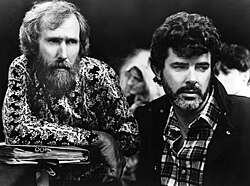
Lucas's early career was marked by a desire to blend traditional storytelling with experimental techniques. After his initial foray into filmmaking, he directed THX 1138 (1971), a dystopian vision that showcased his interest in futuristic themes. He achieved widespread critical acclaim with American Graffiti (1973), a nostalgic look at youth culture that earned him multiple Academy Award nominations.
In 1977, Lucas released Star Wars (later titled Episode IV - A New Hope), a film that revolutionized the industry. It combined a mythic narrative with groundbreaking special effects, launching one of the most successful media franchises in history.
The Middle Years and the Indiana Jones Era (1977–1993)
Following the massive success of Star Wars, Lucas took a hiatus from directing feature films. During this period, he focused on producing and expanding his creative empire. He played a pivotal role in the creation of the Indiana Jones series, blending adventure and archaeology into a cinematic staple.

Return to the Director's Chair (1993–2012)
Lucas returned to directing to realize his original vision for the Star Wars saga, creating the prequel trilogy: The Phantom Menace (1999), Attack of the Clones (2002), and Revenge of the Sith (2005). These films were notable for their heavy use of digital technology and CGI (Computer-Generated Imagery), pushing the boundaries of what was possible on screen.

Semi-Retirement and Legacy (2012–Present)
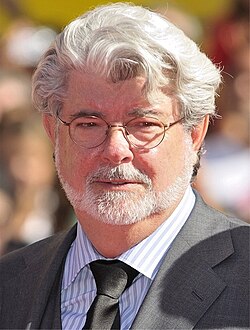
In 2012, Lucas entered a period of semi-retirement, coinciding with the sale of Lucasfilm Ltd. to Disney for $4.05 billion. While he stepped away from the director's chair for blockbusters, he has remained a consultant and a figure of influence in the industry, occasionally contributing to other projects, such as providing assistance on the season 8 premiere of Game of Thrones.
Beyond the Director's Chair: Ventures and Philanthropy
Lucas's influence extends far beyond his own films. He founded Lucasfilm and Industrial Light & Magic (ILM), the latter of which became the gold standard for visual effects in Hollywood. His passion for art led to the creation of the Lucas Museum of Narrative Art, a project intended to celebrate storytelling through visual arts.
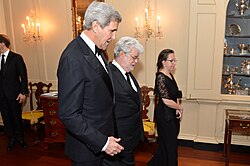
His philanthropic efforts are equally significant. Through the George Lucas Educational Foundation and the donation of proceeds from the Disney sale, he has committed billions to education. He has also supported various causes, including the Martin Luther King, Jr. Memorial Project and the Obama presidential library.
Career Summary and Accolades
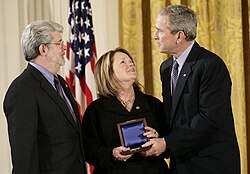
Throughout his career, George Lucas has been recognized with numerous prestigious awards, including the National Medal of Technology and Innovation and the National Medal of Arts.
| Year | Title | Academy Award Nominations | Academy Award Wins | Saturn Award Wins |
|---|---|---|---|---|
| 1973 | American Graffiti | 5 | 1 | 0 |
| 1977 | Star Wars | 10 | 6 | 8 |
| 1999 | Star Wars: Episode I | 3 | 2 | 0 |
| 2002 | Star Wars: Episode II | 1 | 0 | 2 |
| 2005 | Star Wars: Episode III | 1 | 0 | 2 |
Frequently Asked Questions
When did George Lucas sell Lucasfilm?
George Lucas sold Lucasfilm to Disney in 2012 for approximately $4.05 billion.
What is Industrial Light & Magic (ILM)?
ILM is a visual effects company founded by George Lucas that revolutionized the use of special effects in cinema, most notably for the Star Wars series.
What is the Lucas Museum of Narrative Art?
It is a museum founded by George Lucas dedicated to the art of storytelling through visual media, with plans to be located in Los Angeles.
Did George Lucas direct all the Star Wars movies?
No, he directed the original 1977 film and the three prequel films (Episodes I, II, and III), but he served as a producer and creator for the rest of the saga.
How has George Lucas contributed to education?
He established the George Lucas Educational Foundation and has used a significant portion of the proceeds from the sale of Lucasfilm to fund educational initiatives.