George Eastman Museum: Preserving the Legacy of Photography and Film
The George Eastman Museum stands as a global beacon for the preservation of visual history. Located in Rochester, New York, the institution is housed in the former estate of George Eastman (1854–1932), the visionary founder of the Eastman Kodak Company. What began as a private residence has evolved into one of the world's most significant repositories for the history of photography and motion pictures.
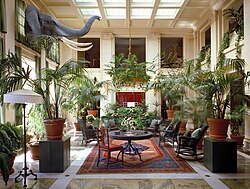
The transition from a private home to a public institution began after Eastman's death, when his estate was bequeathed to the University of Rochester. For a decade, the Georgian Revival Style mansion served as the residence for university presidents Benjamin Rush Rhees and Alan Valentine. In 1948, the university donated the property to the museum, allowing the mansion to be adapted for professional operations.
The Evolution of a World-Class Institution
Chartered as a museum in 1947, the institution officially opened its doors on November 9, 1949. Originally known as George Eastman House, it rebranded as the George Eastman Museum in October 2015. From its inception, the museum's mission has been to collect, preserve, and present the history of photography and film.
The museum's foundation was built upon several prestigious collections, including the Medicus collection of Civil War photographs by Alexander Gardner, the historical archives of the Eastman Kodak Company, and the Gabriel Cromer collection, which features an extensive array of nineteenth-century French photography. Over the decades, the museum has expanded its holdings through the acquisition of corporate archives, individual estates of leading photographers, and thousands of motion pictures and cinematic ephemera.
Overcoming Growth and Financial Challenges
Success brought its own set of challenges. By July 19, 1984, the museum faced a $500,000 deficit. While its holdings were recognized as some of the finest in the world, the rapid growth of the collections created a critical need for more space to store and study the objects.
In 1985, a proposal was made to the Smithsonian Institution to take title and control of the museum, provided the archives remained in Rochester and the Smithsonian paid $1 million annually for maintenance. However, a turning point occurred when Kodak provided an endowment—derived from the sale of its San Francisco office building—valued between $13 million and $15 million. This gift was contingent upon the museum remaining in Rochester and the trustees raising funds for local renovation or construction. This support paved the way for a new expansion facility, which opened to the public in January 1989.
Specialized Conservation and Education
The museum has expanded beyond exhibition to become a leader in technical preservation. In 1996, it opened the Louis B. Mayer Conservation Center in nearby Chili. This facility is one of only four film conservation centers in the United States (as of March 2006) and is specifically designed to house rare 35 mm prints made on cellulose nitrate—a highly flammable early film base that requires specialized storage.
Parallel to the conservation center, the museum launched the L. Jeffrey Selznick School of Film Preservation in 1996. Supported by The Louis B. Mayer Foundation, this was the first school of its kind in the United States dedicated to teaching the restoration, preservation, and archiving of motion pictures.
Furthering its commitment to expertise, the museum launched the Mellon Advanced Residency Program in Photograph Conservation in 1999. Funded by the Andrew W. Mellon Foundation, this program provides advanced training for top photograph archivists and conservators from across the globe.
Cultural Impact and Exhibitions
Beyond its archives, the museum is known for organizing groundbreaking exhibitions. A notable example is the 1975 exhibition New Topographics: Photographs of a Man-Altered Landscape, which played a pivotal role in defining the New Topographics genre, focusing on the intersection of nature and human development.
Key Facts
- Founded: Chartered in 1947; opened to the public on November 9, 1949.
- Location: The former Georgian Revival Style mansion of George Eastman in Rochester, NY.
- Specialization: One of only four U.S. centers for the conservation of cellulose nitrate film.
- Education: Home to the L. Jeffrey Selznick School of Film Preservation, the first of its kind in the U.S.
- Major Collections: Includes the Medicus Civil War photographs and the Gabriel Cromer French photography collection.
| Year | Event/Development |
|---|---|
| 1947 | Museum chartered |
| 1949 | Museum opens to the public |
| 1975 | New Topographics exhibition held |
| 1989 | Expansion facility opens |
| 1996 | Louis B. Mayer Conservation Center and Selznick School founded |
| 1999 | Mellon Advanced Residency Program launched |
| 2015 | Renamed from George Eastman House to George Eastman Museum |
Frequently Asked Questions
What is the primary mission of the George Eastman Museum?
The museum's mission is to collect, preserve, and present the history of photography and film.
What is the significance of the Louis B. Mayer Conservation Center?
It is one of only four film conservation centers in the United States and specializes in the storage and preservation of rare 35 mm cellulose nitrate prints.
What is the L. Jeffrey Selznick School of Film Preservation?
Founded in 1996 with support from The Louis B. Mayer Foundation, it was the first school in the United States dedicated to teaching the archiving, preservation, and restoration of motion pictures.
How did the museum fund its expansion in the 1980s?
The museum received an endowment from Kodak, worth between $13 million and $15 million from the sale of a San Francisco office building, on the condition that the museum remain in Rochester.
Which exhibition helped define the New Topographics genre?
The 1975 exhibition titled New Topographics: Photographs of a Man-Altered Landscape helped define this specific genre of photography.