Generative Art: The Evolution of Autonomous Creative Systems
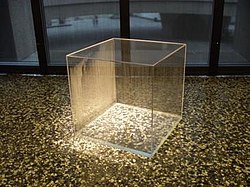
Generative art is a form of post-conceptual art created, either in whole or in part, through the use of an autonomous system. In this context, an autonomous system is a non-human entity capable of independently determining features of an artwork that would typically require direct decisions by the artist. Depending on the creator's intent, the system may be viewed as a tool representing the artist's idea or as the creator itself.
While often associated with algorithmic computer art and synthetic media (algorithmically generated media), generative art extends far beyond the digital realm. Artists utilize a diverse array of systems, including chemistry, biology, robotics, mathematics, data mapping, and manual randomization to produce their work.
Key Facts
- Definition: Art produced by a system that can make independent decisions about the final output.
- Origins: Early computer-based generative art emerged in the 1960s with pioneers like Georg Nees and Frieder Nake.
- Diversity: Spans multiple disciplines including music, visual arts, architecture, comics, and blockchain-based NFTs.
- Core Mechanism: Relies on a set of rules (algorithms) where the artist defines the parameters and the system executes the result.
- Modern Integration: The rise of blockchain has allowed for "minted" generative art where the code is permanently stored on-chain.
The History of Generative Systems
The conceptualization of "generative" art has evolved significantly. Early discussions focused on "Artificial DNA," creating systems capable of unpredictable events that maintained a recognizable common character. This evolved into the concept of "emergent" art, where human control is strongly reduced to allow the system's autonomy to shine.
The Digital Pioneers
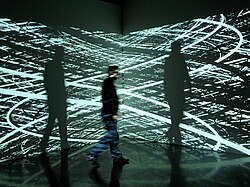
The 1960s marked the birth of automated computer graphics. A. Michael Noll began combining randomness with order in 1962. By 1965, Georg Nees and Frieder Nake exhibited early works, with Nees's doctoral thesis later formalizing the term "Generative Computergrafik." Other early innovators included Manfred Mohr, Ken Knowlton, and Vera Molnár, the latter being a pioneer and one of the first women to integrate computers into her artistic practice.
Institutional and Theoretical Growth
In 1970, the School of the Art Institute of Chicago established a Department of Generative Systems, focusing on the capture, transmission, and transformation of image information. By the late 1960s, Argentinian artists Eduardo Mac Entyre and Miguel Ángel Vidal were practicing a form of generative art based on the repetition and transformation of geometric elements.
The term "Generative Art" was formally solidified as a descriptor for dynamic artwork-systems during a 1998 conference in Milan. This era also saw Brian Eno popularize "generative music," drawing connections to the experimental works of Steve Reich, Philip Glass, and Terry Riley.
Diverse Applications of Generative Art
Generative systems have permeated nearly every creative medium, shifting the artist's role from a direct creator to a designer of processes.
Visual Arts and Data Mapping
Modern visual generative art often utilizes data mapping—the process of translating data sets into visual forms. Mark Napier's "Carnivore" project used Ethernet traffic, while Martin Wattenberg transformed Wikipedia edits and musical scores into visual compositions. Others, like San Base, use "Dynamic Painting" algorithms to create fluid, never-repeating imagery.
Music and Literature
Generative music dates back further than computer art; Johann Kirnberger's 1757 "Musical Dice Game" used dice to randomly select musical sequences from a pre-composed pool. In contemporary literature and comics, machine learning has made significant inroads. Ilan Manouach's Fastwalkers (2023) is recognized as the first book-length comic where all text and images were produced via GAN (Generative Adversarial Networks) and GPT-3.
Architecture and Blockchain
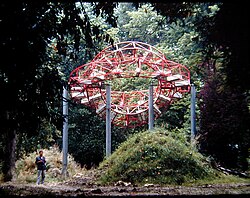
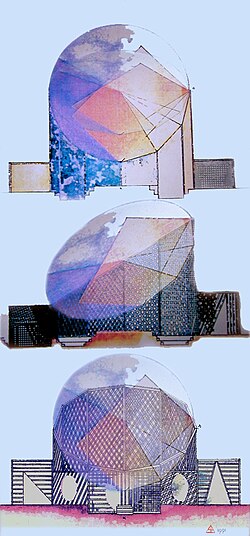
In architecture, Celestino Soddu developed "artificial DNA" for medieval towns to generate 3D models. Similarly, Michael Hansmeyer used repeated subdivision processes to automatically generate complex architectural columns.
The advent of blockchain introduced a new paradigm via platforms like Art Blocks. Here, the algorithm is stored permanently on the Ethereum blockchain. The artwork is only generated (or "minted") at the moment of sale, ensuring the result is random yet adheres to the artist's defined aesthetic.

Theoretical Frameworks
The study of generative art often intersects with complexity theory. Philip Galanter suggests that the most complex generative art blends order and disorder, mirroring biological life. This contrasts with earlier views that equated complexity simply with increased disorder (entropy).
Margaret Boden and Ernest Edmonds have further refined the field by distinguishing between various types of electronic and computer art, arguing that while all generative art is rule-based, not all rule-based art is necessarily generative.
| Medium | Key Technique/System | Notable Example/Artist |
|---|---|---|
| Music | Randomization/Dice | Johann Kirnberger (1757) |
| Visual Art | Data Mapping | Mark Napier (Carnivore) |
| Architecture | Repeated Subdivision | Michael Hansmeyer |
| Comics | Machine Learning (GAN/GPT-3) | Ilan Manouach (Fastwalkers) |
| Blockchain | On-chain Algorithms | Art Blocks (Erick Calderon) |
Frequently Asked Questions
What is the difference between generative art and AI art?
Generative art is a broad category that includes any art made with an autonomous system, including simple mathematical rules, chemistry, or robotics. AI art is a specific subset of generative art that utilizes artificial intelligence and machine learning models.
Does the artist still have control over the artwork?
Yes, but the nature of the control shifts. The artist determines the rules, parameters, and constraints of the system. The autonomous system then makes the specific decisions regarding the final execution within those boundaries.
How does blockchain change generative art?
Blockchain allows the source code to be stored permanently and immutably. The final artwork is often generated only when a user "mints" the piece, making the specific output a unique, random result of the artist's fixed algorithm.
Can generative art be non-digital?
Absolutely. Generative art can be created using biological systems, chemical reactions, mechanical devices, or even manual randomization techniques like rolling dice.