Generał: The Evolution of the Four-Star General Rank in Poland
In the Polish language, generał is the generic term used to describe the rank of general. However, in a specific military context, it denotes the prestigious rank of a four-star general. This rank, officially introduced in its current form on August 15, 2002, serves as the highest active rank in the Polish Army during peacetime.
While the title of Marshal of Poland remains the absolute highest rank in the national hierarchy, it is reserved exclusively for wartime. Consequently, the generał stands as the pinnacle of leadership for the Polish military in day-to-day operations.
The rank is visually identified by specific insignia: the wężyk generalski (a "general's wavy line") and four stars. These symbols are prominently displayed on the rogatywka (the traditional Polish four-cornered cap), the sleeves of the uniform, and above the breast pocket of field uniforms.
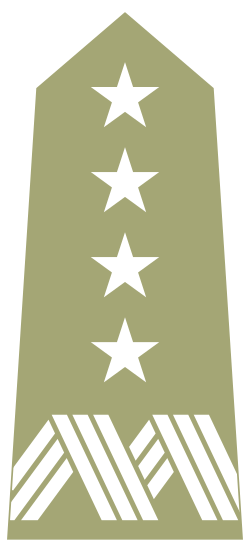
Key Facts
- Current Status: The rank of generał is the highest rank used in the Polish Army during peacetime.
- Insignia: Identified by four stars and the wężyk generalski (general's wavy line).
- Establishment: The modern four-star rank was introduced on August 15, 2002.
- Wartime Exception: The Marshal of Poland is the only rank superior to generał, but it is not used in peacetime.
- NATO Alignment: The current system was designed to unify Polish ranks with English-speaking standards, specifically those of the United States.
Historical Evolution of Polish General Ranks
Pre-NATO and Warsaw Pact Era
Historically, the Polish military structure differed significantly from the systems used by NATO and the Warsaw Pact. For a long period, Poland lacked a four-star general rank. This created a discrepancy where Polish ranks were often a grade higher in practice than their names suggested. For example, a generał brygady was equivalent to a Major General rather than a Brigadier General.
In 1954, as the Polish Army integrated with the Red Army and the Warsaw Pact, the rank of generał armii (General of the Army) was introduced. This was a direct imitation of the Soviet rank system. However, following the death of Joseph Stalin and the subsequent end of Stalinism in Poland, the military reverted to its pre-war rank patterns.
The Era of Wojciech Jaruzelski
The rank of general of the army reappeared in 1981, introduced by General Wojciech Jaruzelski, who simultaneously served as the Prime Minister, Minister of National Defense, and 1st Secretary of the Polish United Workers' Party. As the sole holder of this rank at the time, Jaruzelski was often viewed as an "ersatz-Marshal," as he could not promote himself to Marshal of Poland following the death of Marian Spychalski.
This iteration of the rank was abolished in 1995. The last generals from this pre-NATO era, Wojciech Jaruzelski and Florian Siwicki, both passed away in the early 2010s.
Integration with NATO
Poland's entry into NATO in 1999 necessitated a standardization of military ranks to ensure seamless cooperation with international allies, particularly the United States. This led to the re-introduction of the generał rank to align the Polish hierarchy with Western four-star general structures.
Summary of Polish General Rank Structure
| Rank Title | Status/Context | Key Characteristics |
|---|---|---|
| Marshal of Poland | Wartime Only | Highest possible rank; awarded to Chief of General Staff or victorious commanders. |
| Generał | Peacetime Highest | Four-star rank; aligned with US/NATO standards since 2002. |
| Generał Armii | Historical/Soviet-era | Introduced in 1954 and 1981; abolished in 1995. |
| Generał Brygady | Historical Discrepancy | Formerly equivalent to Major General before NATO unification. |
Frequently Asked Questions
What is the difference between a Generał and a Marshal of Poland?
The generał is the highest rank used during peacetime. The Marshal of Poland is a higher rank, but it is only used during wartime or awarded to a successful military commander after a victorious campaign.
What are the visual symbols of a Polish four-star general?
A generał is identified by four stars and the wężyk generalski (general's wavy line), which appear on the rogatywka cap, uniform sleeves, and above the breast pocket of field uniforms.
Why did the Polish rank system change after 1999?
After joining NATO in 1999, Poland needed to unify its rank system with English-speaking countries, specifically the United States, to ensure organizational compatibility and clarity during joint operations.
Who was the last person to hold the pre-NATO rank of general of the army?
The last pre-NATO generals were Wojciech Jaruzelski and Florian Siwicki, both of whom died in the early 2010s.
Was the rank of generał brygady always equivalent to a Brigadier General?
No. Due to the historical lack of a four-star rank, the generał brygady was previously equivalent to a Major General rather than a Brigadier General.