Gath & Chaves: The Legacy of Argentina's Premier Retail Empire
Long before the arrival of modern shopping malls in the late 1980s, Gath & Chaves stood as a titan of Argentine commerce. Founded in the late 19th century, this retail powerhouse became a symbol of luxury and sophistication, catering specifically to the upper class of Buenos Aires and expanding its influence across the region. Known colloquially as "gatichaves," the brand evolved from a specialized hosiery shop into a massive department store empire.
Key Facts
- Founded: 1883 by Alfred Gath and Lorenzo Chaves.
- Headquarters: Buenos Aires, Argentina.
- Peak Workforce: 6,000 employees by 1945.
- Parent Company: Acquired by Harrods in 1922.
- Product Range: Clothing, furniture, perfumes, phonograph records, shoes, tableware, and toys.
- Closure: The company ceased operations in 1974.
The Rise of a Retail Giant
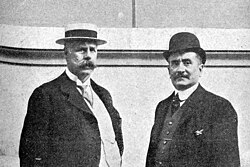
The partnership began in 1873 when Lorenzo Chaves, an Argentine, and Alfred Henry Gath, an Englishman experienced in livestock management, met at "Casa Burgos," a department store in Buenos Aires. On July 7, 1883, they established The London Hosiery de Gath & Chaves on San Martín Street. Initially, the business focused exclusively on men's clothing crafted from English fabrics.
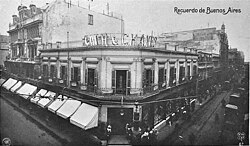
The business expanded rapidly. By 1885, the founders introduced women's clothing and diversified their inventory to include furniture, perfumes, and shoes. This growth led to the 1901 inauguration of their first exclusive three-story building on La Piedad and Florida streets, designed by architect Lorenzo Siegerist.
Corporate Expansion and International Reach
In March 1908, the company transitioned into a sociedad anónima (a public limited company) with a capital of $6,000,000. The company's ambition soon crossed borders, opening a store in Santiago, Chile, in 1910. To support this growth, Gath & Chaves established its own furniture factory, a depot, and a workshop where thousands of employees produced high-end suits and dresses.
The brand continued to diversify its physical footprint, opening "El Palacio de los Niños" (The Children's Palace) in 1909 to capture the toy and children's wear market. In 1912, the company merged with D'Erlanger and Co., renaming itself "The South American Stores (Gath and Chaves) Ltd." At the time, the British newspaper The Times compared the scale of the operation to the legendary Le Bon Marché and Printemps stores in Paris.
The Golden Era: Sede Central and Harrods
The pinnacle of the company's architectural presence arrived on September 19, 1914, with the opening of the Sede Central (Main Building) on Cangallo and Florida streets. Designed by French architect Francisque Fleury Tronquoy, this 2,400 m² structure featured eight floors and five underground levels, making it the most expensive building in Buenos Aires. Its design was heavily inspired by the grand galleries of Paris, featuring a rooftop coffeehouse and a magnificent main hall with four staircases.
In 1922, the British luxury retailer Harrods took over the company. Under Harrods' ownership, the empire grew further with the addition of the "Anexo señoras" (Women's Annex) in 1925, which was connected to the main building via an underground passage. The brand expanded into various Argentine cities, including La Plata, Rosario, Córdoba, and Mendoza, as well as several Chilean cities such as Valparaíso and Temuco.
| Category | Details |
|---|---|
| Founding Date | July 7, 1883 |
| Founders | Alfred Gath & Lorenzo Chaves |
| Key Locations | Buenos Aires, Santiago (Chile), Rosario, Córdoba |
| Major Acquisition | Harrods (1922) |
| Employee Count (1945) | 6,000 |
| Year of Closure | 1974 |
Sports Culture and Social Legacy
Gath & Chaves was more than a retailer; it was a social institution. The company's employees were deeply involved in sports, founding the "Club Harrods Gath y Chaves" football team in 1905. Due to regulations forbidding commercial trademarks in the Argentine Football Association (AFA), the team was renamed Club Atlético Nacional (Nacional de Floresta) in 1907, eventually winning a Segunda División title that same year.
In 1921, a merger between the athletic clubs of Harrods Buenos Aires and Gath & Chaves created the modern Club Harrods Gath & Chaves, which offered a wide array of activities including rugby, tennis, swimming, and artistic gymnastics. Furthermore, the company's influence extended to the national stage, serving as the official kit supplier for the Argentina national football team from 1925 to 1934.
Frequently Asked Questions
What was Gath & Chaves?
Gath & Chaves was a prominent Argentine retail company and department store chain founded in 1883, known for selling luxury goods to the upper class of Buenos Aires.
When did Harrods acquire Gath & Chaves?
The British company Harrods took over The South American Stores (Gath y Chaves) in 1922.
What happened to the Sede Central building?
After the company closed in 1974, the main building on Cangallo and Florida streets was refurbished and later occupied by Banco Meridian.
Did Gath & Chaves operate outside of Argentina?
Yes, the company had a Chilean subsidiary, Gath & Chaves Chile, which operated stores in Santiago, Valparaíso, Temuco, and Valdivia until it closed in 1952.
What was the company's connection to Argentine football?
The company's employees founded sports clubs, and Gath & Chaves served as the official kit supplier for the Argentina national football team between 1925 and 1934.