Gateway Region History: From Lenape Territory to Industrial Powerhouse
The Gateway Region of New Jersey serves as a vital corridor of American history, evolving from the ancestral lands of indigenous peoples into a global hub of industry, innovation, and immigration. Its strategic location along the coast and river systems has made it a focal point for colonial expansion and a cradle for some of the most significant technological advancements in the United States.
Indigenous Roots and New Netherland
Long before European arrival, the Gateway Region was the territory of the Lenape, a collection of Algonquian-language speaking Native Americans, including the Hackensack, Raritan, and Tappan. Their legacy persists today through numerous local place names. While Dutch and English settlers "purchased" land from the Lenape, the concept of land ownership was foreign to the indigenous people. Following years of growth in European settlements, the Lenape relocated westward under the Treaty of Easton in 1766, though the Ramapough Mountain Indians claim descent from them.
European influence began in 1609 when Henry Hudson, sailing for the Dutch East India Company, anchored the Halve Maen (Half Moon) at Weehawken Cove and Sandy Hook. This area became part of the province of New Netherland. In 1630, the patroonship of Pavonia was established, and by 1660, Bergen Square became the site of the first chartered village on the west bank of the North River, marking the oldest municipality in the state.
Colonial America and the British Transition
The region transitioned to British control in 1664 through a negotiated surrender that ensured private property protection and religious tolerance. Elizabethtown was founded as the first officially English-speaking settlement and served as the capitol. In 1666, Puritans from Connecticut established Newark. By 1675, the area became the proprietary colony of East Jersey, eventually divided into four administrative counties: Bergen, Essex, Middlesex, and Monmouth.
Throughout the 18th century, settlement expanded into the Raritan Valley and Horseneck Tract, supported by the use of indentured servants and enslaved people. The region played a role in the American Revolution, hosting battles at Paulus Hook, Bound Brook, and Connecticut Farms, and seeing the third public reading of the Declaration of Independence in New Brunswick.
The Cradle of American Invention and Industry
The Gateway Region became a powerhouse of the Industrial Revolution. In 1755, the first American steam engine was introduced at the Schuyler Copper Mine. Later, in 1791, Alexander Hamilton helped found the Society for the Establishment of Useful Manufactures (S.U.M.), which utilized the water power of the Great Falls of the Passaic to foster economic independence from Britain.
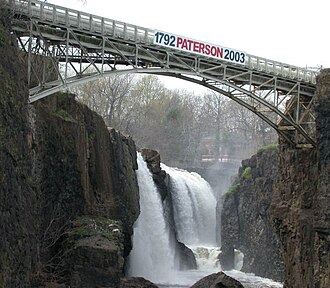
Paterson became a center of early industry, further supported by the Morris Canal in the 1820s. The region's legacy of innovation continued with Thomas Edison in West Orange and the Singer Manufacturing Company in Elizabethport. The area is credited with the development or mass production of the incandescent light bulb, the phonograph, the revolver, the rocket engine, and the electric railway, as well as the first U.S. automobile and submarine. It is also recognized as the birthplace of the American film industry and baseball.
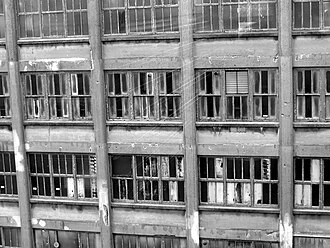
By the late 19th century, German immigration and the expansion of rail lines spurred the growth of shipping in Newark Bay and the Kill van Kull. This era saw the rise of the "Chemical Coast" and heavy industry, with companies like Alcoa Aluminum, Ford Motor Company, and Lever Brothers establishing a presence. The 1913 Paterson Silk Strike highlighted the growing labor tensions of the industrial age.
World Wars and Infrastructure Expansion
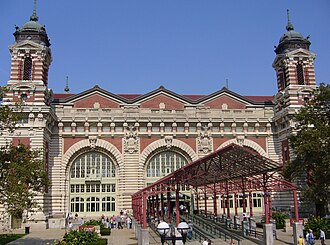
The early 20th century was marked by massive population growth, fueled by immigration through Ellis Island and the Great Migration of African Americans from the South.
During World War I, Hoboken's Hamburg-American Line piers became the primary embarkation point for over three million "doughboys." The region also suffered from wartime sabotage, including the Black Tom munitions depot bombing in 1916 and the Kingsland explosion in 1917.
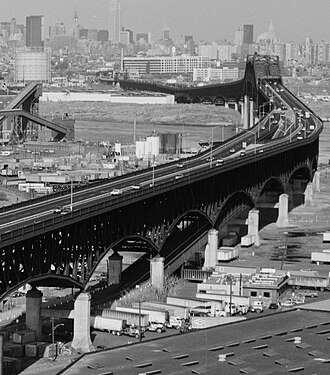
The interwar period saw a revolution in transportation. The Port Authority of New York and New Jersey was established in 1921, leading to the construction of the Holland Tunnel (1927), the George Washington Bridge (1931), the Bayonne Bridge (1931), and the Lincoln Tunnel (1937). Newark Airport opened in 1928 as the first major airport in the New York Metropolitan Area, and the Pulaski Skyway was built to cross the Hackensack River.
During World War II, the region's industrial capacity was pivoted toward the war effort. Elco in Bayonne produced PT boats, General Motors in Linden produced planes, and the Federal Shipbuilding and Drydock Company built over thirty ships. In 1946, the region made social history when Jackie Robinson crossed the baseball color line at Roosevelt Stadium.
Post-War Prosperity and Modern Development
The 1950s brought significant shifts in geography and commerce. The Port Newark-Elizabeth Marine Terminal, opened in 1958, became the first and largest container port in the eastern United States. Infrastructure continued to expand with the opening of the New Jersey Turnpike (1952–1956) and the Garden State Parkway (1957). This era also saw the rise of the first shopping malls, including Bergen Town Center.
The latter part of the 20th century focused on environmental protection and urban renewal. The New Jersey Meadowlands Commission was created in 1969, and Liberty State Park opened in 1976. The late 1970s marked the beginning of gentrification in Hoboken and Downtown Jersey City, leading to the redevelopment of the Hudson Waterfront. Recent developments include the 2007 opening of the Prudential Center in Newark and the 2019 opening of the American Dream Meadowlands complex.
Key Facts
- Oldest Municipality: Bergen Square, established in 1660.
- Industrial Firsts: Site of the first U.S. steam engine (1755), first automobile, and first submarine.
- Transportation Hubs: Home to the first major NYC-area airport (Newark Airport, 1928) and the first eastern U.S. container port.
- Cultural Milestones: Birthplace of the American film industry and baseball; site where Jackie Robinson broke the color line in 1946.
- Indigenous Heritage: Originally inhabited by the Lenape (Hackensack, Raritan, and Tappan groups).
| Era | Key Event/Development | Significance |
|---|---|---|
| Colonial | Establishment of Bergen Square (1660) | Oldest municipality in New Jersey |
| Industrial | Founding of Paterson (1791) | Cradle of the American Industrial Revolution |
| WWI Era | Black Tom Explosion (1916) | Major act of wartime sabotage |
| Interwar | Opening of Holland Tunnel (1927) | Revolutionized NJ-NY vehicular travel |
| Post-War | Port Newark-Elizabeth Terminal (1958) | First container terminal in the U.S. |
Frequently Asked Questions
Who were the original inhabitants of the Gateway Region?
The region was originally the territory of the Lenape Native Americans, specifically the Hackensack, Raritan, and Tappan groups, who spoke Algonquian languages.
Why is Paterson considered the cradle of the American Industrial Revolution?
Paterson was founded by the Society for the Establishment of Useful Manufactures (S.U.M.) to harness the water power of the Great Falls of the Passaic River, aiming to create economic independence from British manufacturers.
What role did the region play during World War I?
The region served as a massive embarkation point for over three million soldiers via the Hoboken piers and was the site of significant sabotage events, such as the Black Tom explosion.
Which major transportation projects were completed between the World Wars?
Key projects included the Holland Tunnel, the George Washington Bridge, the Bayonne Bridge, the Lincoln Tunnel, the Pulaski Skyway, and the opening of Newark Airport.
What is the significance of the Port Newark-Elizabeth Marine Terminal?
Opened in 1958, it was the first container terminal in the United States and became the largest and busiest container port in the eastern U.S. for many years.