Garuda Emblem: The Royal and National Symbol of Thailand
The Garuda (Thai: ครุฑ, khrut) serves as the preeminent national and royal symbol of Thailand. Known formally as the Phra Khrut Pha, which translates to "Garuda, the vehicle (of Vishnu)," this mythical creature represents the intersection of divine authority and state power. Rooted in the adoption of Hindu court rituals and the recruitment of Brahmins from India by Thai kings, the Garuda is the mount of Lord Vishnu, symbolizing the king's role as the earthly personification of the deity Narayana.
From the banknotes of the Thai Baht to the letterheads of government ministries, the Garuda is an omnipresent figure in Thai civic and royal life.
The Evolution of the Royal Seal
The use of the Garuda in royal seals dates back to the Ayutthaya period, but its formalization as the primary national emblem underwent several shifts during the Chakri Dynasty.
From European Influence to Traditional Roots
In 1873, King Chulalongkorn (Rama V) introduced a European-inspired coat of arms as the national emblem of Siam. However, this did not fully replace traditional seals. A law passed in 1890 ensured that the Khrut Pha and Airaphot seals remained in use. By 1893, King Chulalongkorn decided the heraldic arms were too foreign and commissioned his brother, Prince Narisara Nuvadtivongs, to design a new seal featuring the Garuda.
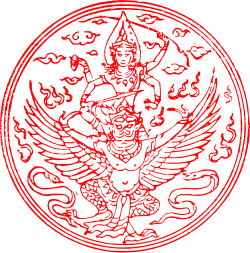
The initial design by Prince Naris depicted the god Narayana mounted on the Garuda's back. This version was used only briefly before the King requested a redesign featuring the Garuda alone with wings outstretched.
Formalization under King Vajiravudh
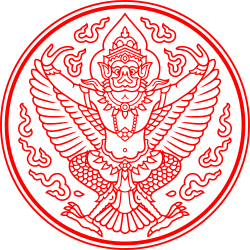
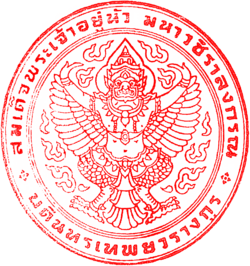
In 1910, King Vajiravudh (Rama VI) completely abandoned the European coat of arms. He commissioned the artist Phra Dhevabhinimit to refine Prince Naris's drawing, adding an encirclement of the King's ceremonial name around the outer edge. This led to the 1911 Act on the Seals of State, which established the Garuda seal as the principal tool for authenticating the King's signature on important documents.
Succession and Continuity
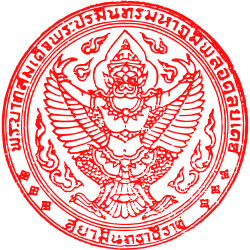
Subsequent monarchs maintained this tradition. King Prajadhipok (Rama VII) updated the seal with his own name. King Ananda Mahidol (Rama VIII), who was never crowned in a formal ceremony and thus had no regnal name, utilized the seals of his grandfather, King Rama V. The seal for King Bhumibol Adulyadej (Rama IX) was carved in 1946 following his coronation.
The Garuda as a State and Monarchy Symbol
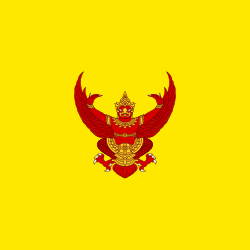
Beyond seals, the Garuda is central to the visual identity of the Thai monarchy. Under the 1910 Act on Flags, the Garuda became a prominent feature of royal standards—flags flown above royal residences to signal the King's presence or in front of royal vehicles.
This symbolism extends to royal transport, such as the 1996 royal barge Narai Song Suban (Narayana on his carrier), which features a bow depicting Narayana mounted on a Garuda.

Official Government Use and Regulations
The Royal Thai Government adopted the Garuda as its official emblem to symbolize that the government acts as the vehicle or instrument of the King. Consequently, the emblem appears on government buildings, title deeds, boundary markers, and the uniforms of the Royal Thai Armed Forces and Royal Thai Police.

Legal Protections and Design
The use of the emblem is strictly regulated. King Rama VI first legislated its use in 1911, followed by the Act on the Garuda Emblem in 1991. Misuse or misrepresentation of the symbol can result in a fine between 3,000 and 6,000 Baht, imprisonment for up to one year, or both. In 2001, the Office of the Prime Minister issued guidelines emphasizing that the Garuda is a sacred symbol and must be treated with respect.
While various designs exist across different departments, King Rama VI selected the Khrut Ram (dancing Garuda) posture—characterized by elevated, displayed wings—as the preferred attitude.

Variations in Application
Depending on the document or entity, different versions of the Garuda are employed:
- Monarch-specific: Used exclusively by the King, appearing on Thai passports and the Royal Thai Government Gazette.
- General Administrative: Used for land deeds and official correspondence.
- Judicial: Used for court orders.
- Financial: Used on Thai banknotes.

Royal Warrants of Appointment
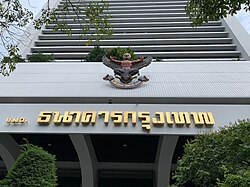
Private businesses of high standing may apply for a Royal warrant of appointment through the Prime Minister or the Bureau of the Royal Household. If granted, the firm is permitted to display the Tra Tang Hang (store standing emblem).
This emblem is a large sculpture of the Garuda wearing a golden crown and regalia, dressed in blue and green robes with outstretched wings. It is accompanied by a ribbon stating, "By Appointment to His Majesty the King." This honor replaces the royal arms sculptures used during the reign of King Rama V.
Key Facts
- Meaning: Phra Khrut Pha means "Garuda, the vehicle (of Vishnu)."
- Symbolism: Represents the King as the earthly personification of Narayana and the government as the King's instrument.
- Legal Status: Protected by the Act on the Garuda Emblem (1991); misuse is a criminal offense.
- Visuals: The Khrut Ram (dancing Garuda) is the standard posture for government use.
- Royal Warrant: Private firms can display a Garuda sculpture (Tra Tang Hang) if granted a royal appointment.
| Application | Context/Usage | Significance |
|---|---|---|
| Royal Seals | Authentication of King's signature | Sovereign authority |
| Government Documents | Letterheads, title deeds, passports | State administration |
| Military/Police | Official uniforms | State security and property |
| Currency | Thai Baht banknotes | National financial identity |
| Private Business | Royal warrant (Tra Tang Hang) | Mark of distinction and honor |
Frequently Asked Questions
What does the Garuda represent in Thai culture?
The Garuda represents the mount of Lord Vishnu and symbolizes the Thai King's status as the earthly personification of the god Narayana. It serves as a symbol of both royalty and the state's authority.
Can any business use the Garuda emblem?
No. Only private entities that have been granted a Royal warrant of appointment by the King are permitted to display the Garuda emblem (Tra Tang Hang) on their premises.
What are the penalties for misusing the Garuda emblem?
Under the Act on the Garuda Emblem of 1991, misuse can lead to imprisonment for up to one year, a fine between 3,000 and 6,000 Baht, or both.
Who designed the modern Garuda seal?
The modern seal was based on drawings by Prince Narisara Nuvadtivongs in 1893 and was later refined by the artist Phra Dhevabhinimit under the direction of King Vajiravudh (Rama VI).
What is the 'Khrut Ram' posture?
Khrut Ram, or the "dancing Garuda," is a specific artistic depiction where the Garuda's wings are displayed and elevated. This posture was selected by King Rama VI for government use.