Freestyle Wrestling: History, Rules, and Olympic Evolution
Freestyle wrestling is a dynamic form of full-contact grappling that emphasizes explosive action and versatility. Unlike other styles, it allows wrestlers to use their legs for both offense and defense, making it one of the most versatile combat sports in the world. Rooted in various international styles and catch wrestling, it has evolved from a regional pastime into a globally recognized Olympic discipline.
While often confused with collegiate or scholastic wrestling—which focuses more on dominance and control—freestyle wrestling is characterized by its fast pace and high-amplitude throws. It serves as a foundational skill for many other grappling arts and continues to grow in popularity across all age groups and genders.
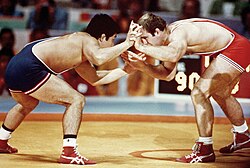
Key Facts

- Olympic Debut: First appeared in the 1904 Summer Olympics in St. Louis.
- Core Focus: Full-contact grappling and explosive movement.
- Olympic Status: Reinstated as a probationary sport for 2020 and 2024 after a massive global campaign.
- Gender Inclusion: Women's freestyle wrestling debuted at the 2004 Summer Olympics.
- Key Distinction: Differs from Greco-Roman wrestling by allowing the use of legs for attacks and defense.
The History of Freestyle Wrestling
In 19th-century Europe, Greco-Roman wrestling dominated the amateur scene, making it difficult for freestyle wrestling to gain a foothold. The 1896 Olympic Games featured only a single heavyweight Greco-Roman match, leaving no room for the freestyle style.
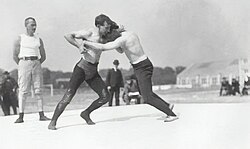
The tide turned during the 1904 St. Louis Olympics, where freestyle wrestling officially emerged as an Olympic sport. Interestingly, all 40 participants in that inaugural event were American. The 1904 games adopted the rules of catch-as-catch-can (a style where any hold is permitted), though some restrictions were placed on dangerous holds to ensure athlete safety. This era also introduced the concept of weight classes, featuring seven divisions ranging from 47.6 kg to over 71.7 kg.
The Fight for Olympic Survival
In early 2013, the International Olympic Committee (IOC) voted to remove wrestling from the core sports list for the 2020 Games. This sparked a massive grassroots movement led by a group called "2020 Vision." Through social media and global outreach, they aimed to gather over 2 million signatures to save the sport.
The campaign was successful. In September 2013, the IOC voted to reinstate wrestling as a probationary sport for the 2020 and 2024 Olympics. To secure this return, United World Wrestling (UWW) implemented significant changes to the rules and weight classes to modernize the sport.
Weight Classes and Age Categories
International freestyle wrestling is strictly organized by age and weight to ensure fair competition. Wrestlers must weigh in before a match and are generally restricted to their own weight class, though senior wrestlers may occasionally move up a class (excluding the heavyweight division).
Men's Categories
Men's competition is divided into six primary age groups: schoolboys (14–15), cadets (16–17), novice, juvenile, juniors (18–20), and seniors (20+). There is also a "Veterans" category for those aged 35 and older. Weight classes vary by age, with seniors and juniors competing in eight to seven classes ranging from 57 kg to 125 kg.
Women's Categories
Women compete in four international age categories: schoolgirls (14–15), cadets (16–17), juniors (18–20), and seniors (20+). Senior women's weight classes range from 44 kg to 72 kg.
The Competition Environment
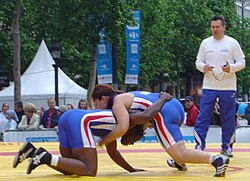
Matches take place on a shock-absorbing rubber mat designed for safety. For high-stakes events like the World Cups or Olympic Games, a brand-new mat is required.
Mat Layout
- Main Area: A circle with a nine-meter diameter.
- Protection Area: A 1.5-meter border surrounding the main circle.
- Red Zone (Passivity Zone): A one-meter wide red band on the outer edge of the main circle, used to identify passive wrestlers.
- Central Wrestling Area: A seven-meter diameter circle.
- Central Circle: A one-meter diameter circle in the very center, divided by a red line.

Match Mechanics and Scoring
Freestyle wrestling is a game of positioning, leverage, and agility. Wrestlers use a variety of techniques to bring their opponent to the mat or pin their shoulders.
Takedowns and Control
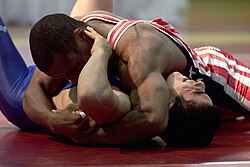
A primary goal is the takedown, where a wrestler brings their opponent from a standing position to the mat. Once on the ground, the wrestler on top attempts to turn the opponent to secure a fall or earn points through exposure.


Penalties and Infractions
Points can be awarded to an opponent based on penalties. A wrestler may receive one or two points if their opponent takes an injury time-out (unless the injured wrestler is bleeding). Other infractions—such as fleeing the mat, using illegal holds, or acting with brutality—result in a Caution and points for the opponent. Accumulating three cautions results in an automatic loss of the match.
Summary of Freestyle Wrestling Structure
| Feature | Details |
|---|---|
| Olympic Debut | 1904 (St. Louis) |
| Mat Diameter | 9 Meters (Main Area) |
| Key Zones | Central Circle, Red Zone (Passivity), Protection Area |
| Men's Senior Weights | 57 kg to 125 kg |
| Women's Senior Weights | 44 kg to 72 kg |
| Penalty Limit | 3 Cautions = Match Loss |
Frequently Asked Questions
What is the difference between freestyle and Greco-Roman wrestling?
The primary difference is the use of the legs. In freestyle wrestling, athletes can use their legs to attack or defend and can tackle their opponent's legs. In Greco-Roman wrestling, holds below the waist are strictly prohibited.
How does freestyle wrestling differ from collegiate wrestling?
Collegiate and scholastic wrestling place a heavier emphasis on a wrestler's ability to maintain dominance and control over their opponent. Freestyle wrestling focuses more on explosive actions and high-impact maneuvers.
What happens if a wrestler is too passive?
If a wrestler is deemed passive, they may be pushed into the "red zone" (passivity zone). This can lead to penalties or points being awarded to the opponent to encourage active engagement.
How did wrestling return to the Olympics after being voted out?
A global campaign called "2020 Vision" gathered massive support and signatures. In response, the IOC reinstated wrestling as a probationary sport for the 2020 and 2024 Games after UWW updated the rules and weight classes.
What are the victory conditions in a freestyle match?
A match can be won through a fall (pinning the opponent's shoulders to the mat), by accumulating more points than the opponent, or via technical superiority.