Frank McCann: The Historian of the Brazilian Army and US-Brazil Relations
Francis Daniel McCann, widely known as Frank McCann (1938–2021), was a distinguished American historian and a preeminent Brazilianist—a scholar specializing in the study of Brazil. As a professor emeritus at the University of New Hampshire and an emeritus professor of International Relations at the Universidade Federal Fluminense (UFF), McCann dedicated his career to analyzing the intricate intersection of military power, internal politics, and international diplomacy in Brazil.
Fluent in Portuguese and deeply respected in both the United States and Brazil, McCann was often described as a "great friend of Brazil." His academic contributions provided critical insights into how the Brazilian Army evolved and how the nation navigated its complex alliance with the United States during the mid-20th century.
Key Facts
- Expertise: Specialized in Brazilian military history and US-Brazil diplomatic relations.
- Major Works: Author of Soldiers of the Pátria and Aliança Brasil-Estados Unidos 1937-1945.
- Academic Standing: Professor Emeritus at the University of New Hampshire and Universidade Federal Fluminense.
- Honors: Recipient of the Commander of the Order of Rio Branco (1987) and the Medalha do Pacificador (1995).
- Key Focus: The role of the Brazilian Expeditionary Force (FEB) in World War II.
The Evolution of the Brazilian Army
One of McCann's most significant contributions was his exploration of the Brazilian Army's internal culture and political influence. In his book Soldiers of the Pátria, he examined the military's mentality during its formative years, spanning the period after the Paraguayan War up to the 1937 proclamation of the Estado Novo (New State), the dictatorship established by Getúlio Vargas.
McCann's work helped illuminate how the army transitioned from a regional force into a national institution with significant political weight, shaping the trajectory of the Brazilian state during the early 20th century.
The US-Brazil Alliance and World War II
McCann spent a large portion of his career studying the strategic partnership between Brazil and the United States from 1937 to 1945. His work Aliança Brasil-Estados Unidos 1937-1945, which won the 1975 Bernath Prize and received an honorable mention for the Bolton Prize, detailed the diplomatic negotiations and military cooperation of the era.
A notable historical detail highlighted by McCann was the invitation extended to Brazil to participate in the administration of occupied Austria following the conclusion of World War II.
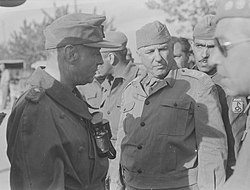
The Brazilian Expeditionary Force (FEB)
McCann was a passionate advocate for the recognition of the Brazilian Expeditionary Force (FEB), the contingent of soldiers sent to fight in Italy. In his journal Brazil and World War II: The Forgotten Ally, he analyzed the strategic thinking of leaders like Góis Monteiro and Getúlio Vargas, focusing primarily on the land component of the war effort.
He argued that while the battle of Monte Castello often dominates the historical narrative, the victory at Montese on April 16 was equally critical. McCann noted that the FEB, nicknamed the "Smoking Cobras," fought a grueling four-day battle at Montese, suffering 426 casualties. This success led to the surrender of the German 148th Division and several Fascist Italian divisions (Monte Rosa, San Marco, and Italia) to General Mascarenhas on April 29–30. In total, the Brazilians captured two generals, 800 officers, and 14,700 troops.
Academic Legacy and Bibliography
Throughout his career, McCann published numerous books and articles that remain essential reading for historians of the Americas. His final major work, Brazil and the United States During World War II and Its Aftermath: Negotiating Alliance and Balancing Giants (2018), continued his lifelong study of the geopolitical balance between the two nations.
| Title | Focus | Key Theme |
|---|---|---|
| Soldiers of the Pátria | Brazilian Army (1889-1937) | Military mentality and internal politics |
| Aliança Brasil-Estados Unidos 1937-1945 | Diplomatic Relations | US-Brazil alliance during WWII |
| A Nação Armada | Brazilian Army Essays | Historical analysis of the armed forces |
| Modern Brazil: Elites and Masses | Social History | Historical perspective on Brazilian society |
| Brazil and the United States... (2018) | Post-War Relations | Negotiating alliances and balancing power |
Frequently Asked Questions
Who was Frank McCann?
Frank McCann was an American historian and professor emeritus at the University of New Hampshire and Universidade Federal Fluminense, recognized as a leading expert in Brazilian military history and US-Brazil relations.
What was the significance of the "Smoking Cobras"?
The "Smoking Cobras" was the nickname for the Brazilian Expeditionary Force (FEB). McCann highlighted their bravery and effectiveness in Italy, specifically their ability to capture thousands of Axis troops despite having limited initial preparation.
Which of McCann's works focused on the Brazilian Army's internal politics?
His book Soldiers of the Pátria specifically examines the mentality and internal politics of the Brazilian Army from 1889 through the start of the Estado Novo dictatorship in 1937.
What honors did the Brazilian government give to Frank McCann?
In recognition of his scholarly commitment to Brazil, he was awarded the title of Commander of the Order of Rio Branco in 1987 and the Medalha do Pacificador (Peacemaker Medal) in 1995.
What did McCann say about the victory at Montese?
McCann argued that the victory at Montese was often overshadowed by the symbolism of Monte Castello, despite the fact that the battle at Montese led to the surrender of an entire intact German division and thousands of Fascist Italian troops.