Frank Leslie's Illustrated Newspaper: A Legacy of American Visual Journalism
Long before the digital age of instant imagery, Frank Leslie's Illustrated Newspaper served as a primary window into the world for millions of Americans. Founded in 1855, this pioneering publication blended literary content with cutting-edge visual reporting, documenting the most pivotal moments of the 19th and early 20th centuries.
Originally established by the ambitious publisher and illustrator Frank Leslie, the magazine—later renamed Leslie's Weekly—became a cornerstone of American media. It bridged the gap between traditional text-heavy news and the modern illustrated press, utilizing a variety of artistic techniques to bring global events to a domestic audience.
Key Facts
- Founded: 1855 by Frank Leslie (pseudonym of Henry Carter).
- Duration: Published until 1922.
- Visual Mediums: Used wood engravings, lithographs, steel engravings, and early photography (daguerreotypes).
- Peak Reach: Circulation reached approximately 65,000 copies by 1897.
- Notable Contributors: Norman Rockwell, Louisa May Alcott, and aviation pioneer Harriet Quimby.
The Origins of Frank Leslie
The magazine was the brainchild of Henry Carter, an English-born artist who adopted the pen name Frank Leslie. After emigrating to New York City in 1848, Carter pursued wood engraving—a craft his father had opposed. When he struggled to find employment with established newspapers, he opened his own engraving shop on Broadway.
Leslie's early career was marked by high-profile commissions, including work for the promoter P.T. Barnum for singer Jenny Lind's concert programs. Although Barnum's 1853 venture, The Illustrated News, failed within a year, the experience emboldened Leslie to launch his own periodicals. In 1854, he released a fashion newspaper and a fiction magazine, both of which were financially successful, paving the way for the launch of Frank Leslie's Illustrated Newspaper in 1855.
Growth Through Conflict and Crisis
The early years were not without struggle, particularly during the business crisis of 1857. However, the outbreak of the American Civil War in 1861 transformed the publication into a massive success. Readers were drawn to the vivid, and sometimes lurid, illustrations of the conflict. The magazine's commitment to reporting was so intense that one of its freelancers, James R. O'Neill, is believed to be the only Civil War correspondent killed in action.
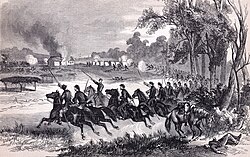
By 1873, Leslie's had grown into a prosperous empire employing over 300 people, including 70 illustrators. It remained a dominant force in visual news until the rise of daily illustrated newspapers like The Daily Graphic.
The Art of Production
Producing a weekly illustrated magazine in the 19th century was a complex industrial process. The publication typically averaged 16 pages and focused on timeliness, often reporting events within days of their occurrence.
The production workflow followed a rigorous sequence:
- Sketching: An editor selected a news event, and an illustrator created an outline drawing.
- Block Preparation: The outline was applied to a block made of multiple layers of Turkish boxwood.
- Engraving: Specialized artists carved away the white sections of the wood, leaving the image in relief.
- Printing: The wood block was converted into an electrotyped copper plate for mass printing.
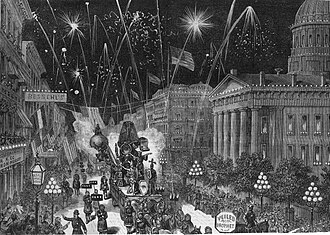
Evolution and Later Years
Following Frank Leslie's death in 1880, the magazine was managed by his widow, Miriam Florence Leslie, a known campaigner for women's suffrage. Even after the Leslie family ceased ownership in 1902, the brand remained a powerful trademark.
The publication maintained a patriotic tone, frequently highlighting heroic battle stories and soldiers. Beyond war, it covered major events like the 1897 Klondike gold rush. It also attracted a prestigious roster of talent, including writers like Louisa May Alcott and legendary illustrators such as Norman Rockwell.
One of the most enduring images in American history—James Montgomery Flagg's Uncle Sam—first appeared on the July 6, 1916, cover to promote military preparedness before becoming a world-famous recruiting poster for World War I.
The magazine also championed female professionals. Harriet Quimby, the first licensed American woman pilot, served as the magazine's aviation editor and a frequent contributor for ten years, writing on travel, drama, and aviation safety until her death in 1912.
Publication Summary
| Feature | Details |
|---|---|
| Founder | Frank Leslie (Henry Carter) |
| Active Years | 1855 – 1922 |
| Primary Formats | Weekly (later Monthly in 1921) |
| Key Visual Techniques | Wood engraving, Lithography, Steel engraving, Halftone photography |
| Final Merger | Merged into Judge (June 24, 1922) |
Frequently Asked Questions
Who was Frank Leslie?
Frank Leslie was the pseudonym of Henry Carter (1821–1880), an English-born wood engraver who emigrated to New York City in 1848 and built a publishing empire of illustrated periodicals.
How did the magazine produce its images before digital photography?
The magazine used a labor-intensive process involving sketches that were transferred to Turkish boxwood blocks. Engravers carved out the negative space to create a relief image, which was then converted into copper plates for printing.
What role did the magazine play during the American Civil War?
It provided critical visual documentation of the war through engravings and lithographs, helping it achieve massive popularity as the public sought visual accounts of the conflict.
Which famous artists were associated with the publication?
Notable illustrators included Norman Rockwell, who created covers in the magazine's later years, and James Montgomery Flagg, who debuted his iconic Uncle Sam image in the publication.
When did the publication end?
After switching to a monthly format in February 1921, the magazine was merged into the publication Judge on June 24, 1922.