Franco-Spanish Border: A History of Treaties and Territorial Agreements
The boundary between France and Spain is more than just a geographical divide across the Pyrenees; it is the result of centuries of diplomatic negotiations, royal decrees, and international treaties. From the early formalizations of the 17th century to the modern era of open borders, the evolution of this frontier reflects the shifting political landscapes of Western Europe.
The Foundations of the Border
The formal layout of the border began with the Treaty of the Pyrenees in 1659, signed between the kingdoms of Spain and France. This landmark agreement established the primary framework for the boundary. Shortly after, the 1660 Treaty of Llivia further refined the map by transferring the sovereignty of several villages in the Querol valley to France.
As the centuries progressed, specific regional disputes required targeted diplomatic solutions. In 1764, an agreement signed in Perpignan defined the boundaries between Empordà and Coll Pertús. Later, the 1785 Elizondo Treaty was established to demarcate the limits of Valcarlos and the height of Aldudes.
The Bayonne Treaties and Final Definition
The most definitive shaping of the border occurred between 1856 and 1868 through a series of agreements known as the Bayonne Treaties. Signed during the reigns of Queen Isabel II of Spain and Emperor Napoleon III of France, these treaties established the boundaries that remain largely in force today.
- 1856 Treaty: Defined the boundary between the provinces of Navarre and Guipuzcoa.
- 1862 Treaty: Marked the boundaries within the provinces of Lleida and Huesca.
- 1866 Treaty: Established the line from the Mediterranean Sea to the valley of Andorra.
This era of demarcation concluded with the signing of the Final Act of borders in 1868, providing a comprehensive legal closure to the territorial definitions.
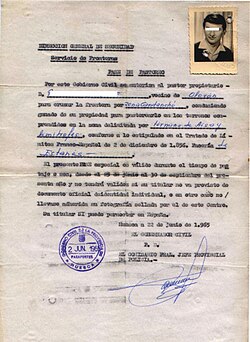
Modern Amendments and the Schengen Era
Even after the Final Act, minor adjustments were necessary to accommodate infrastructure and modern needs. In 1980, an agreement was reached to define the border within the Bielsa-Aragnouet tunnel. In 1984, during the construction of a road connecting Arette with the Roncal Valley, the two nations agreed to a mutual land transfer of 2,710 square meters (29,170 sq ft).
The most significant change in recent history occurred in 1995 with the implementation of the Schengen Agreement. This treaty abolished border controls for goods and people, ensuring freedom of movement across the Pyrenees. While many border stations now stand disused, they remain as historical markers of a time when the frontier was a strictly controlled barrier.
Key Facts
- The Treaty of the Pyrenees (1659) provided the first formal layout of the border.
- The Bayonne Treaties (1856–1868) established the majority of the current border limits.
- A land transfer of 2,710 m² occurred in 1984 for road construction.
- Border controls were officially abolished in 1995 due to the Schengen Agreement.
| Year | Agreement/Treaty | Primary Outcome |
|---|---|---|
| 1659 | Treaty of the Pyrenees | Initial formal layout of the border |
| 1660 | Treaty of Llivia | Sovereignty of Querol valley villages transferred to France |
| 1764 | Perpignan Agreement | Boundaries set between Empordà and Coll Pertús |
| 1785 | Elizondo Treaty | Demarcation of Aldudes and Valcarlos |
| 1856-1868 | Bayonne Treaties | Final definition of most current borders |
| 1995 | Schengen Agreement | Abolition of border controls for people and goods |
Frequently Asked Questions
When was the Franco-Spanish border first formally established?
The formal layout was first established in 1659 with the signing of the Treaty of the Pyrenees.
What are the Bayonne Treaties?
The Bayonne Treaties are a series of agreements signed between 1856 and 1868 under Queen Isabel II and Napoleon III that defined the border in the provinces of Guipuzcoa, Navarre, Huesca, and Lleida, as well as the area from Andorra to the Mediterranean.
How did the Schengen Agreement affect the border?
Entering into force in 1995, the Schengen Agreement abolished border controls for people and goods, allowing for free movement between France and Spain.
Were there any recent land transfers between the two countries?
Yes, in 1984, a mutual transfer of 2,710 square meters of land was agreed upon to facilitate the construction of a road linking Arette and the Roncal Valley.
Which treaty handled the border near the Mediterranean Sea?
The treaty of 1866 established the boundaries from the valley of Andorra to the Mediterranean Sea.