Forest Lawn Memorial Park: The Architectural Legacy of Its Three Historic Churches
Forest Lawn Memorial Park is home to three distinct churches, each serving as a meticulous architectural tribute to European history and romantic legend. These structures were designed not only as places of worship and reflection but as physical recreations of historic sites from England and Scotland, blending art, poetry, and spirituality into the landscape.
Key Facts
- Little Church of the Flowers was the first church built, inspired by a village church in Buckinghamshire, England.
- Wee Kirk o' the Heather is based on a 14th-century Scottish kirk and commemorates the ballad "Annie Laurie."
- Church of the Recessional draws its design from the 12th-century Church of St. Margaret in Sussex, England.
- The grounds feature unique interactive monuments, including the Wishing Chair and the Ring of Aldyth.
The Little Church of the Flowers
Commissioned in 1917 and designed by architect T. Patterson Ross, the Little Church of the Flowers was the first ecclesiastical structure at Forest Lawn. Ross drew inspiration from the parish church at Stoke Poges in Buckinghamshire, England—the site where poet Thomas Gray composed the famous "Elegy Written in a Country Churchyard." Ross sought to recreate the essence of this 600-year-old English village church for the memorial park.
The church was dedicated on Mother's Day, May 12, 1918. Its design features a nave ending in the Tree of Life Window, which was based on a design by an English Abbey monk and later translated into stained glass. Later additions to the structure include flower-filled conservatories adjacent to the pews and the Rosemary Chapel, which is specifically used for cremation services.
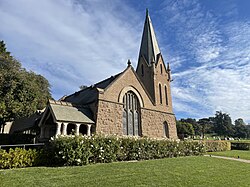
Wee Kirk o' the Heather
The second church constructed at Forest Lawn is the Wee Kirk o' the Heather, dedicated on October 6, 1929, before a crowd of over five thousand people. The architecture is modeled after the village church (kirk) at Glencairn, Dumfriesshire, Scotland. The original Glencairn kirk was built in 1310 and destroyed in 1805. Dumfriesshire is a region steeped in literary history, known as the home of poet Robert Burns and the setting for many works by Sir Walter Scott.
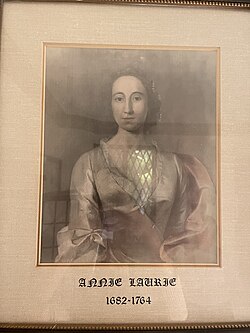
The Wee Kirk is deeply connected to the story of Annie Laurie, the subject of Scotland's most popular love ballad. Annie Laurie, born in 1682 to Sir Robert Laurie, was the center of a tragic romance with William Douglas of Fingland, a soldier in the Royal Scots Army. Tradition suggests her aristocratic family forbade the union due to Douglas's age and clan affiliation. This story is told through eight stained glass windows along the church's south side.
Inside the church's historical room, visitors can find artifacts belonging to Annie Laurie, including her will, communion coins, and a portrait. During the church's dedication, Scottish tenor Frank McWilliams performed the song "Annie Laurie."
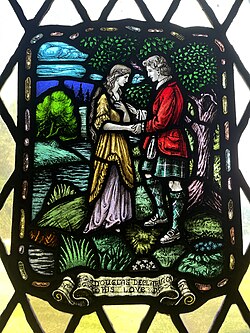
In the forecourt sits the "Wishing Chair," constructed in 1931 using stones from the original Glencairn kirk. According to legend, couples who sit in the chair and recite the inscribed words will receive a lifelong blessing.
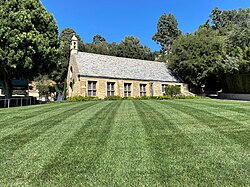
Church of the Recessional
The third and final church built at Forest Lawn is the Church of the Recessional, dedicated on November 30, 1941. Its architectural inspiration is the Church of St. Margaret in Rottingdean, Sussex, England, an Anglo-Saxon style stone building dating back to 1100 A.D.
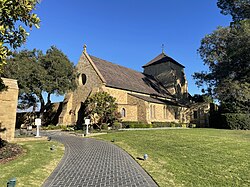
The interior features high-quality craftsmanship, including three stained glass windows in the chancel depicting the Virgin Mary and the Christ Child, created by artist Charles J. Connick. The pulpit and baptismal font from St. Margaret's were faithfully reproduced along the chancel arch, which is inscribed with the words of the Apostle Paul: "Now abideth faith, hope, and love, these three; and the greatest of these is love." Additionally, the south side of the church features windows depicting the Beatitudes from the Sermon on the Mount.
The forecourt contains the Ring of Aldyth. Based on an Old Saxon legend, the ring is said to bring happiness and devotion to couples who clasp their right hands through the ring and repeat the vow: "Thy hand in mine, this ring doth bind, my heart to thine."
Summary of Forest Lawn Churches
| Church Name | Inspiration Source | Dedication Date | Key Feature |
|---|---|---|---|
| Little Church of the Flowers | Stoke Poges, Buckinghamshire, England | May 12, 1918 | Tree of Life Window & Rosemary Chapel |
| Wee Kirk o' the Heather | Glencairn, Dumfriesshire, Scotland | October 6, 1929 | Wishing Chair & Annie Laurie artifacts |
| Church of the Recessional | St. Margaret's, Rottingdean, England | November 30, 1941 | Ring of Aldyth & Connick glass |
Frequently Asked Questions
Who designed the Little Church of the Flowers?
The church was designed by architect T. Patterson Ross, who began the commission in 1917.
What is the significance of Annie Laurie to the Wee Kirk o' the Heather?
Annie Laurie was a woman from Glencairn whose ill-fated romance with William Douglas of Fingland inspired a famous Scottish love ballad. Her story is depicted in the church's stained glass windows, and her personal artifacts are housed in the historical room.
What is the Ring of Aldyth?
The Ring of Aldyth is a monument in the forecourt of the Church of the Recessional. According to Old Saxon legend, couples who clasp hands through the ring and recite the inscribed vows are promised happiness and devotion.
Which church features the Beatitudes?
The Church of the Recessional features stained glass windows along its south side that depict the Beatitudes from the Sermon on the Mount.
What is the Wishing Chair made of?
The Wishing Chair, located at the Wee Kirk o' the Heather, was built in 1931 using stones transported from the original 1310 kirk at Glencairn, Scotland.