Foreign Service Institute: Training the Architects of U.S. Diplomacy
The Foreign Service Institute (FSI) serves as the premier training institution for the United States Foreign Service community. As the primary engine for professional development within the U.S. Department of State, the FSI prepares diplomats and other essential professionals to advance American foreign policy objectives, both in Washington, D.C., and at overseas missions.
Headquartered at the National Foreign Affairs Training Center in Arlington, Virginia, the institute provides a massive scale of educational resources. Each year, more than 225,000 enrollees—drawn from the Department of State and over 50 other government agencies and military branches—utilize FSI's extensive curriculum to sharpen their expertise.
Key Facts
- Established: March 13, 1947
- Headquarters: National Foreign Affairs Training Center, Arlington, Virginia
- Annual Enrollees: Over 225,000 people
- Course Offerings: More than 800 courses, including up to 70 foreign languages
- Primary Mission: Preparing professionals for U.S. foreign policy objectives
A Legacy of Diplomatic Excellence
The FSI was not created in a vacuum; it was the culmination of several predecessor programs, including the Consular School of Application (1907) and the Wilson Diplomatic School (1909). Following legislation signed by President Truman in 1946, Secretary of State George C. Marshall officially established the Institute on March 13, 1947.
Initially located in the Mayfair Building in Washington, D.C., the FSI underwent significant evolution. A pivotal moment occurred in 1954 following the Wriston Report, which led to a curriculum overhaul that placed a much heavier emphasis on specialized training and language proficiency. In October 1993, the institute moved to its current permanent home in Arlington, Virginia.
| Category | Details |
|---|---|
| Parent Department | U.S. Department of State |
| Founded | March 13, 1947 |
| Annual Budget (FY 2012) | $115 million |
| Staff Count (Dec 2012) | 1,332 employees |
| Core Function | Professional training for foreign affairs personnel |
Organizational Structure and Specialized Schools
To meet the diverse needs of the global diplomatic community, the FSI is organized into several specialized schools and offices, each focusing on a critical pillar of international service.
School of Language Studies (SLS)
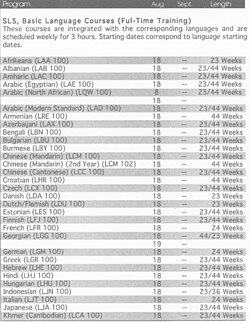
The SLS is a cornerstone of the institute, offering instruction in more than 70 languages and proficiency testing in over 100. Courses can last anywhere from 8 to 44 weeks depending on the language's difficulty. To support global operations, the SLS maintains a network of language field schools in locations such as Taipei, Yokohama, Seoul, and various regions across the Middle East, North Africa, and Asia.
School of Professional and Area Studies (SPAS)
SPAS focuses on the "tradecraft" of diplomacy. This includes training in consular affairs, political and economic affairs, and public diplomacy. It also provides deep dives into the socio-cultural and political landscapes of specific world regions. Notably, it houses the Center for the Study of the Conduct of Diplomacy (CSCD), which analyzes recent diplomatic experiences to establish best practices for future missions.
School of Applied Information Technology (SAIT)
In an increasingly digital world, SAIT ensures that foreign affairs professionals are equipped with essential technical skills. The school provides training ranging from general business applications to specialized IT management and technical training for Information Management Specialists.
Leadership and Management School (LMS)
The LMS is responsible for developing the next generation of leaders. It offers mandatory and elective training for supervisors and managers at all levels, from entry-level staff to senior executives, including crisis management training for overseas environments.
The Transition Center (TC) and Office of the Historian (OH)
The Transition Center assists employees and their families in navigating the unique challenges of a mobile, international lifestyle. Through its Center of Excellence in Foreign Affairs Resilience (CEFAR), it provides training for performing in high-stress or high-threat environments. Meanwhile, the Office of the Historian fulfills a legal mandate to prepare the official documentary history of U.S. foreign policy through the Foreign Relations of the United States series.
Frequently Asked Questions
What is the primary purpose of the Foreign Service Institute?
The FSI is the primary training institution for the U.S. Foreign Service community, designed to equip diplomats and professionals with the skills, languages, and knowledge necessary to execute U.S. foreign policy.
How many languages does the FSI teach?
The School of Language Studies offers instruction in more than 70 foreign languages and provides proficiency testing in over 100 languages.
Where is the FSI located?
The institute is headquartered at the National Foreign Affairs Training Center in Arlington County, Virginia.
Does the FSI provide training for families of diplomats?
Yes. Through the Transition Center, the FSI provides resources and training to help family members prepare for the demands of living abroad and navigating a mobile lifestyle.
Who is responsible for the FSI's leadership?
The FSI Director serves as the chief learning officer for the State Department and federal foreign affairs agencies. This position is equivalent in rank to an assistant secretary of state and is appointed by the secretary of state.