Flour: The Foundation of Global Cuisine
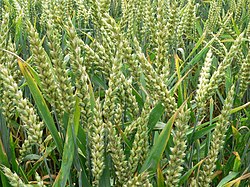
Flour is a finely ground powder made from grains, legumes, nuts, roots, or seeds. While most commonly associated with wheat, flour serves as a primary staple across diverse cultures, forming the basis of everything from European breads to Mesoamerican tortillas and Central African fufu.
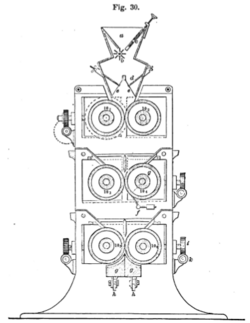
The history of flour is as old as human civilization itself. Archaeological evidence suggests that humans were producing cereal flour over 32,000 years ago. From the early use of grindstones in Australia's Pleistocene period to the discovery of 14,000-year-old bread-making evidence at the Natufian site of Shubayqa 1 in Jordan, the process of milling has evolved from simple stones to complex industrial machinery.
Key Facts
- Ancient Origins: Evidence of flour production dates back over 32,000 years.
- Composition: Whole-grain flour contains the endosperm, germ, and bran; refined flour contains only the endosperm.
- Fortification: As of 2016, 86 countries legally require the fortification of wheat flour to replace lost nutrients.
- Gluten Role: Gluten is the protein responsible for the stretch and rise in bread dough.
- Safety: Suspended flour dust is highly flammable and can be explosive in industrial settings.
The Science of Cereal Flour
Cereal flour is categorized based on which part of the grain is used. Whole-grain flour retains the entire kernel, while refined flour removes the outer layers (bran and germ). While refining produces a whiter flour with a longer shelf life, it removes essential nutrients, leading many countries to fortify flour with iron, niacin, thiamine, riboflavin, and folic acid.
Technically, there is a difference between flour and meal; meal has a coarser particle size, known as the degree of comminution, though the terms are often used interchangeably in common speech.
Common Types of Wheat Flour
Wheat flours are primarily distinguished by their protein (gluten) content, which determines the texture of the final baked good.
Cake and Pastry Flour
Cake flour has the lowest protein content. Pastry flour follows closely with 7.5% to 9.5% protein, providing enough strength to hold a structure while ensuring flaky crusts rather than hard ones.
All-Purpose (Plain) Flour
All-purpose or plain flour is a versatile medium-protein flour (9.5% to 11.5%). It is suitable for a wide range of products, including biscuits and some pizza bases. The term "plain" also indicates the absence of added leavening agents.
Bread and Hard Flour
Bread flour, typically made from hard red winter wheat, contains 11.5% to 13.5% protein. This high gluten content traps carbon dioxide during yeast fermentation, resulting in a better rise and a chewier texture. Hard flour (or extra strong flour) can reach protein levels of 13.5% to 16%, used for heavy doughs or structural bread displays.
Specialty Wheat Flours
- Gluten Flour: A highly refined protein used to strengthen other flours or help whole-grain breads rise better.
- Self-Raising Flour: A mixture of plain flour, baking powder, and a pinch of salt.
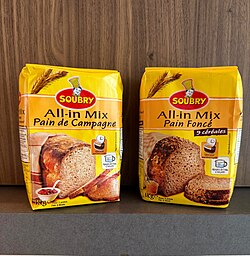
- Multigrain Flour: A blend of various grains used to improve nutritional profiles and texture.
Alternative and Gluten-Free Flours
Beyond wheat, many other sources are milled into flour to suit dietary needs or regional tastes.
Bean and Legume Flours
Bean flours are made from dried or roasted beans. Examples include gram flour (besan) from chickpeas, used extensively in Indian and Middle Eastern cuisines, and soybean flour. In Japan, roasted soybean flour is known as kinako.
Root and Seed Flours
Cassava and corn flours are essential staples in Central African and Mesoamerican cuisines, respectively. Other options include hemp flour—made from the residue after pressing oil from hemp seeds—which adds a nutty flavor and green hue to baked goods.
Production and Processing
The evolution of milling moved from Roman cone mills to the first steam-powered mill, the Albion Mills in London (1786). Modern commercial flour may undergo bleaching or maturing using agents such as calcium peroxide or azodicarbonamide to modify color and baking properties.
To maintain freshness and prevent spoilage, commercial flours often include preservatives like calcium propanoate or sodium benzoate.
| Flour Type | Protein Content | Primary Use | Texture Characteristic |
|---|---|---|---|
| Cake Flour | Lowest | Cakes | Tender/Soft |
| Pastry Flour | 7.5% – 9.5% | Pie crusts, pastries | Flaky |
| All-Purpose | 9.5% – 11.5% | General baking, biscuits | Versatile |
| Bread Flour | 11.5% – 13.5% | Bread, pizza dough | Chewy/Strong |
| Hard Flour | 13.5% – 16% | Specialty strong breads | Extra Strong |
Frequently Asked Questions
What is the difference between whole-grain and refined flour?
Whole-grain flour includes all parts of the grain kernel: the endosperm, the germ, and the bran. Refined flour consists only of the endosperm, meaning the nutrient-rich outer layers are removed during processing.
Why is gluten important in bread making?
Gluten is a protein that provides elasticity and strength to the dough. It creates a network that traps carbon dioxide bubbles produced by yeast, allowing the bread to rise and creating a chewy texture.
Is flour dangerous?
In industrial quantities, flour dust suspended in the air is highly explosive. Historically, this has led to devastating mill explosions. Additionally, raw flour can contain pathogens, making it unsafe to consume uncooked.
What is the difference between flour and meal?
Technically, meal has a coarser particle size (a lower degree of comminution) than flour. However, in many regions, the two terms are used synonymously.
What is fortification in flour?
Fortification is the process of adding essential nutrients (such as iron, folic acid, and B vitamins) back into refined flour to replace those lost during the milling process.