Filmmaking: The Comprehensive Process of Motion Picture Production
Filmmaking, also known as film production, is the complex art and science of creating a motion picture. While traditionally associated with feature-length cinema, these methodologies are now applied across a vast array of media, including episodic streaming series, network broadcasts, commercials, animations, music videos, and documentaries. From a simple spark of an idea to the final screening, the process transforms a concept into a visual experience.
Modern filmmaking is a nonlinear journey. Directors often shoot scripts out of sequence and repeat takes to achieve perfection, relying on the editing process to assemble the final narrative. While the industry began with photographic film, the vast majority of contemporary production has shifted to digital cinema, making the medium more accessible than ever before.
Key Facts
- Five Major Stages: Production is divided into development, pre-production, production, post-production, and distribution.
- Nonlinear Workflow: Scenes are rarely filmed in the order they appear in the script.
- Digital Shift: Most modern films are recorded digitally rather than on traditional photographic film.
- Versatility: Filmmaking techniques are used for everything from high-budget blockbusters to indie shorts and commercials.
- Independent Path: Affordable technology and streaming platforms have empowered filmmakers to operate outside the mainstream studio system.
The Five Stages of Film Production
Creating a professional motion picture requires a structured approach to manage the creative and financial risks involved.
1. Development
Development is the foundational phase where the initial idea is explored. During this stage, studios and producers identify trending topics from media or real-life events to set their creative agenda. This often involves securing the rights to intellectual property (IP), such as bestselling novels, plays, comic books, video games, or fairy tales. The phase concludes when the screenplay is written and the necessary financing is obtained.
In some cases, studios acquire films that were independently financed and produced, such as The English Patient (1996), Little Miss Sunshine (2006), and Roma (2018).
2. Pre-production
Once a project is greenlit, it enters pre-production. This is the planning phase where all logistical arrangements are made to ensure the shoot runs efficiently. Key activities include hiring the cast and crew, scouting and securing filming locations, and constructing physical sets.

3. Production
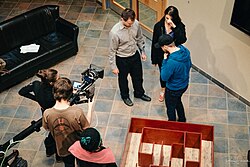
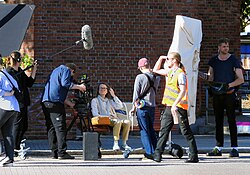
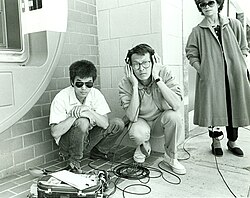
Production, or principal photography, is the stage where the actual recording takes place. This involves capturing the raw footage and recording the primary audio. It is the most resource-intensive phase, requiring the coordination of a diverse crew to execute the director's vision.
4. Post-production
After filming wraps, the project moves into post-production. Here, the raw footage is edited into a coherent story. This stage includes sound mixing, the addition of visual effects, and the composition and recording of the musical score.
5. Distribution
The final stage is distribution, which brings the finished film to the audience. This involves marketing, promotion, and choosing the release platform. Films may be exhibited in movie theaters, released on home video, or made available via cable, television, and streaming services.
Production Summary Table
| Stage | Primary Goal | Key Activities |
|---|---|---|
| Development | Concept & Funding | Screenwriting, securing IP rights, financing. |
| Pre-production | Planning & Logistics | Casting, location scouting, set construction. |
| Production | Capturing Content | Shooting raw footage, sound recording. |
| Post-production | Assembly & Polishing | Editing, visual effects, sound mixing, scoring. |
| Distribution | Audience Reach | Marketing, cinema release, streaming. |
Independent Filmmaking
Not all films are produced by major studios. Independent filmmaking involves operating outside the mainstream studio system. This path has become significantly more accessible due to the advent of affordable digital recording technology and the rise of streaming platforms, allowing creators to produce and distribute their work with fewer traditional barriers.
Frequently Asked Questions
Is filmmaking always done in the order of the story?
No. Filmmaking is a nonlinear process. To maximize efficiency and manage locations, filmmakers typically shoot the script out of sequence and assemble the scenes during the editing phase.
What is intellectual property (IP) in the context of development?
Intellectual property refers to the legal rights to a story or concept. This includes the rights to adapt books, comic books, plays, or real-life events into a motion picture.
What happens during post-production?
Post-production is where the raw footage is transformed into a final product. This includes editing the visuals, adding sound effects and music, and integrating visual effects.
How has technology changed filmmaking?
The industry has largely transitioned from using photographic film to digital recording. This shift, combined with digital editing and streaming, has lowered the cost of entry and expanded the reach of independent filmmakers.
What is the difference between production and pre-production?
Pre-production is the planning phase (hiring, scouting, and building), while production is the actual execution phase where the footage is recorded on set.