FIFA World Cup Trophy: The History and Legacy of Football's Greatest Prize
The FIFA World Cup Trophy is more than just a piece of sporting hardware; it is the ultimate symbol of global footballing excellence. Awarded every four years to the winner of the FIFA World Cup, this gold masterpiece represents the pinnacle of achievement in association football. Since the tournament's inception in 1930, the world has seen two distinct trophies define the era of victory.
From the early days of the Jules Rimet Trophy to the modern icon we see today, the journey of these awards is filled with drama, theft, and artistic brilliance. As of June 2026, the material cost of the current trophy is estimated at US$ 713,000.
Key Facts
- Current Holders: Spain (winners of the 2026 World Cup).
- Most Successful Nation: Brazil, with 5 titles.
- Current Material: 18 karat gold with malachite base.
- Weight: 6.175 kilograms (13.61 lb).
- Storage: Permanently housed at the FIFA World Football Museum in Zürich, Switzerland.
The Jules Rimet Trophy (1930–1970)
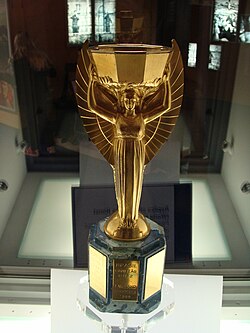
The original prize was first awarded in 1930 to Uruguay. Originally named "Victory," it was later renamed in 1946 to honor Jules Rimet, the FIFA president who initiated the competition in 1929. Designed by French sculptor Abel Lafleur, the trophy was crafted from gold-plated sterling silver with a lapis lazuli base, depicting Nike, the Greek goddess of victory.
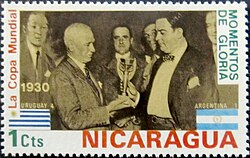
The trophy's history is as dramatic as the games themselves. During World War II, the 1938 champion Italy kept the trophy safe when Ottorino Barassi hid it in a shoe-box under his bed to protect it from Nazi seizure. In 1958, Brazilian captain Hilderaldo Bellini began the tradition of lifting the trophy high in the air for photographers—a gesture every winning captain has since followed.
The trophy was stolen twice. First, in 1966, it disappeared from a public exhibition in London, only to be found seven days later by a collie dog named Pickles. Later, after Brazil won their third title in 1970 and were allowed to keep the trophy in perpetuity, it was stolen again from the Brazilian Football Confederation headquarters in 1983. While some believe it was melted down, it has never been recovered, though the original base remains in FIFA's possession.
The Modern FIFA World Cup Trophy (1974–Present)
Following the permanent award of the first trophy to Brazil, FIFA commissioned a replacement for the 1974 tournament. After reviewing 53 submissions from seven countries, Italian artist Silvio Gazzaniga was chosen. His design depicts two human figures spiraling upward to hold the Earth, symbolizing the stirring moment of victory.
The current trophy is made of 18 karat gold and stands 36.8 centimeters (14.5 in) high. It features two layers of green malachite on its base. While it appears solid, chemist Sir Martyn Poliakoff and the manufacturer have confirmed that the trophy is hollow; if it were solid gold, it would weigh between 70 and 80 kilograms, making it nearly impossible to lift.
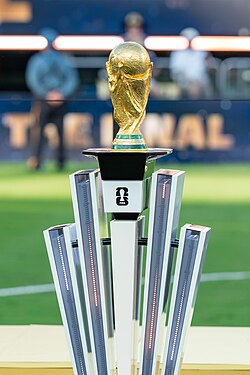
To maintain its prestige, FIFA enforces strict rules regarding who can touch the original trophy with bare hands. This privilege is reserved for FIFA officials, heads of state, and the players and managers who have actually won the competition.
Trophy Specifications and Winners
The base of the current trophy contains a plate where the names of winning nations are engraved in their national language (with a few historical exceptions). This plate is replaced every World Cup cycle to accommodate new winners in a spiral arrangement.
| Feature | Jules Rimet Trophy | FIFA World Cup Trophy |
|---|---|---|
| Period of Use | 1930–1970 | 1974–Present |
| Material | Gold-plated sterling silver | 18 karat gold |
| Base Material | Lapis lazuli | Malachite |
| Weight | 3.8 kg (8.4 lb) | 6.175 kg (13.61 lb) |
| Height | 35 cm (14 in) | 36.8 cm (14.5 in) |
| First Winner | Uruguay (1930) | West Germany (1974) |
Frequently Asked Questions
Who is allowed to touch the original World Cup trophy?
Only a select few are permitted to touch the trophy with bare hands, including FIFA officials, heads of state, and the players and managers who have won the tournament.
What happened to the original Jules Rimet Trophy?
After being awarded to Brazil in perpetuity in 1970, it was stolen in 1983. It has never been recovered and is widely believed to have been melted down, although some speculate it exists on the black market.
Is the current World Cup trophy solid gold?
No, the trophy is hollow. If it were solid gold, it would weigh approximately 70–80 kilograms, which would be too heavy for players to lift during celebrations.
Where is the trophy kept when not in use?
The original trophy is permanently housed at the FIFA World Football Museum in Zürich, Switzerland, leaving only for specific events like the Trophy Tour, the Final draw, and the tournament's opening and final matches.
Which country has won the trophy the most times?
Brazil holds the record for the most wins, having secured the title 5 times.