FIFA Club World Cup: History, Evolution, and Global Champions
The FIFA Club World Cup is the premier international competition for professional club football. Organized by FIFA, the tournament brings together the champions from six different continental confederations to determine the best club team in the world. From its humble beginnings as a conceptual expansion of the Intercontinental Cup to its current status as a high-stakes global event, the tournament has evolved into a showcase of footballing excellence.
While the competition focuses on club teams, it is distinct from the FIFA World Cup, which is contested by national teams, and the FIFA Intercontinental Cup, an annual competition starting in 2024.
Key Facts
- Founded: 2000
- Most Successful Club: Real Madrid (5 titles)
- Current Champions: Chelsea (2nd title)
- Largest Format: 32 teams (starting 2025)
- Highest Individual Honor: Toni Kroos is the only player to win the tournament six times.
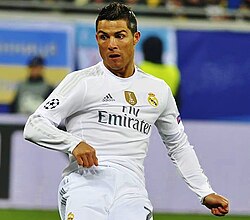
- Leading Goalscorer: Cristiano Ronaldo holds the record for most goals scored.
The Road to Global Competition
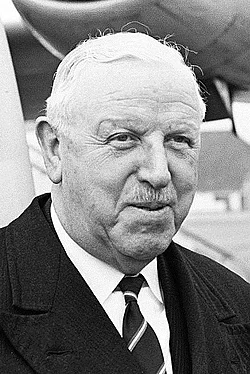
The vision for a truly global club competition was championed by Stanley Rous. As a referee in the 1930 Coupe des Nations and later as a football official, Rous supported early precursors like the Copa Rio and the International Soccer League. In 1967, while serving as FIFA president, he proposed expanding the Intercontinental Cup into an all-confederations tournament under FIFA's auspices.
Inauguration and Early Struggles
The tournament officially launched in 2000 in Brazil, where Corinthians claimed the first title. However, the early years were marked by instability; the 2001 edition was cancelled due to financial difficulties. It wasn't until 2005 that the competition returned as a regular fixture, primarily hosted in Japan for several years.
The Era of Knock-out Tournaments (2005–2023)
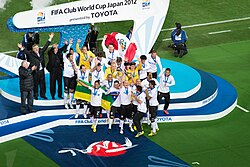
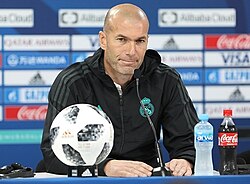
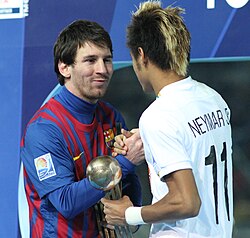
Between 2005 and 2023, the tournament largely followed a knock-out format. This era saw the rise of European dominance, particularly by Spanish giants Barcelona and Real Madrid. Real Madrid achieved a historic milestone in 2017 by becoming the first team to retain the trophy, having won in 2016.
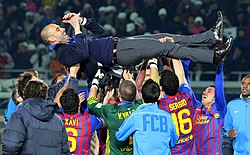
Barcelona also enjoyed significant success during this period, with legendary players like Lionel Messi and Neymar contributing to their multiple titles.
Modern Expansion and Format Changes
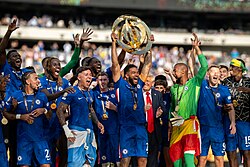
Starting in 2025, the FIFA Club World Cup underwent a massive transformation. The tournament expanded to 32 teams from six confederations, significantly increasing the prestige and the financial stakes. This new era is characterized by a group stage followed by a knockout phase, with the 2025 edition hosted in the United States.
Prize Money and Incentives
The expansion brought unprecedented financial rewards for participating clubs. The current prize structure is designed to reward success at every stage of the competition:
- Winners: $40 million
- Runners-up: $30 million
- Semi-finalists: $21 million
- Quarter-finalists: $13.125 million
- Round of 16: $7.5 million
- Group Stage: $2 million per win / $1 million per draw
Tournament Statistics and Records
The dominance of UEFA (European) clubs is evident in the overall statistics, though CONMEBOL (South American) clubs have provided the strongest competition.
| Confederation | Winners | Runners-up | Third Place |
|---|---|---|---|
| UEFA | 17 | 4 | 0 |
| CONMEBOL | 4 | 11 | 5 |
| AFC | 0 | 3 | 5 |
| CAF | 0 | 2 | 4 |
| CONCACAF | 0 | 1 | 5 |
| OFC | 0 | 1 | 0 |
Individual brilliance has also defined the tournament. Toni Kroos stands alone as the only player to have won the trophy six times, while Cristiano Ronaldo remains the all-time leading goalscorer.

Frequently Asked Questions
Which club has won the most FIFA Club World Cups?
Real Madrid holds the record for the most championships, having won the title 5 times.
How many teams participate in the new 2025 format?
The expanded tournament features 32 teams representing six different continental confederations.
Who is the all-time leading goalscorer of the tournament?
Cristiano Ronaldo is the all-time leading goalscorer in the history of the FIFA Club World Cup.
What is the difference between the Club World Cup and the Intercontinental Cup?
The FIFA Club World Cup is a larger tournament involving champions from all six confederations, whereas the FIFA Intercontinental Cup is a separate annual competition starting in 2024.
How much prize money does the winning team receive in the new format?
The winners of the expanded tournament receive $40 million.