Field Marshal: History, Rank, and Global Traditions
The field marshal (abbreviated as FM) represents the pinnacle of military hierarchy. As the most senior rank, it sits above all other general officer ranks. While historically associated with extraordinary wartime achievements and decisive victories, the role has evolved over centuries, serving variously as a divisional command rank, a brigade command rank, or a purely ceremonial honor.
In some historical contexts, the rank of generalissimo was considered superior to that of field marshal, though this title has largely fallen out of use and is no longer held by any living person.
Key Facts

- Highest Rank: It is the most senior rank in many national armies, surpassing general officer levels.
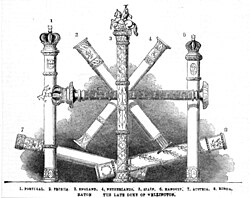
- Symbolism: The traditional attribute of a field marshal is the baton, which is now primarily ornamental.
- Equivalents: In navies, the equivalent is typically Admiral of the Fleet or Grand Admiral; in air forces, it is Marshal of the Air Force.
- Criteria: Promotion often requires exceptional military achievement, though it is frequently granted to royalty or heads of state.
Origins and Evolution
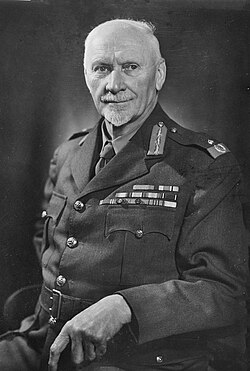
The term dates back to the early Middle Ages, originating from the Old German Marh-scalc, meaning "horse-servant." Initially, the role described the keeper of the king's horses under early Frankish kings. Over time, the term "servant" evolved to denote a subordinate official of high standing.
By the 1600s, formal titles had emerged in Europe, such as the Feldmarschall in the Holy Roman Empire and the Maréchal de camp in France. While the specific nomenclature varies—ranging from "marshal" to "field marshal general"—the core function remained the leadership of the army in the field.
The most iconic symbol of the rank is the baton. While once a functional tool, modern batons are richly decorated ceremonial objects. Some nations deviate from this tradition; for example, the former Soviet Union and post-1991 Russia utilize a jeweled "Marshal's star" instead.
Global Implementations of the Rank
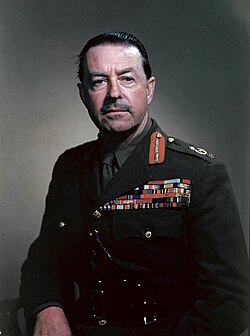
Commonwealth Nations
In Australia, the rank has been rare. Sir William Birdwood was the first appointee in 1925, followed by Sir Thomas Blamey in 1950—the only Australian-born substantive field marshal. More recently, the rank has been held by Prince Philip and King Charles III.
New Zealand currently recognizes King Charles III as its only living field marshal, who simultaneously holds the equivalent highest ranks in the Royal New Zealand Navy and the RNZAF.
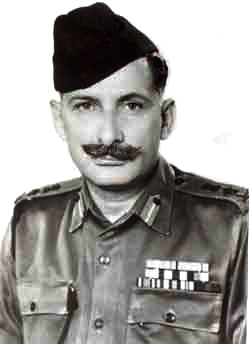
In India, the rank is a ceremonial wartime honor. Only two officers have attained it: Sam Manekshaw (1973) for his leadership during the Bangladesh Liberation War, and K. M. Cariappa (1986) for his service during the 1947–48 Kashmir conflict.
Europe and the Americas
The United Kingdom has a long history with the rank, exemplified by Arthur Wellesley, the 1st Duke of Wellington, who was promoted in 1813.
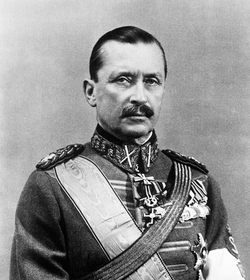
In Sweden, the rank was used from 1609 to 1824 to denote the commander of the mounted army, though it has not been used since 1972. In Finland, C. G. E. Mannerheim reached the rank of field marshal in 1933 before being promoted to the honorary title of Marshal of Finland in 1942.
The United States has never used the title "field marshal." Instead, Congress created the five-star rank of General of the Army in 1944. George Marshall was the first to receive this rank. It is noted that the term "Marshal" was avoided to prevent the undignified address of "Marshal Marshall." Consequently, Douglas MacArthur is the only US officer to hold the rank of field marshal, a title conferred upon him by the Philippines in 1936.
Other International Examples
- Ethiopia: Recently reintroduced in 2022 with the promotion of General Birhanu Jula. Historically, Emperor Haile Selassie held the rank.
- Pakistan: Ayub Khan was the first field marshal (1959). General Asim Munir became the third in 2025.
- Sri Lanka: Sarath Fonseka is the first and only officer to hold this ceremonial rank (2015).
- Uganda: Idi Amin promoted himself to field marshal during his tenure as military dictator.
Comparative Summary of Field Marshal Equivalents
| Branch/Region | Rank Title | Key Characteristic |
|---|---|---|
| Army (Global) | Field Marshal | Often associated with a ceremonial baton. |
| Navy (Commonwealth) | Admiral of the Fleet | Highest naval rank equivalent to FM. |
| Air Force (Commonwealth) | Marshal of the Air Force | Highest air rank equivalent to FM. |
| United States Army | General of the Army | Five-star rank created in 1944. |
| Russia (Post-Soviet) | Marshal of the Russian Federation | Uses a jeweled star instead of a baton. |
Frequently Asked Questions
What is the difference between a General and a Field Marshal?
A general is a high-ranking officer, but a field marshal is the most senior rank possible, sitting above all general officer grades. In many countries, field marshal is a ceremonial or wartime rank reserved for exceptional achievement.
Why does the US Army not use the title Field Marshal?
The US uses the rank of General of the Army (five-star). Historical accounts suggest the title "Marshal" was avoided to prevent the repetitive and undignified phrasing of "Marshal Marshall" when George Marshall was promoted.
What is a marshal's baton?
A baton is a traditional ornamental staff carried by field marshals as a symbol of their authority. While once functional, they are now typically richly decorated ceremonial items.
Is the rank of Field Marshal still used today?
Yes, though its usage varies. In some countries, it is a current active rank; in others, it is purely ceremonial, reserved for royalty, or only activated during times of war.
Who was the first field marshal in Pakistan?
Ayub Khan was promoted to field marshal in 1959, becoming the first person in Pakistan's history to hold the rank.