Federal Coat of Arms of Germany
The Federal coat of arms of Germany, known as the Bundesadler (Federal Eagle), is the primary heraldic symbol of the Federal Republic of Germany. Characterized by a black eagle on a golden field, this emblem is not merely a modern design but a reflection of centuries of German political history, evolving through empires, republics, and periods of unification.
The current design is a re-introduction of the coat of arms used during the Weimar Republic. Specifically, the official version used today was designed by Karl-Tobias Schwab in 1928 and formally adopted by the Federal Republic in 1950. Since the reunification of Germany in 1990, the Bundesadler has served as the symbol for the entire reunified nation.
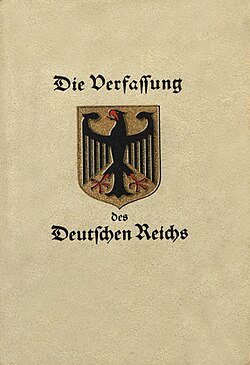
Key Facts
- Official Name: Bundesadler (Federal Eagle).
- Blazon: Or, an eagle displayed sable armed beaked and langued gules (A black eagle with red beak and claws on a gold background).
- Current Design: Created by Karl-Tobias Schwab in 1928.
- Adoption Date: Formally adopted by the Federal Republic of Germany in 1950.
- Legal Basis: An announcement dated January 20, 1950, by President Theodor Heuss, Chancellor Konrad Adenauer, and Interior Minister Gustav Heinemann.
Historical Evolution of the German Eagle
The Holy Roman Empire
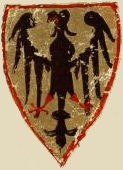
The tradition of the imperial eagle dates back to the 13th century. Initially, the coat of arms featured a single-headed black eagle on a gold field. However, by 1433, under Emperor Sigismund of Luxemburg, the double-headed eagle was adopted, becoming the enduring symbol of the Holy Roman Empire of the German Nation.
The German Confederation and 1848 Revolution
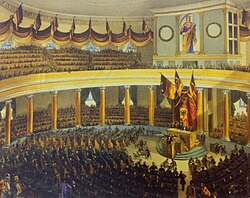
Following the dissolution of the Holy Roman Empire, the German Confederation (1815–1866) initially lacked its own coat of arms, often using the Austrian Empire's double-headed eagle. During the 1848 revolution, the National Assembly in Frankfurt attempted to introduce a new version: a double-headed eagle without monarchical symbols (such as the crown and scepter), resting on a golden shield and accompanied by black-red-gold flags.
The German Empire (1871–1918)
The German Empire returned to a single-headed eagle, looking to the right. This choice symbolized that Austria and Bohemia were not part of this new empire. This Reichsadler was more realistic in style and featured the heraldic crown of the German Empire. It also included a breast shield representing the Prussian kings as the dynasts of the empire.
The Weimar Republic and the Modern Era
With the birth of the Weimar Republic (1919–1933), all monarchical symbols—including the crown and the Prussian breast shield—were removed. The republic sought to align itself with the democratic movements of 1848. In 1928, the stylized design by Karl-Tobias Schwab became the official emblem, which provided the blueprint for the current Bundesadler adopted in 1950.
Official Use and Variations
The federal eagle appears across various state institutions, though the artistic rendering may vary. For example, the eagle in the Bundestag (the German parliament) is notably larger and plumper, earning it the nickname Fette Henne ("Fat Hen"). This same plump version is found on German euro coins.
Other official depictions are found on the standard of the President, official seals, and the federal institutions flag. While the 1997 Federal Press Office introduced a simplified version for corporate design and media, it remains an unofficial rendering as it is not codified in the binding patterns of 1952.
| Era | Eagle Type | Key Characteristics |
|---|---|---|
| Holy Roman Empire | Single $\rightarrow$ Double-headed | Gold field; double-headed from 1433. |
| German Empire | Single-headed | Imperial crown; Prussian breast shield. |
| Weimar Republic | Single-headed | Removal of monarchical symbols; Schwab design (1928). |
| Federal Republic | Single-headed | Based on Weimar design; known as Bundesadler. |
Frequently Asked Questions
What does the term "Or, an eagle displayed sable" mean?
This is heraldic language (blazon). "Or" refers to the gold background, "eagle displayed" means the eagle is shown with wings spread, and "sable" refers to the color black.
Why is the parliament's eagle called the "Fat Hen"?
The eagle decorating the chamber of the Bundestag is a particularly large and plump artistic rendition, leading to the colloquial nickname Fette Henne.
How does the Federal Republic's eagle differ from the German Empire's eagle?
The Federal Republic's eagle (the Bundesadler) lacks the imperial crown and the Prussian breast shield that were central to the German Empire's Reichsadler.
Who designed the current official coat of arms?
The current official design was created by Karl-Tobias Schwab in 1928, originally for the Weimar Republic, before being adopted by the Federal Republic in 1950.
Is the simplified version used by the Federal Press Office official?
No. While used for corporate design and media since 1997, it has no official legal status as it is not mentioned in any ordinance or the binding patterns of 1952.