Facturas: The History and Variety of Argentina's Iconic Pastries
In Argentina, the morning ritual or afternoon tea is rarely complete without facturas. While the term is used broadly to describe a wide array of pastries, sweet breads, cakes, and even salty baked snacks, these treats are more than just confectionery. They represent a fusion of global influences and a rebellious streak of political history.
Originally introduced by immigrants from the French, German, and Italian confectionery industries, facturas have evolved into a cornerstone of Argentine culinary identity. While similar baked goods are known as bizcochos in Uruguay, the Argentine version carries a unique legacy tied to the labor movements of the late 19th century.
Key Facts
- Definition: A general term for Argentine pastries, including sweet breads, viennoiserie (yeast-leavened pastries), and salty snacks.
- Origins: Influenced by millions of immigrants from Italy, Spain, Germany, Russia, Armenia, and Syria between 1880 and 1930.
- Political Roots: Many modern names were created by anarchist bakery workers to mock authorities.
- Etymology: The word "factura" means "invoice" in Spanish, symbolizing the value of the worker's labor.
The Anarchist History of Argentine Pastries
The story of the factura is deeply intertwined with the birth of labor unions in Argentina. In 1887, Italian immigrants and anarchists Errico Malatesta and Ettore Mattei founded the Sociedad Cosmopolita de Resistencia y Colocación de Obreros Panaderos, the country's first labor union for bakery workers.
Tensions peaked in 1888 when bakery workers in Buenos Aires launched a 15-day strike. During this era of social unrest, workers began renaming traditional pastries as a form of ridicule and protest against the repression they faced from those in power.
For instance, the traditional Berliner was renamed Borlas de fraile ("Friar's tassels") or Bolas de Fraile ("Friar's balls") to offend religious and state authorities. Even the term "factura" itself—meaning "invoice"—was a deliberate choice to link the food to the economic value of the workers' hard labor.
Types of Facturas
Argentine bakeries offer a diverse selection of treats, categorized primarily by their flavor profile. The sweet varieties often feature creams, jams, or glazes, while the salty options provide a savory contrast.
Sweet Facturas
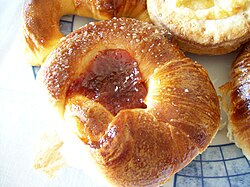
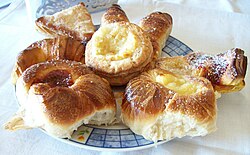
The sweet category is the most expansive, ranging from the buttery Medialuna to the fruit-filled Pastelitos criollos. Other popular varieties include the Cañoncito, Churro, Huevo frito, Lengüita, Moñito, Pan de leche, Sacramento, Tortita negra (also known as Cara sucia), and the Vigilante.
One standout is the Margarita, often paired with dulce de membrillo (sweet quince paste).
Salty Facturas
While less common than the sweet versions, salty baked goods are a staple for those seeking a savory snack. Notable examples include the Cremona, the Librito, and a specific version of the Medialuna made with grease rather than butter.
Summary of Argentine Facturas
| Category | Common Examples | Primary Influence/Origin |
|---|---|---|
| Sweet | Medialuna, Bolas de Fraile, Cañoncito | European (French, Italian, German) |
| Salty | Cremona, Librito, Grease Medialuna | Local Argentine adaptations |
| Political | Bolas de Fraile, "Factura" (Invoice) | Anarchist Labor Unions (1880s) |
Frequently Asked Questions
What does the word "factura" actually mean?
In Spanish, "factura" translates to "invoice." The name was adopted by bakery workers to emphasize the connection between the product and the value of their labor.
Who influenced the creation of facturas in Argentina?
Facturas were shaped by millions of immigrants who arrived between 1880 and 1930, primarily from Italy, Spain, Germany, and Russia, as well as Armenia and Syria.
Why are some pastries named after friars?
Names like Bolas de Fraile were created by anarchist workers in the late 19th century to ridicule and insult the authorities and the church during labor disputes.
What is the difference between a factura and a bizcocho?
While very similar in nature, facturas is the term used in Argentina, whereas bizcochos is the term used for similar baked goods in Uruguay.
Are all facturas sweet?
No. While the majority are sweet, there are salty varieties such as the Cremona and Librito, as well as savory versions of the Medialuna.