Extracts and Essences: The Science of Concentrated Flavor and Aroma
In the worlds of culinary arts, perfumery, and pharmaceuticals, few substances are as vital as the extract. An extract, often referred to as an essence, is a concentrated substance created by pulling specific components out of a raw material. This process typically involves a solvent—a substance like ethanol, oil, or water—to draw out the desired aromatic or flavorful properties.
Depending on the method used and the intended application, these substances may be sold in various forms, including tinctures, absolutes, or even as dried powders. Because they capture the very soul of a plant or spice, extracts are indispensable ingredients in cosmetics, medicines, perfumes, and the global food industry.
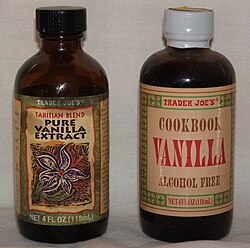
Vanilla extract
Key Facts
- Extracts are produced by using solvents like water, oil, or ethanol to isolate parts of a raw material.
- Common natural extracts include vanilla, cinnamon, peppermint, rose, and citrus.
- Extraction methods range from physical pressing to complex chemical distillation.
- Artificial flavors are often created by combining esters, such as ethyl acetate, to mimic fruit tastes.
- Natural extracts are generally more delicate in flavor than their artificial counterparts.
Common Extraction Methods
To obtain the aromatic principles found in flowers, fruits, roots, and herbs, scientists and producers employ several distinct techniques. The choice of method depends on the feedstock and the desired concentration of the final product.
Physical and Chemical Techniques
Expression is a physical method involving juicing or pressing. This is most effective when the oil is plentiful and easily accessible, such as in the peels of citrus fruits, olives, or grapes.
Absorption involves soaking a material in a solvent. This technique is commonly used for tea leaves or vanilla beans, where the solvent pulls the essence into the liquid through a process known as steeping or decoction.
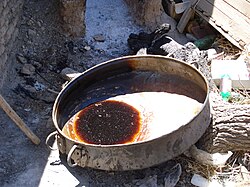
Traditional extraction pot in Iran
Maceration is a gentler approach used to soften and degrade material without the application of heat. This is frequently seen in winemaking or the production of peppermint extract, often utilizing oils as the medium.
Distillation is a more complex separation process. By heating a material to a specific boiling point, the extract is vaporized, collected, and then condensed back into a liquid. This creates a highly concentrated extract while leaving unwanted solid material behind, a method famously used for lavender extract.
Natural vs. Artificial Flavors
While many fruits provide wonderful flavors in their raw state, only a few—such as vanilla beans, oranges, and lemons—are practical sources for highly concentrated natural extracts. For many other popular flavors, the industry turns to synthetic alternatives.
Most concentrated flavors for fruits like strawberry, raspberry, peach, pineapple, cherry, and banana are produced by combining specific esters (organic compounds) with specialized oils. For example, amyl acetate and amyl butyrate are the primary components used to create artificial banana, pineapple, and strawberry essences. While these artificial versions may lack the subtle delicacy of true natural essences, they provide a cost-effective and functional alternative when natural sources are too expensive or unavailable.
| Category | Common Examples | Primary Method/Component |
|---|---|---|
| Natural Extracts | Vanilla, Cinnamon, Rose, Peppermint | Distillation, Maceration, or Absorption |
| Expression-Based | Citrus peel, Olive, Grape | Pressing or Juicing |
| Artificial Flavors | Banana, Strawberry, Pineapple | Esters (e.g., Ethyl acetate, Amyl acetate) |
Frequently Asked Questions
What is the difference between an extract and an essential oil?
While related, an extract is a substance made by extracting parts of a raw material using a solvent like ethanol or water, whereas essential oils are often the specific aromatic compounds obtained through processes like distillation or expression.
How are artificial fruit flavors created?
Artificial fruit flavors are typically produced by combining various esters with special oils. For instance, amyl acetate is a key factor in creating artificial banana and pineapple flavors.
Why aren't all fruit flavors natural?
Only a few fruits, such as lemons and vanilla beans, are practical sources for sufficiently concentrated natural extracts. For many others, like strawberry or peach, it is more efficient to use synthetic combinations.
What is maceration?
Maceration is an extraction technique that involves soaking material in a medium, such as oil, to soften and degrade it without using heat.
What are the main uses for extracts?
Extracts are widely utilized across multiple industries, including food production, perfumes, cosmetics, and pharmaceuticals.