European University at Saint Petersburg: A History of Academic Independence
The European University at Saint Petersburg (EUSP) emerged from a vision to challenge the traditional state higher education system in Russia. Conceived during the democratic revival of the late 1980s, the institution was designed as a response to the brain drain—the migration of highly skilled intellectuals and academics leaving the country during the twilight of the Soviet Union.
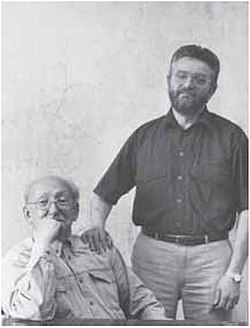
The university's identity is deeply tied to its location. While discussions were underway to establish an American University in Moscow, Leo Klejn, a professor of Archaeology at Saint Petersburg State University, proposed a "European" alternative. He believed that Saint Petersburg, historically regarded as Russia's "window on Europe," was the ideal setting for such an institution.
By the early 1990s, this vision transitioned into a concrete plan through the collaboration of intellectuals and political figures, including Anatoly Sobchak, the first Mayor of Saint Petersburg, and Boris Firsov, then President of the Saint Petersburg Branch of the Institute of Sociology of the Russian Academy of Sciences.
Key Facts
- Founded: Registered with state authorities on November 28, 1994.
- Location: Based in Saint Petersburg, Russia.
- Funding: Supported early on by the Ford Foundation and the John D. and Catherine T. MacArthur Foundation.
- Innovation: First higher education institution in Saint Petersburg to establish an endowment fund (May 2007).
- Academic Scope: Offers programs in Economics, Ethnology, History, Political Science, Sociology, and History of Arts.
Institutional Growth and Academic Milestones
Following its registration, EUSP secured municipal funding in 1995 for the maintenance and rental of its building at 3 Gagarinskaya Street. The university's academic engine truly ignited in 1996 when grants from the Ford Foundation and the MacArthur Foundation enabled the launch of its main academic programs.
The university expanded rapidly through the late 1990s and early 2000s:
- 1996: Licensing of the Economics, Ethnology, History, Political Science, and Sociology departments.
- 1997: Launch of the Department of History of Arts graduate courses and the International Programme in Russian Studies (IMARS), which is conducted in English.
- 2000: First student admissions for the main academic program in the Department of History of Arts.
- 2004: Official accreditation by the Russian Federal Body for Control over the Higher Professional Education.
- 2006: Acquisition of the state license to confer doctorate degrees.
The university's commitment to financial sustainability was highlighted in May 2007 when it became the second institution in Russia to create an endowment fund—a legal entity that manages donated funds to provide long-term financial support.
Challenges to Academic Freedom
The history of EUSP has not been without conflict. In 2007, the university received a €700,000 grant from the European Commission to improve election monitoring in Russia. This project drew sharp criticism from the Russian government and was ultimately closed on January 31, 2008, following government threats.
Shortly after the project's closure, the university faced a sudden legal challenge. Following a fire safety inspection, a Saint Petersburg court ordered the university to close for six weeks, from February 7 to March 21, 2008. This event, widely viewed as political pressure disguised as regulatory enforcement, sparked protests from students, staff, and the international academic community.
The university resumed operations on March 24, 2008, after the court deemed the fire regulations sufficient. This period of turmoil was later documented in the film Pugovka (A Button), produced by EUSP anthropology professor Iliya Utekhin.
In 2016, the university faced further administrative hurdles when it lost its accreditation following an audit by the Federal Service for Supervision in Education and Science, which cited documentation violations. Despite these challenges, the university has continued its academic mission and maintained diplomatic ties with government officials, including visits from the Minister for Education and Science.
EUSP Timeline and Milestones
| Year | Event | Significance |
|---|---|---|
| 1994 | State Registration | Official establishment of the university. |
| 1996 | Main Academic Programs Launch | Opening of five core departments. |
| 1997 | IMARS Launch | Introduction of English-taught Russian studies. |
| 2004 | Federal Accreditation | Official recognition of professional education standards. |
| 2007 | Endowment Fund Created | Pioneered long-term financial sustainability in the region. |
| 2008 | Temporary Closure | Six-week closure due to fire safety rulings. |
Frequently Asked Questions
Why was the European University at Saint Petersburg founded?
It was founded to create an alternative to the standard state higher education system in Russia and to combat the "brain drain" of intellectuals during the late Soviet and early post-Soviet era.
What is the IMARS program?
IMARS stands for the International Programme in Russian Studies, an English-taught program offered by the Department of Political Science and Sociology.
What caused the temporary closure of the university in 2008?
The university was closed for six weeks by a court ruling following a fire safety inspection, though many viewed this as political pressure resulting from a European Commission-funded election monitoring project.
Who provided the initial funding for the academic programs?
The main academic programs were made possible through grants from the Ford Foundation and the John D. and Catherine T. MacArthur Foundation.
Has the university ever lost its accreditation?
Yes, in 2016, the university lost its accreditation following an audit by the Federal Service for Supervision in Education and Science due to violations in academic documentation.