European Road Networks and Highway Systems
Europe possesses one of the most complex and integrated transport infrastructures in the world. From the high-speed Autobahns of Germany to the scenic national roads of Iceland, the continent's road networks are categorized by varying levels of administration, speed, and purpose, facilitating the movement of millions of people and goods across international borders.
Key Facts
- Europe utilizes diverse naming conventions for high-speed roads, including Motorways, Autobahns, and Autoroutes.
- Road systems are typically divided into national, regional, and provincial jurisdictions.
- Infrastructure ranges from massive federal highway networks in Russia and Germany to specialized urban street layouts in cities like Dublin and Valletta.
- Many countries maintain a distinction between high-capacity motorways and general national roads.
High-Capacity Motorway Systems
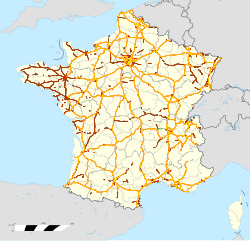
Across Western and Central Europe, high-capacity roads are designed for long-distance travel with limited access points. In France, these are known as Autoroutes, which form a dense web connecting major cities and regions.
Germany is world-renowned for its Autobahns, a system of federal highways that serves as the backbone of Central European logistics. Similarly, the United Kingdom, Belgium, the Netherlands, and Sweden maintain extensive motorway lists to manage high-volume traffic flow.
Southern and Eastern European Networks
In Southern Europe, Spain, Italy, and Greece operate sophisticated motorway systems. Italy further categorizes its network into state highways, regional roads, and provincial roads to manage different levels of traffic density. In Eastern Europe, Poland and Romania utilize national road systems, with Poland specifically employing Voivodeship roads (regional roads managed by the province).
National and Regional Road Classifications
Beyond motorways, most European nations maintain a secondary tier of roads. France utilizes the Route nationale for primary non-motorway transit, while Germany maintains a separate list of federal highways. In the Nordic regions, Sweden and Finland rely on national road systems to connect sparsely populated areas.
Russia's network is characterized by its immense scale, featuring Russian federal highways. Notable examples include the Georgian Military Road and the historical Amur Cart Road, reflecting the country's vast geography and history.
Island and Small State Infrastructure
Island nations such as Iceland, Ireland, Cyprus, and Malta have road systems tailored to their unique geography. While Ireland and Cyprus maintain standard road and motorway lists, Malta's transport focus is highly concentrated, with detailed records of streets and piazzas in its capital, Valletta. Similarly, Dublin in Ireland maintains specific lists of its streets and squares.
Summary of European Road Types
| Country | Primary High-Speed Road | Secondary/Regional Road |
|---|---|---|
| Germany | Autobahn | Federal Highway |
| France | Autoroute | Route nationale |
| Italy | Motorway | State/Regional/Provincial Road |
| Poland | Motorway | National/Voivodeship Road |
| Russia | Federal Highway | Regional Road |
Frequently Asked Questions
What is the difference between an Autobahn and an Autoroute?
Both are high-capacity, limited-access highways; however, Autobahn is the specific term used in Germany, while Autoroute is the term used in France.
What are Voivodeship roads in Poland?
Voivodeship roads are a category of regional roads in Poland that are managed at the provincial (voivodeship) level rather than the national level.
How does Italy categorize its non-motorway roads?
Italy divides its road network into state highways, regional roads, and provincial roads based on the level of government responsible for their maintenance and their strategic importance.
Which historical roads are mentioned in the Russian network?
The source mentions the Georgian Military Road and the historical Amur Cart Road as notable parts of the Russian road landscape.
Do small nations like Malta have motorway systems?
While Malta has transport infrastructure, the focus is often on urban layouts, such as the streets and piazzas found in Valletta, due to the country's small size.