Eugen Haile: The German-American Master of the Lyric Song
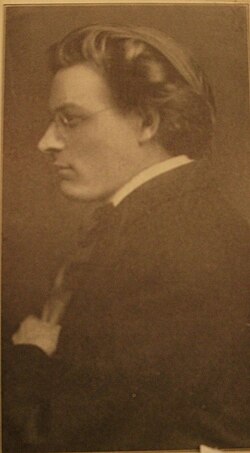
Eugen Haile (1873–1933) was a distinguished German-American composer, singer, and accompanist who dedicated his life to the art of the song. Often described as a lineal descendant of great lyricists such as Schubert, Schumann, and Brahms, Haile bridged the gap between traditional German romanticism and the emerging modernism of the early 20th century.
Key Facts
- Born: February 21, 1873, in Ulm, Germany.
- Education: Studied violin, piano, and composition at the Stuttgart Conservatory (1887–1894).
- Major Works: Composed approximately 200 songs, three operas, and the musical setting for the play The Happy Ending.
- Style: Transitioned from a melodic, conservative style to a more modern, declamatory approach.
- Legacy: His papers and scores are preserved at the New York Public Library for the Performing Arts.
Early Life and Education
Born in the town of Ulm, Germany—a region steeped in Meistersinger traditions on the edge of the Black Forest—Haile was the son of a local butcher. His formal musical journey began at age 14 when he entered the Stuttgart Conservatory. Over seven years of rigorous study, he mastered the violin, piano, and the art of composition, providing the foundation for his future career as a versatile musician.
Career and Migration to America
In his early years, Haile focused on songs that resonated with audiences, though they often lacked the approval of musical authorities. During his time in Stuttgart, he began work on his first opera, Harald der Geiger. When the librettist moved to the United States, Haile followed in 1903, eventually settling in Scranton, Pennsylvania.
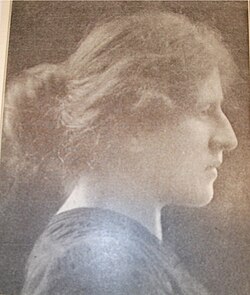
It was during this period that he married Elise, a German contralto who had also worked in Stuttgart. Together, they became a formidable musical duo, performing recitals across New York City where they eventually settled.
The New York Years
By the first decade of the 20th century, the Hailes were active figures in the New York music scene. Haile's works were championed by singers like Theodore Van Yorx and Ludwig Hess, the latter of whom performed pieces such as "Teufelslied" and "Es vegnet" in their original German. Haile himself, a baritone, frequently served as the accompanist for these performances.
Evolution of Compositional Style
Haile's musical output is characterized by a fascinating shift in style. Initially, he was praised for his "poetic genius" and ability to write tender, melodic songs. However, by early 1912, he began introducing a more modern, declamatory style. This approach focused more on the translation of poetic sentiment into tonal utterances than on traditional melody.
Despite this evolution, Haile never fully abandoned his conservative roots. Critics noted that some of his later works remained free from the dissonances of the modern era, showing the clear influence of Chopin and Wagner.
Overcoming Adversity: Illness and Late Success
Between 1912 and 1913, Haile suffered a devastating health crisis that left him almost entirely paralyzed. This condition forced him to stop composing and teaching for several years. To support him, the Eugen Haile Society was formed in New York in 1914 to raise funds and promote the publication of his music.
In a remarkable feat of determination, Haile returned to composition in 1916. While still unable to walk, he dictated the orchestral score for the play The Happy Ending over six months. This work utilized Sprechstimme—a vocal technique that combines spoken words with pitch inflections—and made extensive use of leitmotifs (recurring musical themes associated with specific characters or ideas).
Haile's final years saw the realization of a lifelong dream. On June 30, 1933, his opera Harold's Dream was performed in Woodstock, New York, shortly before his death later that year.
Summary of Musical Works
| Category | Notable Works | Details |
|---|---|---|
| Solo Songs | "Herbst", "König Elf", "Der Egoist" | Approx. 200 written; 65 published. |
| Operas | Harold's Dream, Viola d'Amore, Harald der Geiger | Harold's Dream premiered in 1933. |
| Stage Works | The Happy Ending | Musical setting for a play (1916). |
| Choral/Other | Christabend, Peace | Cantatas for chorus and soloists. |
| Children's Music | A Riddle Book with Melodies | Published by H. W. Gray Co. in 1924. |
Frequently Asked Questions
What was Eugen Haile's primary musical contribution?
Haile is best known for his approximately 200 songs written to German texts, which blended traditional lyricism with more modern, declamatory elements.
How did Haile compose music after becoming paralyzed?
For his 1916 work The Happy Ending, Haile dictated the orchestral score over a period of six months because he was unable to physically write.
What is Sprechstimme, and how did Haile use it?
Sprechstimme is a vocal style between speaking and singing. Haile employed this technique in The Happy Ending to combine spoken words with specific pitch inflections.
Which of Haile's operas was actually produced?
While Harald der Geiger and Viola d'Amore remained unfinished, Harold's Dream was performed in Woodstock, New York, on June 30, 1933.
Where can researchers find Eugen Haile's original scores?
The Eugen Haile Papers collection, including many of his published and unpublished songs, is housed at the New York Public Library for the Performing Arts.