Estadio Monumental Banco Pichincha: The Colossus of Guayaquil
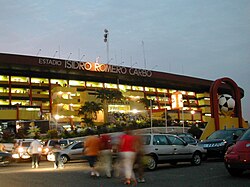
Located in the Bellavista neighborhood of Guayaquil, Ecuador, the Estadio Monumental Banco Pichincha stands as a landmark of South American sports architecture. Known affectionately as "El Coloso del Salado" or "El Templo," this massive venue serves as the fortress for Barcelona Sporting Club (Barcelona SC) and holds the distinction of being the largest stadium in Ecuador.
With a capacity of 57,267 spectators for international matches, the stadium is a hub of passion and history, situated just 10 meters (32.8 feet) above sea level. Its presence in Guayaquil symbolizes the ambition and scale of Ecuadorian football.
Key Facts
- Capacity: 57,267 (International)
- Location: Guayaquil, Ecuador
- Owner/Operator: Barcelona Sporting Club
- Architect: Jose Viteri
- Field Dimensions: 105 x 70 meters
- Inauguration Date: December 27, 1987
The History and Legacy of the Monumental
The vision for the stadium began with Isidro Romero Carbo, the president of Barcelona SC. At the time, the club played its home matches at the Estadio Modelo Alberto Spencer Herrera, but Romero Carbo sought a dedicated home that the club could own and operate independently.
The stadium officially opened its doors on December 27, 1987. The inaugural match featured a clash against the Uruguayan side Peñarol, which resulted in a 1-3 defeat for Barcelona SC. Despite the loss, the event was a grand celebration, attracting global football icons including the legendary Pelé. Upon seeing the venue, Pelé famously remarked that while the Maracanã might be the largest stadium in the world, the Monumental was one of the most beautiful. This compliment is permanently commemorated by a golden plaque within the stadium.
Major Events and Infrastructure
Beyond club matches, the stadium has played a pivotal role in international football. Most notably, it hosted five matches of the 1993 Copa América, including the tournament final.
The facility is more than just a pitch; it encompasses approximately 5,100 square meters of supporting infrastructure, including restaurants, clothing and souvenir shops, and healthcare facilities. For training, the club utilizes the Alternate Field Sigifredo Agapito Chuchuca, named after one of the most distinguished midfielders in the team's history.
Naming Rights and Connectivity
In January 2008, then-president Eduardo Maruri entered into a four-year naming rights agreement with Banco Pichincha, an Ecuadorian bank. While the contract was renewed, the partnership eventually concluded in 2015. To improve accessibility, plans were scheduled for 2021 to connect the stadium to the "Aerovia" Julian Coronel station in downtown Guayaquil via a cable car or aerial lift.
Stadium Specifications
| Feature | Detail |
|---|---|
| Full Name | Estadio Monumental Banco Pichincha |
| Former Name | Monumental de Barcelona |
| Construction Cost | $70,000,000 |
| Surface Type | Grass |
| Coordinates | 2°11′9.13″S 79°55′29.75″W |
| Primary Tenant | Barcelona S.C. |
Frequently Asked Questions
Who is the primary tenant of the stadium?
The stadium is owned and operated by Barcelona Sporting Club, who have played there since 1987. The Ecuador national football team also uses the venue for selected matches.
How large is the playing field?
The football field measures 105 meters in length and 70 meters in width.
What is the significance of the golden plaque in the stadium?
The plaque celebrates a quote by Pelé, who described the Monumental as one of the most beautiful stadiums in the world during its inauguration.
Was the stadium used for any major international tournaments?
Yes, the stadium hosted five matches of the 1993 Copa América, including the final match.
Who designed the stadium?
The Estadio Monumental Banco Pichincha was designed by architect Jose Viteri.