Erzurum: A High-Altitude Hub of History and Winter Sports
Perched at an elevation of 1,890 meters (6,200 feet) in eastern Turkey, Erzurum is a city where ancient heritage meets modern athletic ambition. Known historically as Theodosiopolis and Karin, it serves as the capital of Erzurum Province and stands as one of the highest major urban centers in the region. From its strategic military importance in the Middle Ages to its current status as a premier destination for winter sports, Erzurum offers a unique blend of cultural depth and natural beauty.
The city is defined by its stark, high-altitude landscape and a history of resilience, having been a crossroads for the Byzantine, Seljuk, Mongol, Safavid, and Ottoman Empires.
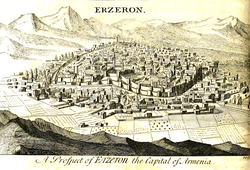
Key Facts
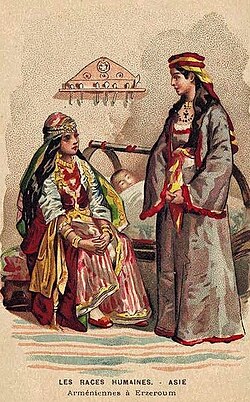
- Elevation: 1,890 meters (6,200 feet) above sea level.
- Climate: Humid continental (Dfb), characterized by very cold, snowy winters.
- Major Landmarks: Çifte Minareli Medrese and Yakutiye Medresesi.
- Sports Legacy: Host of the 2011 Winter Universiade and 2023 Winter Deaflympics.
- Historical Names: Theodosiopolis (Byzantine) and Karin (Armenian).
Historical Evolution
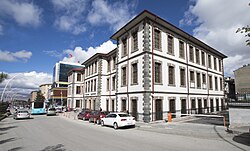
Ancient and Medieval Eras
The city's early history is marked by its role as the Byzantine stronghold of Theodosiopolis. In the 10th century, Byzantine forces resettled the city with Greek and Armenian populations. Following the Battle of Manzikert in 1071, the Seljuk Turks took control, and the city eventually became the center of the Saltukid beylik (principality) until 1202.
Throughout the Middle Ages, Erzurum was a contested prize. It endured a devastating Mongol siege in 1242 and later passed through the hands of the Ilkhanate, the Empire of Trebizond, the Timurid Empire, and various Turkmen beyliks. By 1514, the Ottomans secured the city after the Battle of Chaldiran, establishing it as a primary military base in the east.
The Ottoman Period and Modern Transition
Under Ottoman rule, Erzurum served as the capital of its own eyalet (province). The 19th century brought significant conflict, including occupations by the Russian Empire during the Russo-Turkish War of 1877–1878. This era is remembered locally through figures like Nene Hatun, a folk heroine who displayed immense bravery during the recapture of Fort Aziziye.
World War I and the Republic
The early 20th century was a period of profound tragedy and political transformation. During the 1915 Armenian genocide, the city's Armenian population—which included significant educational and cultural institutions like the Sanasarian College—was deported and killed en masse.
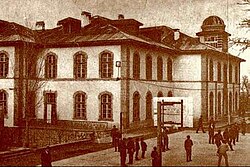
Following the turmoil of World War I, Erzurum became a pivotal site for the birth of the modern Turkish Republic. In 1919, Mustafa Kemal Atatürk resigned from the Ottoman army here and convened the Erzurum Congress, a foundational event for the Turkish War of Independence.
Culture and Architecture
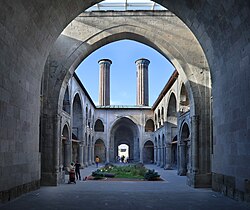
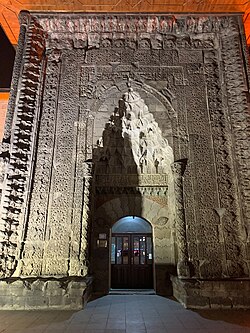
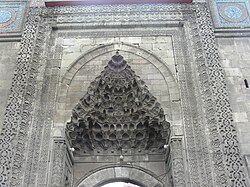
Erzurum's skyline is dominated by Seljuk-era architecture. The Çifte Minareli Medrese (Twin Minaret Madrasa) is the city's most iconic symbol, appearing on its official coat of arms. Another architectural gem is the Yakutiye Medresesi, which showcases the intricate stone carvings and interior design of the period.
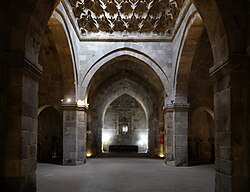
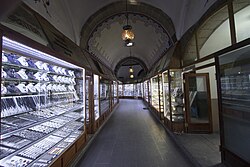
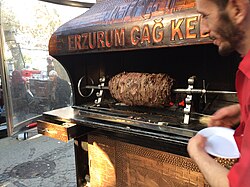
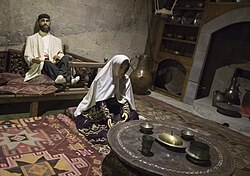
Beyond its monuments, the city maintains traditional commercial hubs like Taşhan, where jewelry shops continue to thrive, and a culinary tradition famous for Cağ Kebab, a regional specialty of marinated lamb grilled on horizontal skewers.
Winter Sports and Modern Infrastructure
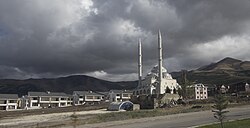
Leveraging its cold climate and the slopes of Mount Palandöken, Erzurum has transformed into a global winter sports hub. The city has invested heavily in infrastructure, including the K-95 and K-125 ski jumping towers at Kiremitliktepe and the Kazım Karabekir Stadium.
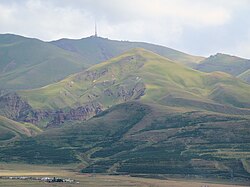
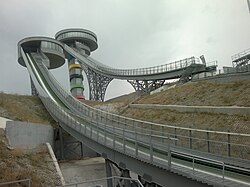
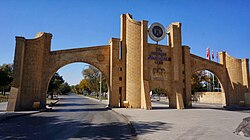
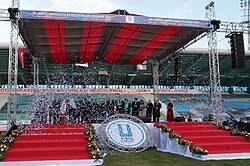
These facilities allowed Erzurum to host prestigious international events, most notably the 25th Winter Universiade in 2011 and the 2023 Winter Deaflympics. Today, the city balances this sporting modernity with academic growth, led by institutions such as Atatürk University.
Climate and Geography
Erzurum experiences a humid continental climate. Winters are exceptionally cold, with January temperatures often averaging around −16 °C (3 °F) and record lows reaching −37.2 °C (−35.0 °F). Summers are warm and dry, with August averages around 28 °C (82 °F). This extreme temperature variance makes the city more climatically similar to Russia than to the Mediterranean coast of Turkey.
| Month | Mean Max Temp (°C) | Mean Min Temp (°C) | Avg Precipitation (mm) | Avg Snowy Days |
|---|---|---|---|---|
| January | −4.0 | −15.9 | 16.2 | 15.2 |
| April | 12.1 | −0.7 | 55.9 | 4.32 |
| July | 27.7 | 9.9 | 21.9 | 0.04 |
| October | 16.4 | 0.3 | 46.8 | 11.84 |
Frequently Asked Questions
What is the significance of the Çifte Minareli Medrese?
The Çifte Minareli Medrese is a Seljuk-era madrasa (educational institution) that serves as the primary symbol of Erzurum and is featured on the city's coat of arms.
Why is Erzurum important to the history of the Turkish Republic?
Erzurum was the site of the 1919 Erzurum Congress, a critical starting point for the Turkish War of Independence, and is where Mustafa Kemal Atatürk received his first citizenship registration of the new Republic.
What are the best winter sports facilities in the city?
The city is renowned for the Mount Palandöken ski resort and the Kiremitliktepe ski jumping towers (K-95 and K-125), which have hosted multiple international championships.
What is the traditional food of Erzurum?
The most famous culinary specialty of the region is Cağ Kebab, a unique style of lamb kebab grilled on a horizontal spit.
How cold does it get in Erzurum during winter?
Erzurum has very harsh winters; the average minimum temperature in January is around −16 °C (3 °F), with record lows reaching as far as −37.2 °C (−35.0 °F).