Eranthis: A Guide to the Winter Aconite and Its Unique Biology
As the frost lingers and the landscape remains dormant, a small but resilient group of flowers begins to emerge. Known commonly as winter aconite, the genus Eranthis belongs to the buttercup family, Ranunculaceae. These hardy plants are among the first signs of life in the transition from winter to spring, often blooming while snow still covers the ground.
The name "winter aconite" is derived from two distinct characteristics: their remarkably early flowering period and the physical resemblance of their leaves to the Aconitum genus, commonly known as true aconite. While they share a name and family, their biological makeup is quite distinct.
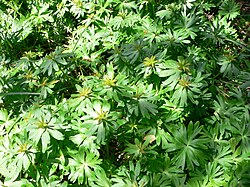
Biological Characteristics and Growth Habits
Eranthis species are herbaceous perennials—plants that live for several years and die back to the ground each season—typically reaching heights of only 10–15 cm (4–6 inches). They are classified as spring ephemerals, a specialized group of plants that complete their life cycle very quickly in the early spring. This strategy allows them to thrive on forest floors, capturing sunlight before the canopy of deciduous trees fully develops and casts deep shade.
The lifecycle of the winter aconite is a finely tuned race against the changing seasons:
- Flowering: In mild climates, flowers can appear as early as January. They are highly frost-tolerant and can survive under fresh snow.
- Foliage: Unlike many plants, the leaves of Eranthis only expand fully once the flowering stage is nearly complete. These peltate leaves (shield-shaped) are 5–8 cm in diameter and feature several notches.
- Dormancy: The leaves typically last for only 2–3 months, dying back in late spring when the tree canopy thickens or summer droughts reduce water availability.
Toxicity and Safety
It is important to note that Eranthis is poisonous. While they are related to the notoriously toxic Aconitum, their chemical defense mechanisms differ. While Aconitum contains neurotoxic alkaloids, Eranthis contains cardiac glycosides. These are toxins that affect the heart, similar to those found in species like Adonis vernalis or Asclepias incarnata.
Key Facts
- Common Name: Winter aconite.
- Family: Ranunculaceae (the buttercup family).
- Growth Habit: Spring ephemeral herbaceous perennials.
- Flower Colors: Primarily yellow, though E. albiflora and E. pinnatifida produce white flowers.
- Toxicity: Contains cardiac glycosides; poisonous if ingested.
- Hardiness: Highly frost-tolerant and snow-tolerant.
Species Distribution and Diversity
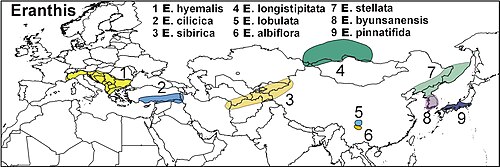
The genus consists of eight recognized species, distributed across a wide range from southern Europe through Asia to Japan. Because of their striking early blooms, they are highly valued as ornamental plants in gardens.
| Species | Primary Geographic Range |
|---|---|
| Eranthis albiflora | Western China |
| Eranthis cilicica | Southwestern Asia |
| Eranthis hyemalis | Southern Europe |
| Eranthis lobulata | Western China |
| Eranthis longistipitata | Central Asia |
| Eranthis pinnatifida | Japan |
| Eranthis sibirica | Northern Asia |
| Eranthis stellata | Eastern Asia (China, Korea, Russia) |
| Eranthis byunsanensis | South Korea |
Frequently Asked Questions
Are winter aconites safe for gardens?
While they are popular ornamental plants, they are poisonous due to the presence of cardiac glycosides. Care should be taken if planting them near pets or small children.
When is the best time to see Eranthis in bloom?
Depending on the climate, you can see them as early as January. They are most prominent in late winter and early spring before the forest canopy closes.
Why do the leaves appear after the flowers?
Eranthis are spring ephemerals. They prioritize flowering early to take advantage of the light, and the peltate leaves only expand fully once the flowering period is nearing its end.
Can Eranthis survive in the snow?
Yes, these plants are remarkably frost-tolerant and are known to survive under fresh snow cover without being harmed.
How is Eranthis different from Aconitum?
Although they share a similar name and family, Eranthis contains cardiac glycosides, whereas Aconitum contains neurotoxic alkaloids.