Equidae: The 55-Million-Year Evolutionary Journey of the Horse Family
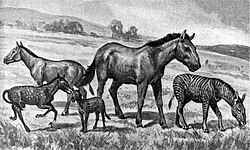
The family Equidae encompasses a diverse lineage of animals that includes modern horses, zebras, and asses, as well as a vast array of extinct species known only through the fossil record. Spanning more than 50 million years, the history of the equid is a remarkable story of biological transformation—evolving from small, multi-toed forest dwellers into the large, single-toed runners we recognize today.
Belonging to the order Perissodactyla (odd-toed ungulates), equids share a biological connection with tapirs and rhinoceroses. While the family has seen many branches rise and fall, all living members of the family today belong to a single genus: Equus, which originally emerged in North America.
Key Facts
- Temporal Range: Approximately 55.8 million years ago to the present.
- Origin: The earliest known fossils were discovered in North America during the Eocene epoch.
- Dietary Strategy: Equids are hindgut fermenters, a digestive method specialized for processing fibrous plant matter.
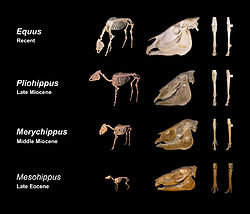
- Morphological Shift: Evolution saw a transition from multi-toed, fox-sized ancestors to large, single-toed animals.
- Current Status: All extant (living) species belong to the genus Equus.
The Evolutionary Path of the Equid
Early Ancestors and the Eocene Epoch
The story begins roughly 54 million years ago in the early Eocene. These primitive equids were significantly different from modern horses; they were roughly the size of a fox and possessed multiple toes—specifically four on the front feet and three on the hind feet. These early animals were herbivorous browsers, feeding on relatively soft vegetation.
Despite their small stature, these ancestors were already highly adapted for running. Furthermore, the complexity of their brain structures suggests they were alert and intelligent creatures. As the environment changed, these species underwent significant physical shifts, including a reduction in the number of toes and the development of specialized teeth designed to grind tough grasses.
Adaptations for Survival: Digestion and Teeth
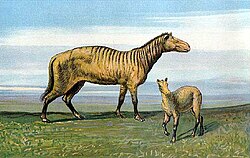
A defining characteristic of the Equidae family is their status as hindgut fermenters. This means they process food through a specialized digestive system located after the stomach. To support this, equids evolved specialized teeth capable of cutting and shearing tough, fibrous plant material. This digestive strategy became increasingly important as equids grew in size, allowing them to thrive on a diet of coarse vegetation.
Diversity in the Miocene and the Rise of Equus
The Miocene epoch marked a period of significant diversification for the family. During this time, equids began to take on a more recognizable horse-like appearance. A major evolutionary milestone was the concentration of body weight onto the central third toe, while the side toes became reduced, eventually barely touching the ground.
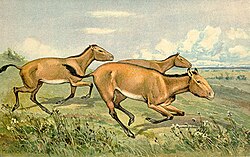
By the early Pleistocene epoch, the genus Equus had evolved and began to spread rapidly across the globe. This genus remains the sole surviving lineage of the once-vast Equidae family.
Taxonomic Classification
The classification of Equidae is complex, involving several extinct subfamilies and tribes. The family is divided into three primary subfamilies: the extinct Eohippinae, the extinct Anchitheriinae, and the living Equinae.
| Subfamily | Status | Notable Genera/Examples |
|---|---|---|
| Eohippinae | Extinct | Eohippus, Orohippus, Protorohippus |
| Anchitheriinae | Extinct | Mesohippus, Anchitherium, Hypohippus |
| Equinae | Extant & Extinct | Equus, Hipparion, Merychippus |
Frequently Asked Questions
What is the difference between an equid and an equine?
The term equid refers to any member of the taxonomic family Equidae, while equine is a term used to describe members of that family as well.
Where did the modern horse genus originate?
The genus Equus, which includes all living horses, zebras, and donkeys, originated in North America.
What does it mean to be a hindgut fermenter?
Hindgut fermentation is a digestive process where plant material is broken down by microbes in a large intestine or cecum located after the stomach. This allows animals to process large amounts of fibrous vegetation.
How did the number of toes change over time?
Early equids had multiple toes (four on the front and three on the back). Over millions of years, evolution favored a single-toed structure to support larger body weights and more efficient running.
Are all horses extinct?
No. While many prehistoric branches of the Equidae family are extinct, the genus Equus is still very much alive, containing seven extant species.