Epping Forest: A History of the People's Forest
Epping Forest stands today as a vital green lung for East London and Essex, but its existence as a public space was far from guaranteed. From its origins as a prehistoric woodland to its legal battles against privatization, the forest's journey reflects the broader evolution of English land rights and the birth of the modern conservation movement.
Early History and Natural Evolution
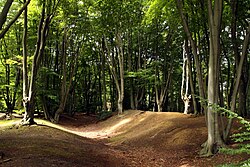
The landscape of Epping Forest has been continuously wooded since Neolithic times. Evidence of early human presence remains in the form of embankments from two Iron Age hill forts: Loughton Camp and Ambresbury Banks. Interestingly, pollen profiles suggest that these Iron Age settlements did not significantly impact the woodland cover.
The composition of the forest shifted during the Anglo-Saxon period. The once-dominant small-leaved lime (also known as pry or linden) was replaced by the beech, birch, oak, and hornbeam that characterize much of the forest today, likely due to selective cutting and partial clearance by Saxon settlers.
The Era of Royal Forests and Forest Law
In the 12th century, Henry II granted the area legal status as a royal forest. In this context, "forest" was a legal designation rather than a botanical one; it meant that Forest Law applied, granting the king exclusive rights to hunt deer. Much of the original Forest of Essex was actually agricultural land, not dense woodland.
Over time, the Forest of Essex shrank, eventually splitting into smaller legal entities including Waltham Forest. By the early 14th century, the physical extent of the woods reached a size similar to what we see today. This stability was reinforced after the Black Death (1348), which reduced the population by a third to a half, easing the pressure on common lands.
Common Rights and Land Use
While the monarch held hunting rights, the land was owned by various local lords. It was managed as a common, allowing local commoners specific rights: gathering firewood and food, grazing livestock, and turning out pigs for mast (fallen nuts and acorns). The landscape was a mosaic of open plains and wood pasture rather than a thick, unbroken canopy.
Tudor Influence and Royal Retreats
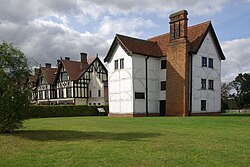
During the Tudor era, the forest served as a playground for royalty. In 1543, Henry VIII commissioned the "Great Standing" at Chingford to view the hunt. This structure was later renovated in 1589 for Queen Elizabeth I and is known today as Queen Elizabeth's Hunting Lodge.
From Shipbuilding to Public Recreation
Following the Restoration of the Monarchy in 1660, royal hunting ceased. The forest became a critical resource for the Royal Navy, providing shipbuilding timber that was transported to the dockyards at Woolwich and Deptford. This exploitation lasted until roughly 1725, when the suitable oak trees were exhausted.
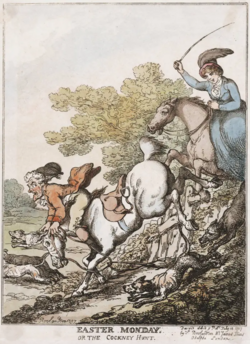
By the 19th century, the forest's role shifted toward recreation. While the City of London maintained a traditional Easter Monday stag hunt until 1807, the event was eventually taken over by rowdy crowds of working-class Londoners. By 1880, the arrival of railways and horse-drawn omnibuses made the forest accessible to the masses, with one Whit Monday seeing an estimated 400,000 visitors.
The Fight Against Enclosure
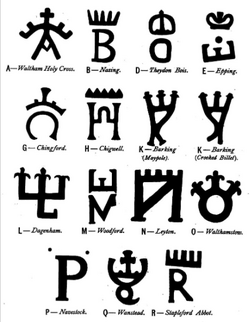
The 19th century brought a threat known as enclosure—the process of privatizing common land for farming or development. By 1870, the unenclosed forest had shrunk to just 3,500 acres. The destruction of the nearby Hainault Forest, which was almost entirely cleared for farmland in 1851, sparked public outrage and fueled the early conservation movement.
The battle for Epping Forest culminated in 1871 when 30,000 East Londoners protested fences on Wanstead Flats. The City of London Corporation intervened, suing forest manor lords to protect their grazing rights. A landmark ruling by Sir George Jessel declared all enclosures since 1851 illegal.
The Epping Forest Act 1878
The conflict was resolved through the Epping Forest Act 1878. The forest ceased to be a royal forest and was purchased by the City of London Corporation. The Act mandated that the forest remain "unenclosed and unbuilt on as an open space for the recreation and enjoyment of the people." This was one of Europe's first major victories for the modern conservation movement.
The People's Forest Today
On May 6, 1882, Queen Victoria officially dedicated the area as "The People's Forest." Today, it is managed by the City of London Corporation using "City's Cash" (private funds) rather than local taxes.
Modern management continues to honor ancient traditions. Commoners who own at least 0.5 acres of land in a forest parish may still graze cattle during the summer. Additionally, residents retain the rare right to collect one "faggot" (bundle) of dead or driftwood per day.
![Connaught Water, an ornamental lake of 8 acres (3.2 ha) named after the Duke of Connaught, the first forest ranger[32]](/images/df/5a/df5a42981963944aa919cfaeb6d0a20549160de2f019f5b1f5bedd1a29c8dbd8.jpg)
| Period | Primary Status/Use | Key Characteristic |
|---|---|---|
| Iron Age | Hill Forts | Loughton Camp and Ambresbury Banks |
| 12th Century | Royal Forest | Governed by Forest Law; exclusive royal hunting |
| 17th - 18th Century | Industrial Resource | Timber source for the Royal Navy |
| Mid-19th Century | Contested Land | Battle against enclosure and privatization |
| 1878 - Present | Public Open Space | Managed by City of London as "The People's Forest" |
Key Facts
- Legal Status: Transitioned from a Royal Forest under Forest Law to a public open space via the Epping Forest Act 1878.
- Conservation Milestone: The successful fight against enclosure is considered one of the first major victories for the modern conservation movement in Europe.
- Management: Funded by the City of London Corporation's private "City's Cash," not by local taxes.
- Common Rights: Registered commoners can still graze cattle, and residents may collect limited amounts of dead wood.
- Key Landmark: Queen Elizabeth's Hunting Lodge in Chingford remains a prominent Tudor-era site.
Frequently Asked Questions
What does the term "forest" mean in the context of Royal Forests?
In the 12th century, "forest" was a legal term rather than a description of the land. It indicated that Forest Law applied, meaning the land was reserved for the king's hunting, regardless of whether the area was heavily wooded or agricultural.
Who manages Epping Forest today?
The forest is managed by the City of London Corporation. A committee of twelve members of the Court of Common Council and four elected Verderers (residents of the forest) act as Conservators.
What happened to Hainault Forest?
Unlike Epping Forest, Hainault Forest was privatized and enclosed in 1851. Most of its trees were removed to create farmland, a destruction that helped spark the movement to protect Epping Forest.
Can people still collect wood from the forest?
Yes, the right still exists for adult residents, though it is rarely used. It is limited to one "faggot" of dead or driftwood per day.
What is the Epping Forest Gateway?
The Epping Forest Gateway is a cluster of sites in Chingford consisting of the View interpretation centre, Queen Elizabeth's Hunting Lodge, and Butler's Retreat.