England National Rugby Union Team: A Legacy of Power and Passion
The England national rugby union team stands as one of the most storied forces in global sports. Governed by the Rugby Football Union (RFU), the team is instantly recognizable by its iconic white jerseys and the Red Rose emblem, a symbol of national pride since the team's inception.
From the early days of amateur competition to the high-intensity professional era, England has consistently competed at the highest levels of the sport, blending tactical discipline with raw physical power to challenge the world's best.
Key Facts
- World Cup Success: Champions of the 2003 Rugby World Cup.
- Home Ground: Twickenham Stadium, the spiritual home of English rugby.
- Most Capped Player: Ben Youngs with 127 caps.
- All-Time Top Scorer: Owen Farrell with 1,237 points.
- Top Try Scorer: Rory Underwood with 49 tries.
- Current Leadership: Head Coach Steve Borthwick and Captain Maro Itoje.
Historical Journey
Early Years and Foundations
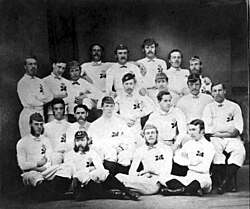
England's international journey began on March 27, 1871, in Edinburgh, Scotland. While the first match resulted in a 1–0 loss to the Scots, it laid the groundwork for a century of rivalry and growth.
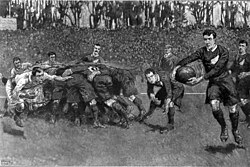
The early 20th century saw England expanding its horizons, facing formidable opponents like the New Zealand "Original All Blacks" in 1905. This match, attended by a then-record crowd of at least 50,000, ended in a 15–0 victory for the New Zealanders, highlighting the global standard the English team would strive to reach.
The Professional Era and World Cup Glory
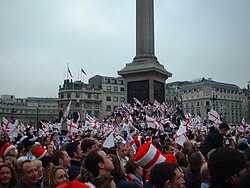
The transition to professionalism brought a new level of athleticism and strategy to the game. The pinnacle of this era arrived in 2003, when England captured the Rugby World Cup title, sparking massive celebrations across the country, most notably at Trafalgar Square.
Since then, England has remained a consistent contender, reaching the final in 2007 and 2019, and securing a third-place finish in 2023. Their journey through the World Cup has seen them evolve through various coaching philosophies, from the tactical brilliance of Sir Clive Woodward to the modern approach of Steve Borthwick.
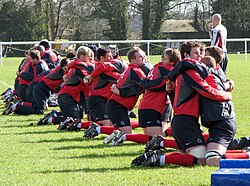
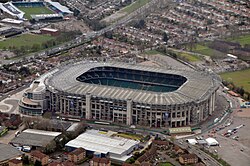
Home Ground: Twickenham Stadium
Twickenham Stadium serves as the primary fortress for the national team. As one of the largest rugby venues in the world, it provides an intimidating atmosphere for visiting teams and a sanctuary for English supporters.
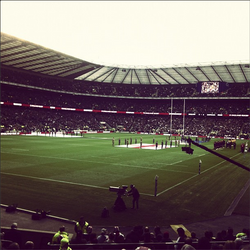
While Twickenham is the primary venue, England has occasionally taken home matches to other cities to grow the game's reach, playing at venues such as Old Trafford in Manchester, St James' Park in Newcastle, and more recently, Hill Dickinson Stadium in Liverpool.
Performance and Statistics
The Six Nations and Regional Dominance
England is a powerhouse in the Six Nations, having secured 13 Grand Slams (winning every match in a tournament) and 26 Triple Crowns (defeating all other home nations). Their rivalry with France, Ireland, Scotland, and Wales continues to define the European rugby calendar.
Global Standing and Records
England's world ranking has fluctuated between a peak of 1st (2003, 2019) and a low of 8th (2009, 2015, 2023). Their statistical history is marked by extreme margins, including a record-breaking 134–0 win over Romania in 2001 and a challenging 76–0 defeat to Australia in 1998.
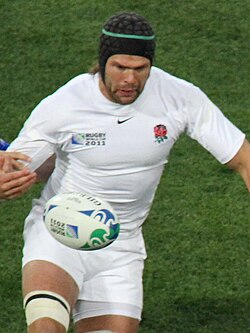
| Category | Detail |
|---|---|
| Current World Ranking | 6 (as of 6 July 2026) |
| World Cup Best Result | Champions (2003) |
| Most Caps | Ben Youngs (127) |
| Top Point Scorer | Owen Farrell (1,237) |
| Top Try Scorer | Rory Underwood (49) |
| Current Head Coach | Steve Borthwick |
Kit and Identity
The England kit is a symbol of tradition. While the primary color remains white, the team has utilized various manufacturers over the decades, including Umbro, Nike, and Canterbury. As of 2025, Castore serves as the official kit provider. The team is also known for its association with the song "Swing Low, Sweet Chariot," often sung by fans during pivotal moments of a match.
Frequently Asked Questions
Who is the current head coach of the England rugby team?
The current head coach is Steve Borthwick, who was appointed on December 19, 2022.
When did England win the Rugby World Cup?
England won the Rugby World Cup in 2003, marking their first and only championship title to date.
Who holds the record for the most caps for England?
Ben Youngs holds the record for the most appearances, with 127 caps.
What is the significance of the Red Rose?
The Red Rose has been the official emblem of the England national rugby union team since their first international match against Scotland in 1871.
Where does the England team play its home matches?
The primary home stadium is Twickenham Stadium in London, although matches are occasionally played at other venues across England.