Elmira History: From Haudenosaunee Roots to the Queen City
Nestled in the Southern Tier of New York, Elmira—often called "The Queen City"—possesses a rich and complex history. From its origins as a homeland for the Cayuga people to its evolution into a critical 19th-century transportation hub, the city has weathered both industrial growth and devastating natural disasters.
Early History and Indigenous Roots
Before European colonization, the region was inhabited by the Cayuga nation (also known as the Gayogo̱hó꞉nǫʼ) of the Haudenosaunee. While the Cayuga maintained relations with European settlers primarily through the fur trade, they remained relatively isolated from the expanding colonial settlements for a time.
The American Revolutionary War brought conflict to the region. In 1779, the Continental Army launched the Sullivan Expedition against the four Haudenosaunee nations allied with the British. This campaign included the Battle of Newtown, fought south of the current city, where the Continental Army emerged victorious. Following the war, a 1791 treaty signed at Elmira sought to settle territorial disputes, though pressure from American settlements eventually led most of the Cayuga to emigrate to Canada on land provided by the British Crown.
The first European-American settler was Abraham Miller, a former captain in the Continental Army. Miller built a cabin shortly before the end of the Revolutionary War; today, Miller Street and Miller's Pond serve as lasting tributes to his presence in the area.
The Formation of Elmira
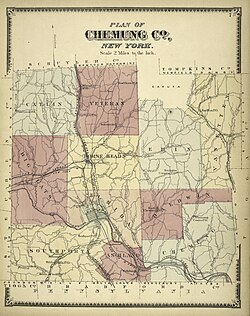
The New York legislature established the Township of Chemung (now Chemung County) in 1788. A settlement called Newtown emerged at the intersection of the Chemung River and Newtown Creek. By 1792, Newtown merged with the settlements of Wisnerburg and DeWittsburg to form a village. In 1808, the village officially became the Town of Elmira during a meeting at Teall's Tavern.
The origin of the name "Elmira" is a subject of local legend. Some suggest it was named after the daughter of tavern owner Nathan Teall. However, a family history book printed in 1898 by Amos Bugbee Carpenter claims the name was chosen in 1821 by Major General Matthew Carpenter, a delegate to the constitutional convention, in honor of his daughter. Another account suggests Carpenter chose the name in 1808 to reflect an "ideal of loveliness" for a lady friend.
The City of Elmira was officially incorporated in 1864, carved from parts of the town and village of Elmira. The town continues to exist today, surrounding the city on three sides.
A Hub of Transportation and Commerce
During the 1800s, Elmira became a vital transportation nexus for New York's Southern Tier, linking Buffalo and Rochester with Albany and New York City.
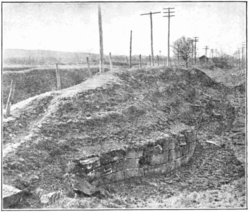
- Canals: The Chemung Canal was completed in 1833 with Elmira as its southern terminus. Later, the Junction Canal connected Elmira to Corning, facilitating the transport of Pennsylvania coal via the Susquehanna Canal system.
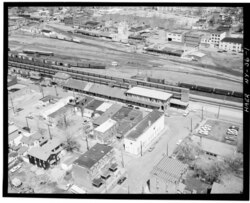
- Railroads: The New York and Erie Railroad arrived in 1849, providing a direct route between New York City and Buffalo. This was followed by the Elmira and Jefferson Railroad (northbound) in 1850 and the Elmira and Williamsport Railroad (southbound) in 1854.
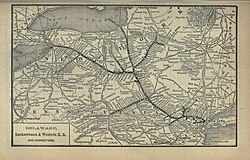
By the late 19th century, the city's connectivity expanded further. The Utica, Ithaca and Elmira Railroad began construction in 1872, creating routes to Cortland and Syracuse. In 1884, the Delaware, Lackawanna and Western Railroad was completed, providing stiff competition to the Erie line.
Civil War and the Legacy of Camp Rathbun
Because of its strategic railroad connections, Elmira served as a primary Army training and muster point during the early Civil War. A 30-acre Union installation known as Camp Rathbun was established, though much of it fell into disuse as the war progressed.
In the summer of 1864, "Barracks #3" was converted into a prisoner-of-war camp. Incarcerated Confederate soldiers nicknamed the site "Hellmira" due to the brutal conditions. Between June 6, 1864, and autumn 1865, 12,123 Confederate soldiers were held there. Tragically, 2,963 died due to disease, malnutrition, and extreme winter weather, exacerbated by poor sanitary conditions near Foster's Pond.
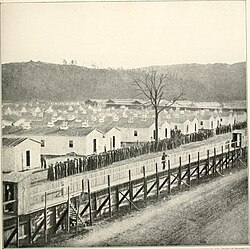
The deceased were buried at Woodlawn National Cemetery by John W. Jones, an ex-slave who served as the sexton. The camp was demolished after the war and converted to farmland, while Woodlawn was officially designated a National Cemetery in 1877.
Correctional Innovation: The Elmira Reformatory
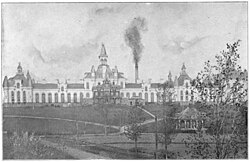
In 1866, the state legislature authorized a prison for first-time offenders. Opening in 1876 as the Elmira Reformatory under Zebulon Brockway, the facility served offenders aged 16 to 30. It was the first institution of its kind in the United States and served as a global model for correctional reform. In 1970, the complex was renamed the Elmira Correctional and Reception Center.
Natural Disasters and Urban Change
Elmira has faced several significant environmental challenges over the last century:
Hurricane Agnes (1972)
Hurricane Agnes caused catastrophic flooding in 1972, resulting in an estimated $291 million in damages. Approximately 5,000 homes were damaged or destroyed, and 15,000 residents were forced to evacuate. Recovery efforts included a secret initiative called "Operation Rebuild" by Eastman Kodak, which helped rebuild 78 homes.
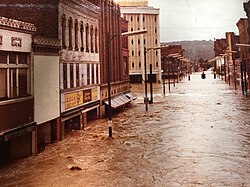
In the aftermath, the New York State Urban Development Corporation (UDC) implemented the "New Elmira Plan." This controversial redevelopment removed buildings along the river to create Riverside Park and replaced business district structures with parking garages, eliminating 40% of the city's commercial space and altering the downtown's character.
The "Storm of the Century" (1993)
In March 1993, a massive blizzard dropped 21.5 inches of snow on the city in a single day, paralyzing the region.
The 2012 Tornado
On July 26, 2012, an EF1 tornado—a windstorm with speeds capable of moderate damage—struck the city. The 0.5-mile-wide storm traveled through Golden Glow and other areas, knocking down hundreds of power lines and trees. Despite the surprise nature of the event, no injuries were reported.
Key Facts
- Indigenous Origins: Originally inhabited by the Cayuga nation of the Haudenosaunee.
- Naming: Officially named Elmira in 1808; theories suggest it was named after a daughter or a lady friend of Matthew Carpenter.
- Transport Hub: Served as a critical link via the Chemung Canal (1833) and multiple railroads including the New York and Erie (1849).
- Civil War Site: Camp Rathbun became a POW camp known as "Hellmira," where nearly 3,000 Confederate soldiers died.
- Correctional First: The Elmira Reformatory (1876) was the first state prison for first offenders in the U.S.
- 1972 Flood: Hurricane Agnes caused $291 million in damage and led to the controversial "New Elmira Plan."
| Year/Period | Event/Development | Significance |
|---|---|---|
| 1779 | Battle of Newtown | Continental Army victory during the Sullivan Expedition. |
| 1808 | Naming of Elmira | Village of Newtown officially renamed the Town of Elmira. |
| 1833 | Chemung Canal Completion | Established Elmira as a southern terminus for regional trade. |
| 1864-1865 | Camp Rathbun POW Camp | Incarceration of 12,123 Confederate soldiers. |
| 1876 | Elmira Reformatory Opens | First U.S. institution for first-time offenders. |
| 1972 | Hurricane Agnes | Severe flooding leading to major urban redevelopment. |
Frequently Asked Questions
Who were the original inhabitants of the Elmira region?
The region was originally inhabited by the Cayuga nation (Gayogo̱hó꞉nǫʼ) of the Haudenosaunee before European colonization.
Why was the POW camp at Camp Rathbun called "Hellmira"?
Prisoners used the nickname due to the dismal sanitary conditions, lack of medical care, malnutrition, and brutal winter weather that led to thousands of deaths.
What was the significance of the Elmira Reformatory?
Opened in 1876, it was the first state prison in the United States specifically designed for first-time offenders aged 16 to 30, serving as a model for future correctional facilities.
How did the "New Elmira Plan" change the city after the 1972 flood?
The plan removed buildings along the river to create Riverside Park and replaced parts of the business district with parking garages, resulting in the loss of 40% of the city's commercial space.
What was the impact of the 2012 tornado?
The EF1 tornado was 0.5 miles wide and caused moderate damage, including the destruction of hundreds of trees and power lines, though no one was injured.