Electronic Industries Alliance (EIA): A Legacy of Industry Standardization
The landscape of modern electronics was built upon a foundation of shared patents and standardized components. At the heart of this coordination was the Electronic Industries Alliance (EIA), an organization that evolved over nearly a century to synchronize the efforts of manufacturers, engineers, and distributors across the globe.
The Origins of the RMA
The story began in 1924 in Chicago, where 50 radio manufacturers established a trade group known as the Associated Radio Manufacturers. The primary goal of this collective was to manage the licensing of a vast array of radio patents. By creating a centralized system, members gained the necessary access to patents required to build essential hardware, including radio transmitters, antennas, and receivers.
As electronic technology advanced, the organization expanded its membership to include non-manufacturers and adapted its identity to reflect the broadening scope of the industry.
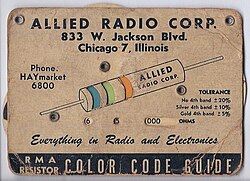
Chronological Evolution of the Organization
Over the decades, the organization underwent several name changes to keep pace with the transition from simple radio technology to complex electronic systems:
- 1924: Associated Radio Manufacturers
- 1924: Radio Manufacturers Association (RMA)
- 1950: Radio Television Manufacturers Association (RTMA)
- 1953: Radio Electronics Television Manufacturers Association (RETMA)
- 1957: Electronic Industries Association (EIA)
- 1997: Electronic Industries Alliance (EIA)
Organizational Structure and Sectors
Headquartered in Arlington, Virginia, the EIA operated as an umbrella organization. To manage the diverse needs of the electronics sector, it divided its activities into several specialized associations:
- ECA: Electronic Components, Assemblies, Equipment & Supplies Association.
- JEDEC: JEDEC Solid State Technology Association (originally the Joint Electron Device Engineering Council).
- GEIA: Government Electronics and Information Technology Association (which later became part of TechAmerica).
- TIA: Telecommunications Industry Association.
- CEA: Consumer Electronics Association.
The Dissolution and Transition to ECIA
In 2007, the EIA announced its intention to dissolve and transfer its operations to its constituent divisions. The Alliance formally ceased to exist on February 11, 2011. To ensure continuity in technical specifications, the EIA designated the ECA to continue developing standards for interconnect, passive and electro-mechanical (IP&E) electronic components under the ANSI-designation of EIA standards.
Following the dissolution, the ECA merged with the National Electronic Distributors Association (NEDA) in 2011 to form the Electronic Components Industry Association (ECIA). While the parent alliance is gone, the EIA brand persists specifically for IP&E standards within the ECIA.
Key Facts
- Founded in 1924 by 50 Chicago-based radio manufacturers.
- Originally created to streamline the licensing of radio patents.
- Operated under various names, including RMA, RTMA, and RETMA, before becoming the EIA.
- Formally dissolved on February 11, 2011.
- The EIA standards brand is still used for IP&E components via the ECIA.
| Year | Organization Name / Event | Key Focus/Outcome |
|---|---|---|
| 1924 | Associated Radio Manufacturers / RMA | Radio patent licensing |
| 1950-1953 | RTMA / RETMA | Integration of Television and Electronics |
| 1957-1997 | Electronic Industries Association/Alliance | Broad industry standardization |
| 2011 | Dissolution / Formation of ECIA | Merger of ECA and NEDA |
Frequently Asked Questions
What was the original purpose of the Associated Radio Manufacturers?
The group was formed to control the licensing of numerous radio patents, ensuring that member manufacturers had the access needed to build receivers, transmitters, and antennas.
When did the Electronic Industries Alliance formally cease to exist?
The EIA formally ceased to exist on February 11, 2011.
What happened to the EIA standards after the organization dissolved?
Standards for interconnect, passive, and electro-mechanical (IP&E) components continued under the ANSI-designation of EIA standards, managed by the ECA and subsequently the ECIA.
What is the relationship between the ECA and the ECIA?
The Electronic Components, Assemblies, Equipment & Supplies Association (ECA) merged with the National Electronic Distributors Association (NEDA) in 2011 to create the Electronic Components Industry Association (ECIA).
Which sectors were managed under the EIA umbrella?
The EIA managed several sectors, including JEDEC (solid state technology), TIA (telecommunications), CEA (consumer electronics), GEIA (government electronics), and the ECA (components and assemblies).