Electrochemistry: Principles, History, and Industrial Applications
Electrochemistry is a specialized branch of physical chemistry that examines the relationship between electrical potential difference and identifiable chemical change. At its core, it deals with reactions where electrons move via an electronically conducting phase—typically an external circuit—between electrodes. These electrodes are separated by an electrolyte, a substance that conducts ions but remains electronically insulating.
The defining characteristic of an electrochemical reaction is that electrons are not transferred directly between atoms or molecules, as they are in conventional chemical reactions. Instead, they travel through an external circuit. When an electrical potential drives a chemical reaction, the process is known as electrolysis. Conversely, when a chemical reaction generates a potential difference, it creates a device such as a battery or fuel cell. When these processes occur at the nanoscale, the field is referred to as nanoelectrochemistry.
Key Facts
- Electron Transfer: Unlike standard chemistry, electrons move through an external circuit rather than directly between species.
- Electrolysis: The use of electrical energy to drive a non-spontaneous chemical reaction.
- Galvanic Cells: Systems that convert chemical energy into electrical energy (e.g., batteries).
- Nernst Equation: The fundamental formula relating cell voltage to the concentration of reactants and products.
- Faraday's Laws: The quantitative rules governing the mass of substances produced during electrolysis.
The Evolution of Electrochemistry
Early Foundations (16th – 18th Century)
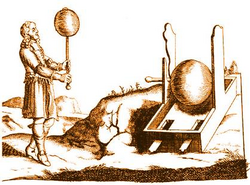
The early stages of the field were marked by the observation of electrical phenomena in nature and simple mechanical generators.
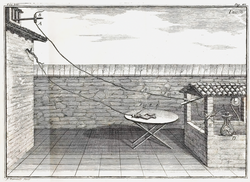
By the late 18th century, researchers began linking electricity to biological and chemical systems, most notably through experiments involving animal tissues.
The 19th Century Breakthroughs
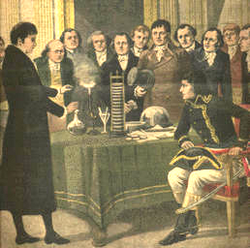
The 1800s saw a rapid acceleration in discovery. In 1800, Alessandro Volta developed the first battery, which William Nicholson and Johann Wilhelm Ritter immediately used to decompose water into hydrogen and oxygen via electrolysis. Ritter also discovered electroplating—the process of depositing a layer of metal onto a surface using electrical current.
By 1808, Sir Humphry Davy used electrolysis of molten salts to isolate metallic sodium and potassium, proving that chemical combination occurs between substances of opposite charge.

In 1832, Michael Faraday established the two laws of electrochemistry, providing the quantitative basis for the field. This was followed by John Daniell's 1836 invention of a primary cell that eliminated hydrogen gas generation, solving the problem of polarization.
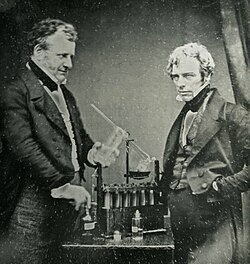
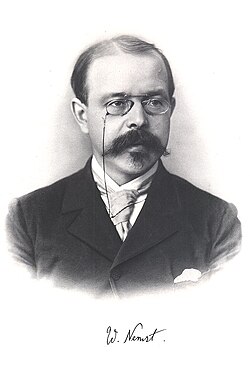
Later in the century, William Grove produced the first fuel cell (1839), and Georges Leclanché patented the cell that would become the zinc-carbon battery (1868). In 1888, Walther Nernst developed the theory of electromotive force (EMF) and the Nernst equation, allowing scientists to calculate free energy changes from cell voltage.
20th Century Advancements
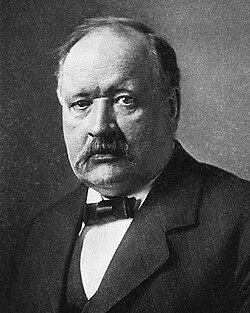
The 20th century shifted toward precision and quantum mechanics. In 1909 and 1911, Robert Millikan and Harvey Fletcher used the oil-drop experiment to accurately measure the electric charge of a single electron. In 1937, Arne Tiselius developed sophisticated electrophoretic apparatuses, leading to a Nobel Prize for his work on protein electrophoresis. By the 1960s and 70s, Revaz Dogonadze pioneered the field of quantum electrochemistry.
Fundamental Principles of Electrochemical Reactions
Oxidation and Reduction (Redox)
Electrochemical reactions are redox reactions, consisting of two half-reactions: oxidation (loss of electrons) and reduction (gain of electrons). To balance these reactions, chemists account for the medium—whether acidic, basic, or neutral—to ensure that atoms and charges are conserved.
Electrochemical Cells and Potential
A standard for measuring electrode potential is the Standard Hydrogen Electrode (SHE). By definition, the SHE has a potential of zero. When another electrode is connected to the SHE, the resulting voltage is the standard electrode potential. A positive potential indicates a strongly reducing electrode, while a negative potential indicates a more oxidizing electrode.
The standard cell potential is calculated as: E° cell = E° red (cathode) – E° red (anode)
The Nernst Equation and Spontaneity
The Nernst equation allows for the calculation of cell EMF when conditions deviate from standard concentrations. At 25°C (298 K), the equation relates the cell potential to the reaction quotient, incorporating the thermal voltage (approximately 0.05916 V). This relationship also determines the spontaneity of a reaction; if the Gibbs free energy change is negative, the reaction occurs spontaneously.
Practical Applications and Industrial Use
Batteries and Energy Storage
The lead-acid battery was the first practical secondary (rechargeable) battery. It utilizes lead plates and a mixture of sulfuric acid and water (typically 30% acid). While durable, these batteries can fail if left uncharged, as acid may crystallize within the plates.
Corrosion and Prevention
Corrosion, such as the rusting of iron, is an electrochemical process. Iron is oxidized to Fe(aq), while oxygen is reduced. This process can be prevented through coating or the use of sacrificial anodes, where a more reactive metal is used to protect the primary structure.
Industrial Electrolysis
- Molten Salt Electrolysis: The Downs cell is used to produce sodium and chlorine gas from molten sodium chloride.
- Water Electrolysis: Using platinum electrodes and an electrolyte (like 0.1 M sulfuric acid), water is decomposed into hydrogen and oxygen gases.
- Aqueous Solutions: In sodium chloride solutions, the process produces hydrogen gas at the cathode and chlorine gas at the anode.
| Concept | Description | Key Example/Formula |
|---|---|---|
| Electrolysis | Using electricity to drive chemical change | Water decomposition (H₂ and O₂) |
| Galvanic Cell | Chemical reaction producing electricity | Lead-acid battery |
| Nernst Equation | Relates voltage to concentration | E = E° - (RT/nF) ln Q |
| Faraday's 1st Law | Mass produced is proportional to charge | m = (Q M) / (n F) |
| Corrosion | Spontaneous oxidation of metals | Iron rusting (Fe → Fe²⁺) |
Frequently Asked Questions
What is the difference between a conventional chemical reaction and an electrochemical one?
In a conventional reaction, electrons are transferred directly between atoms, ions, or molecules. In an electrochemical reaction, electrons must travel through an electronically conducting phase, such as an external electric circuit.
How does the Nernst equation help in practical chemistry?
The Nernst equation allows scientists to calculate the voltage of a cell under non-standard conditions, specifically when the concentrations of the reactants and products change over time.
Why is an electrolyte necessary for the electrolysis of water?
Pure water is a poor conductor of electricity. Adding an electrolyte, such as sodium chloride or sulfuric acid, provides the necessary ions to allow current to flow, enabling the decomposition of water into hydrogen and oxygen.
What is a sacrificial anode?
A sacrificial anode is a piece of more reactive metal attached to a less reactive metal structure. The sacrificial anode oxidizes (corrodes) first, thereby protecting the main structure from corrosion.
What are Faraday's laws of electrochemistry?
Faraday's laws provide the quantitative relationship between the amount of electricity passed through an electrolyte and the mass of the substance produced at the electrodes.