El País: The Evolution of Spain's Global Newspaper of Record
El País (literally 'The Country') is a premier Spanish-language daily newspaper based in Madrid. Owned by the media conglomerate PRISA, it stands as one of Spain's national newspapers of record, alongside ABC and El Mundo. Known for its global reach and commitment to democratic values, El País has evolved from a catalyst for political change into a digital powerhouse with a significant international presence.
As of 2026, it remains a dominant force in the Spanish media landscape, ranking as the most-read general-interest daily in print with 854,000 readers and maintaining a massive digital footprint with 17.6 million unique users as of 2025.
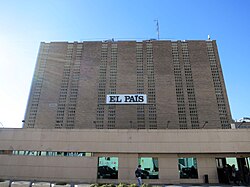
Key Facts
- Founded: May 4, 1976, during the Spanish transition to democracy.
- Ownership: Owned by PRISA.
- Political Alignment: Center-left, characterized by progressivism and social liberalism.
- Reach: 403,840 news subscribers as of December 2024.
- Global Presence: Operates a dedicated US edition in both Spanish and English.
- Format: Compact daily newspaper.
A History of Democracy and Journalism
El País was established in May 1976 by José Ortega Spottorno, Jesús de Polanco, and Carlos Mendo, just six months after the death of dictator Francisco Franco. At a time when most Spanish press outlets were influenced by Francoist ideology, El País emerged as the first pro-democracy newspaper, reflecting the nation's shift toward a democratic system.
The publication quickly set new benchmarks for Spanish journalism. It was the first Spanish daily to implement internal quality control standards, publish a professional Style Guide, and create the role of "Reader's Advocate" to ensure accountability. These rigorous standards helped the paper gain prestige and establish collaborative networks with other European social-democratic outlets, such as Le Monde in France and La Repubblica in Italy.
However, its journey has not been without conflict. In 1978, the paper was targeted in a far-right terrorist attack that resulted in one death and several injuries. In later years, the publication faced political polarization, particularly during the 1990s, as it was often accused by the People's Party (PP) of supporting the interests of the PSOE (Spanish Socialist Workers' Party).
Digital Transformation and Global Expansion
El País was a pioneer in the digital space, becoming the second Spanish newspaper to launch an internet edition in the mid-1990s. While an early attempt to introduce a payment system in 2002 temporarily hindered its growth, the paper successfully pivoted back to a more open-access model in 2005, reserving subscriptions for archives and multimedia content.
The newspaper has consistently sought to expand its linguistic and geographic reach:
- English Language: Since 2001, an English supplement has been available via the International Herald Tribune and the official website.
- Regional Editions: Digital editions in Catalan and Portuguese were launched, though the Brazilian print edition was discontinued in 2021 due to financial sustainability issues.
- US Market: In May 2024, El País launched a dedicated US edition with newsrooms in New York, Chicago, Los Angeles, and Houston, catering to Spanish speakers in the United States.
Editorial Stance and Leadership
The editorial line of El País is defined by Europeanism, progressivism, and social liberalism. It is highly regarded for its extensive coverage of international news, culture, and economics. While it has historically maintained close ties with the PSOE, it has also published critiques of various governments, including the administration of José Luis Rodríguez Zapatero.
The paper has been led by several distinguished editors-in-chief. Notably, in 2018, Soledad Gallego-Díaz became the first woman to hold the position. As of June 2025, the editor-in-chief is Jan Martínez Ahrens.
| Category | Details |
|---|---|
| Owner | PRISA |
| Headquarters | Madrid, Spain |
| Print Circulation (2024) | 52,024 (Average) |
| Digital Subscribers (Dec 2024) | 403,840 |
| Sister Publications | Cinco Días, Diario AS |
| Political Lean | Center-left |
Frequently Asked Questions
When was El País founded?
El País was first published on May 4, 1976, during the beginning of the Spanish transition to democracy.
Who owns El País?
The newspaper is owned by the Spanish media conglomerate PRISA.
Does El País have an English version?
Yes, El País translates a selection of articles into English and launched a dedicated US edition in May 2024 that publishes in both Spanish and English.
What is the political orientation of the newspaper?
El País is generally aligned with the center-left, emphasizing progressivism, social liberalism, and pro-European values.
Who is the current editor-in-chief?
As of June 2025, the editor-in-chief is Jan Martínez Ahrens.