Eggs as Food: Nutrition, Production, and Culinary Uses
Eggs are among the most versatile and widely consumed proteins globally. From their ancient presence in human diets to their role as a modern nutritional powerhouse, eggs provide a complex balance of fats, proteins, and essential vitamins. Whether used as a primary dish or a binding agent in baking, the chicken egg remains a cornerstone of global food security and culinary art.
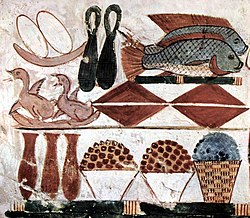
Historically, eggs have been valued across cultures for millennia. Ancient Egyptian records, for instance, depict offerings at the tomb of Menna that included baskets of eggs, illustrating their long-standing significance.
Key Facts

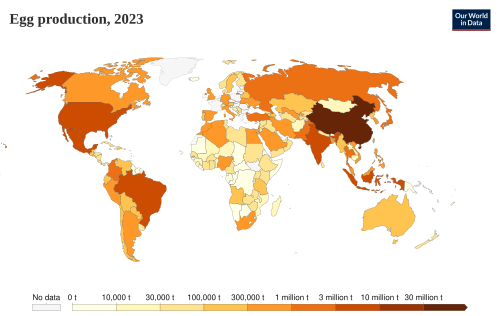
- Global Production: World hen egg production reached 91 million tonnes in 2023, a 77% increase since 2000.
- Nutritional Density: A medium/large chicken egg (approx. 50g) provides about 70 kcal and 6g of protein.
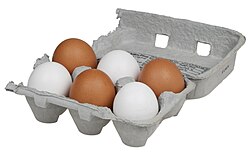
- Versatility: Eggs are available in various shell colors, including white, brown, and very dark brown (such as those from the French Marans breed).
- Grading: In the U.S., eggs are graded by quality, with Grade AA being the highest, followed by Grade A and Grade B.
Anatomy and Characteristics
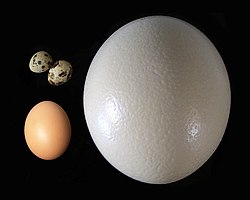
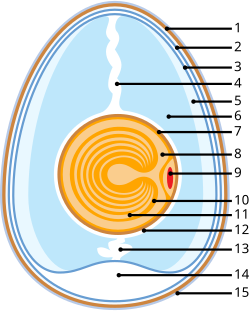
A chicken egg is a biological marvel designed to protect and nourish a developing embryo. Its structure consists of several distinct layers and components:
- The Shell: The hard outer layer that protects the interior.
- Membranes: Both outer and inner membranes sit just beneath the shell.
- The White (Albumen): Divided into thick and thin layers, the albumen provides protein and water.
- The Yolk: The nutrient-dense center containing fats and vitamins, held in place by the chalaza (twisted strands of albumen).
- Air Cell: A pocket of air typically found at the blunt end of the egg.
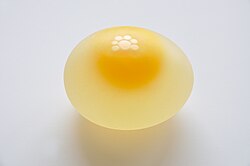
While most eggs follow this standard structure, abnormalities occur. Some eggs may contain two yolks, a phenomenon sometimes marketed as "maxi eggs."

Production and Farming

The scale of egg production has grown exponentially to meet global demand. In 2023, the world produced 91 million tonnes of hen eggs, adding 40 million tonnes to the annual output compared to the year 2000.

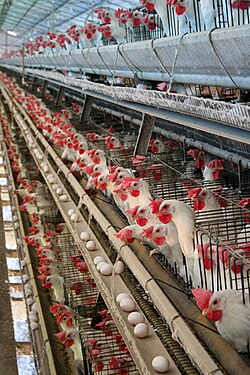
Farming methods vary significantly, ranging from battery cages (intensive confinement) to free-range systems. These living conditions can influence the nutritional profile of the egg, particularly the levels of Vitamin A and E. Additionally, the industry faces ethical challenges, such as the killing of male chicks, leading to the development of "no-kill" eggs through in-ovo sexing (determining the sex of the embryo before hatching).
Culinary Properties and Preservation
Eggs are prized in the kitchen for their ability to emulsify, thicken, and leaven. They can be prepared in numerous ways, including fried, scrambled, soft-boiled, or hard-boiled.

Beyond fresh preparation, various preservation methods exist globally:
- Tea Eggs: Boiled eggs soaked in a brew of tea and spices.
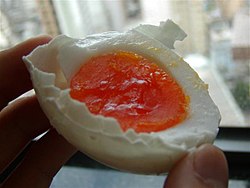
- Salted Eggs: Common in Asian cuisines, often using duck eggs.
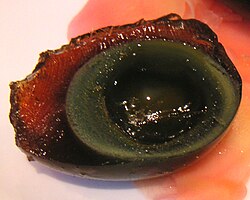
- Century Eggs: A preserved alkaline egg.
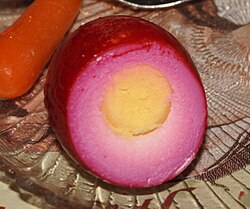
- Pickled Eggs: Preserved in vinegar and often colored with ingredients like beetroot juice.

Nutrition and Health Effects

Eggs are a rich source of high-quality protein and essential micronutrients. They contain a full spectrum of amino acids, making them a complete protein source.
| Nutrient | Amount | % Daily Value (%DV) |
|---|---|---|
| Energy | 155 kcal | - |
| Protein | 12.6 g | - |
| Fat | 10.6 g | - |
| Choline | - | 53% |
| Vitamin D | - | 11% |
| Vitamin B12 | - | 11% |
| Phosphorus | - | 14% |
Cholesterol and Diabetes
The relationship between egg consumption and health is a subject of ongoing research. Some meta-analyses from 2013 suggested that eating four eggs per week was associated with a 29% increase in the relative risk of developing type 2 diabetes. However, a 2016 analysis suggested this association might be specific to cohort studies within the United States.
Cardiovascular Health
While eggs contain cholesterol, various systematic reviews and meta-analyses have provided conflicting results regarding their impact on cardiovascular disease, with some finding no significant link between egg intake and heart disease or stroke.
Frequently Asked Questions




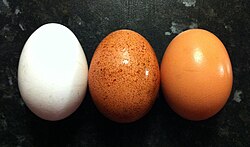


Why are some eggs brown and others white?
The color of the eggshell is determined by the breed of the hen. For example, Marans hens produce very dark brown eggs, while other breeds produce white or light brown shells. Shell color does not affect the nutritional value of the egg.
What causes the green ring around a hard-boiled egg yolk?
The green ring is a result of a chemical reaction between the sulfur in the egg white and the iron in the yolk, which typically occurs when the egg is overcooked.
Are double-yolk eggs safe to eat?
Yes, double-yolk eggs are safe for human consumption. They occur naturally, often in younger hens whose reproductive cycles are not yet fully synchronized.
How are eggs graded in the United States?
The USDA grades eggs based on interior quality and shell integrity. Grade AA is the highest quality, followed by Grade A and Grade B, which may be used more frequently in commercial food processing.