Eduardo Mac Entyre: Pioneer of Generative and Geometric Art
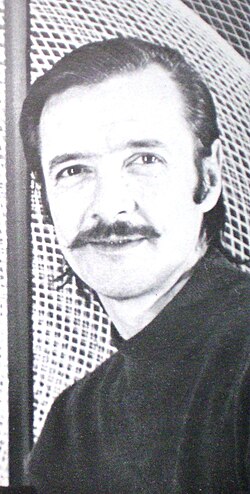
Eduardo Mac Entyre (1929–2014) was a visionary Argentine artist who bridged the gap between traditional fine art and the mathematical precision of the digital age. Known primarily for his striking geometric paintings, Mac Entyre evolved from a student of the Old Masters into a leading figure of Generative art—a style where the artwork is created following a predefined set of rules or algorithms.
Early Life and Artistic Evolution
Born in Buenos Aires to a Scottish father and a Belgian mother, Mac Entyre began honing his sketching skills at the age of twenty. His early education was rooted in the study of classical standards, drawing inspiration from the works of Albrecht Dürer, Hans Holbein, and Rembrandt. As his style matured, he began integrating the influences of Impressionism and Cubism into his compositions.
Mac Entyre first stepped into the public eye in 1954, when his work was displayed at the Comte Art Gallery in Buenos Aires. By 1959, a show at the Peuser Art Gallery caught the attention of influential figures, including arts patron Ignacio Pirovano and Rafael Squirru, the Director of the Buenos Aires Museum of Modern Art.
The Rise of Generative Art
Collaborating with other accomplished abstract artists in Buenos Aires, Mac Entyre helped define a movement they termed Generative art. This approach, which emphasizes the process and the system over the final intuition of the artist, would later be expanded upon by world-renowned computer scientists and artists such as Benoît Mandelbrot.
A pivotal moment in his career occurred between August and September 1969, when his computer-generated work was featured in the Arte y Cibernética exhibition at Galeria Bonino in Buenos Aires. This landmark event was the first in Argentina to explore the capabilities of digital imaging (the creation of visual images using digital computers). The exhibition subsequently toured various South American cities before reaching the United Kingdom in 1970.
Mathematical Precision and Randomness
While Mac Entyre utilized computers, he continued to sketch by hand until relatively recently, employing a series of random algorithms to guide his hand. His work often evokes the 13th-century nautilus designs of Leonardo Fibonacci, though Mac Entyre's interpretations are significantly more complex. Because he introduced elements of randomness, no two of his helixes (spiral-shaped curves) are identical.
Beyond his geometric and algorithmic explorations, Mac Entyre maintained a diverse portfolio that included traditional Abstract, Cubist, and Figurative art. In recognition of his profound impact on Modern Art in Latin America, he was honored by the Organization of American States in 1986.
Legacy and Collections
Today, Mac Entyre's contributions to the intersection of art and mathematics are preserved in prestigious institutions worldwide. His works are held in several prominent public and private collections, ensuring his influence on geometric abstraction continues to be studied.
| Category | Details |
|---|---|
| Lifespan | February 20, 1929 – May 5, 2014 |
| Nationality | Argentine |
| Primary Styles | Generative, Geometric, Abstract, Cubist, Figurative |
| Key Exhibition | Arte y Cibernética (1969) |
| Major Honors | Organization of American States (1986) |
| Notable Museums | Buffalo AKG Art Museum, Victoria and Albert Museum, John and Mable Ringling Museum of Art |
Key Facts
- Pioneer of Digital Art: Participated in Argentina's first digital imaging exhibition, Arte y Cibernética, in 1969.
- Algorithmic Approach: Used random algorithms to create unique, non-repeating helix designs.
- Diverse Influence: His work evolved from studying Old Masters like Rembrandt to exploring Cubism and Generative art.
- International Reach: His work toured South America and the UK, and is now held in major museums in the US and UK.
Frequently Asked Questions
What is Generative art in the context of Mac Entyre's work?
Generative art refers to a movement where the artist uses a system—such as a set of mathematical rules or random algorithms—to determine the outcome of the artwork, rather than relying solely on manual intuition.
How did Mac Entyre's helixes differ from Fibonacci's designs?
While both utilize spiral forms, Mac Entyre's helixes are more complex because they incorporate randomness, meaning that no two of his sketches are exactly alike.
When did Mac Entyre first exhibit his work?
Eduardo Mac Entyre first displayed his artwork in 1954 at the Comte Art Gallery in Buenos Aires.
Which museums hold Eduardo Mac Entyre's artworks?
His works are featured in the Buffalo AKG Art Museum, the John and Mable Ringling Museum of Art, and the Victoria and Albert Museum.
What was the significance of the Arte y Cibernética exhibition?
Held in 1969, it was the first exhibition in Argentina to explore the possibilities of digital imaging, later touring South America and the UK.