Ecuador: A Comprehensive Overview of South America's Megadiverse Nation
Ecuador: A Comprehensive Overview of South America's Megadiverse Nation Located in the heart of South America, the Republic of Ecuador is a nation defined by its extraordinary biological ...
Ecuador: A Comprehensive Overview of South America's Megadiverse Nation
Located in the heart of South America, the Republic of Ecuador is a nation defined by its extraordinary biological diversity and complex historical tapestry. From the high peaks of the Andes to the tropical Amazon basin and the unique ecosystems of the Galápagos Islands, Ecuador offers a landscape of immense variety. This article provides a detailed look at the country's geography, history, governance, and culture.
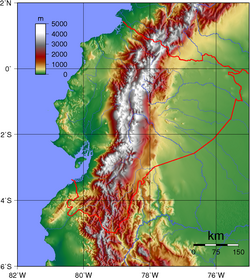
Ecuadorian topography: Ecuadorian topography
Key Facts
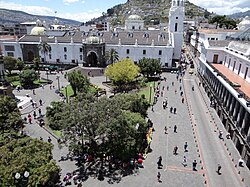
The colonial Quito, capital of the Real Audiencia of Quito, today a UNESCO World Heritage Site
Capital: Quito
Largest City: Guayaquil
Official Language: Spanish (with Kichwa and Shuar recognized for indigenous peoples)
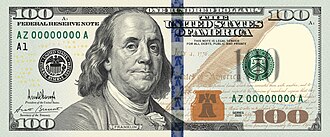
Currency: United States dollar (USD)
Population: Approximately 17.48 million (2023 estimate)
Government Type: Unitary presidential republic
Historical Foundations
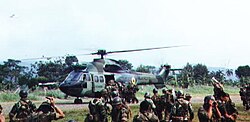
Ecuadorian troops during the Cenepa War
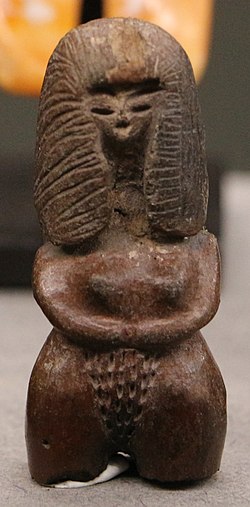
Ecuador's history spans millennia, beginning with sophisticated pre-Inca cultures. Archaeological evidence, such as the Valdivia culture's Venus figures, highlights a deep-rooted ancestral heritage.
A Venus (2,300-2,000 BCE) of the Valdivia culture (from Santa Elena Province) displayed in the National Archaeological Museum of Florence: A Venus (2,300-2,000 BCE) of the Valdivia culture (from Santa Elena Province) displayed in the National Archaeological Museum of Florence
Figure of the Jama Coaque culture (300 BCE-800 CE) (from Manabí Province). Walters Art Museum.[24]: Figure of the Jama Coaque culture (300 BCE-800 CE) (from Manabí Province). Walters Art Museum.[24]
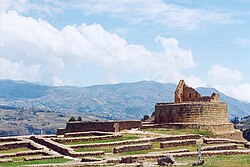
Following these early civilizations, the Incan Empire expanded its influence across the region. The ruins of Ingapirca serve as a testament to this era, functioning as both an outpost and a coricancha—a sacred place of worship dedicated to the Sun god, Inti.
Ruins of Ingapirca, was an outpost and supplier for the Incan troops, and also was a coricancha, a place of worship to the Sun (Inti), the main god.: Ruins of Ingapirca, was an outpost and supplier for the Incan troops, and also was a coricancha, a place of worship to the Sun (Inti), the main god.
Independence and the Modern State
Spanish colonization fundamentally reshaped the region, leading to a long struggle for sovereignty. Ecuador declared independence from Spain on May 24, 1822, later separating from Gran Colombia in 1830 to become an independent republic. The nation's path to stability included the Liberal Revolution of 1895 and the adoption of the current constitution in 2008.
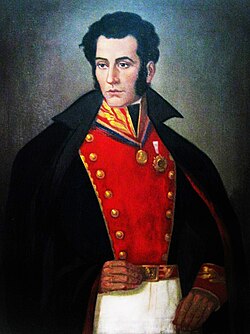
Venezuelan independence hero Antonio José de Sucre: Venezuelan independence hero Antonio José de Sucre
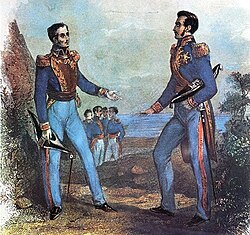
The Guayaquil Conference between the two Hispanic South American heroes of independence, San Martín and Bolívar: The Guayaquil Conference between the two Hispanic South American heroes of independence, San Martín and Bolívar
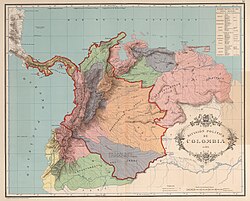
Map of the former Gran Colombia in 1824 (named in its time as Colombia), the Gran Colombia covered all the colored region: Map of the former Gran Colombia in 1824 (named in its time as Colombia), the Gran Colombia covered all the colored region
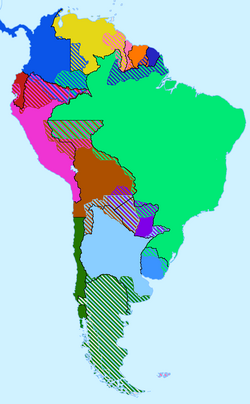
South America (1850): All land claims in South America in 1850: South America (1850): All land claims in South America in 1850
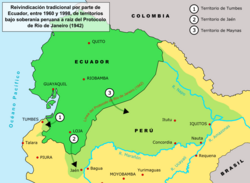
Map of Ecuadorian land claims after 1916: Map of Ecuadorian land claims after 1916
Geography and Biodiversity
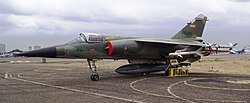
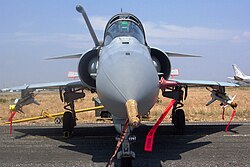
The Mirage F.1JA (FAE-806) was one aircraft involved in the claimed shooting down of two Peruvian Sukhoi Su-22 on 10 February 1995.
Ecuador is divided into four distinct geographic regions: the Coast, the Andes (Sierra), the Amazon (Oriente), and the Galápagos Islands. This varied topography contributes to its status as one of the most megadiverse countries in the world, boasting the highest biodiversity per square kilometer of any nation.
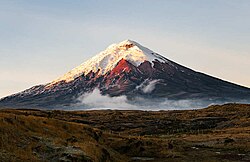
Historically famous Cotopaxi volcano: Historically famous Cotopaxi volcano
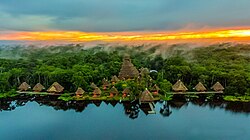
Napo Wildlife Center in the Yasuní National Park: Napo Wildlife Center in the Yasuní National Park
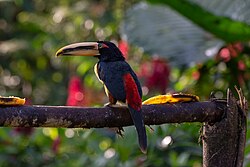
Ecuador is one of the most megadiverse countries in the world, it has the most biodiversity per square kilometer of any nation, and is one of the highest in endemism. In the image, a pale-mandibled aracari in the Mindo-Nambillo Ecological Reserve.: Ecuador is one of the most megadiverse countries in the world, it has the most biodiversity per square kilometer of any nation, and is one of the highest in endemism. In the image, a pale-mandibled aracari in the Mindo-Nambillo Ecological Reserve.
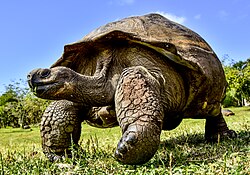
Western Santa Cruz tortoise in the Galápagos Islands: Western Santa Cruz tortoise in the Galápagos Islands
Administrative Divisions
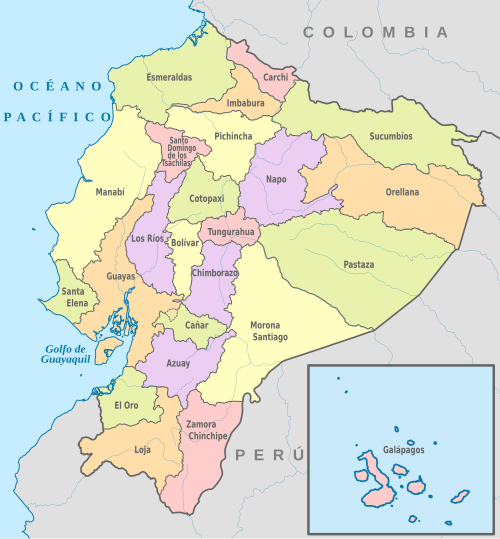
The country is organized into 24 provinces, which are grouped into several planning regions. Major administrative hubs include Ibarra, Tena, Riobamba, Ciudad Alfaro, Cuenca, and Loja.
Provinces of Ecuador: Provinces of Ecuador
Government and Politics
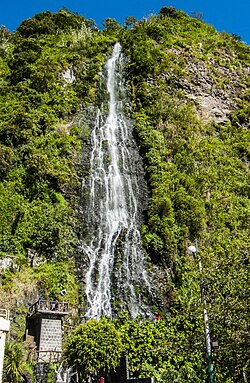
Cabellera de la Virgen waterfall in Baños de Agua Santa, Tungurahua Province
Ecuador operates as a unitary presidential republic. The executive branch is led by the President, currently Daniel Noboa, supported by Vice President María José Pinto. The legislative power is vested in the National Assembly.
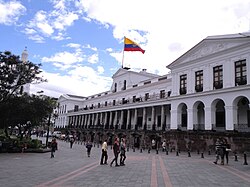
Palacio de Carondelet, seat of the President of Ecuador: Palacio de Carondelet, seat of the President of Ecuador
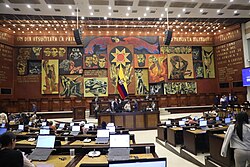
View of the "Nela Martínez" Plenary Hall, National Assembly: View of the "Nela Martínez" Plenary Hall, National Assembly
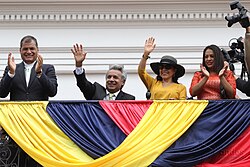
President Lenín Moreno, first lady Rocío González Navas and his predecessor Rafael Correa, 3 April 2017: President Lenín Moreno, first lady Rocío González Navas and his predecessor Rafael Correa, 3 April 2017
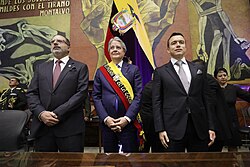
Outgoing President Guillermo Lasso (center) with President-elect Daniel Noboa (right) at the latter's inauguration in November 2023: Outgoing President Guillermo Lasso (center) with President-elect Daniel Noboa (right) at the latter's inauguration in November 2023
Economy and Society
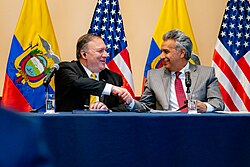
Ecuadorian President Lenín Moreno with U.S. Secretary of State Mike Pompeo, 20 July 2019
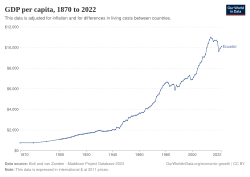
The Ecuadorian economy utilizes the United States dollar as its common currency. While the nation faces challenges regarding inequality, it maintains a high Human Development Index (HDI). The economy is supported by various sectors, including agriculture, energy, and tourism.
GDP per capita development of Ecuador: GDP per capita development of Ecuador
The United States dollar is the common currency circulating in Ecuador.: The United States dollar is the common currency circulating in Ecuador.
Demographics and Culture
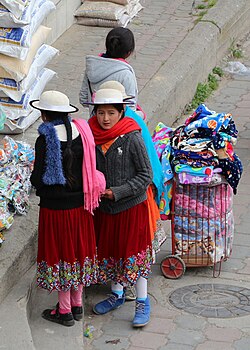
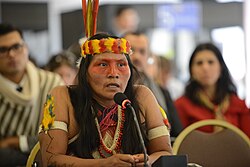
Ecuadorian society is a diverse blend of ethnic groups, primarily Mestizo (77.47%), followed by Montubio, Indigenous, Black, and White populations. This diversity is reflected in the country's languages, with Spanish being the most widely spoken, alongside Kichwa and Shuar.
Cañari children with the typical Andean indigenous clothes: Cañari children with the typical Andean indigenous clothes
Waorani man with the typical Amazonian indigenous clothes: Waorani man with the typical Amazonian indigenous clothes
Religion plays a significant role in social life, with approximately 89.3% of the population identifying as Christian, the majority being Catholic.
Summary of National Profile
Ecuadorian Air Force (FAE)
Quick Reference Guide to Ecuador
Category
Details
Capital City
Quito
Largest City
Guayaquil
Official Languages
Spanish, Kichwa, Shuar
Currency
United States Dollar (USD)
Total Area
283,561 km²
Main Religion
Christianity (68.2% Catholic)
Frequently Asked Questions
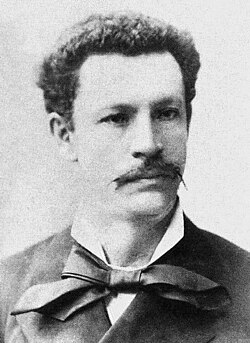
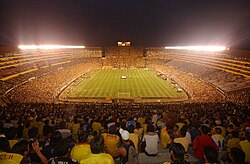
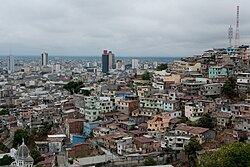
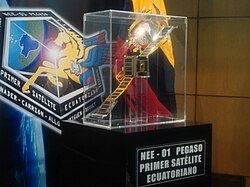
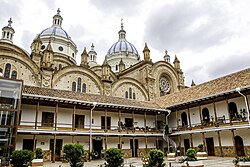
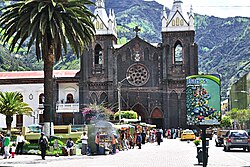
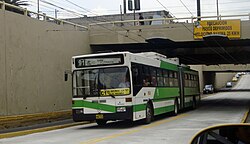
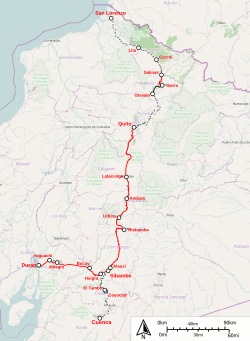
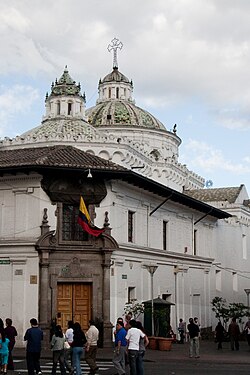
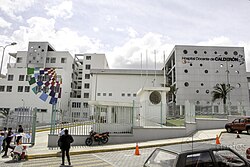
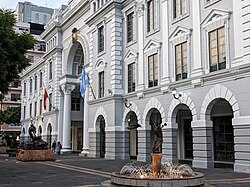
Poor class neighborhoods in GuayaquilEXA's first satellite, NEE-01 PegasusCuenca, a UNESCO World Heritage citySantuario Nuestra Señora del Rosario de Agua Santa in BañosThe Trolebús bus rapid transit system that runs through Quito. It is the principal BRT in Ecuador.Railways in EcuadorColonial Jesuit Convent of QuitoHospital Docente de Calderón, in QuitoUniversity of the Arts in GuayaquilEcuador has a wide repertoire of colonial art in the country and other museums, like this criolla Yapanga from colonial Quito, in 1783, by Vicente Albán. Museo de América, Madrid.[218]Juan MontalvoEstadio Monumental Isidro Romero Carbo of Guayaquil
What is the capital of Ecuador?
The capital of Ecuador is Quito.
What currency is used in Ecuador?
Ecuador uses the United States dollar (USD) as its official currency.
Is Ecuador a biodiverse country?
Yes, Ecuador is considered one of the most megadiverse countries in the world, possessing the highest biodiversity per square kilometer of any nation.
What are the main languages spoken in Ecuador?
Spanish is the primary official language, but Kichwa and Shuar are also recognized for use by indigenous peoples.
"Proyecciones Poblacionales". (in Spanish). National Institute of Statistics and Censuses (INEC). Archived from the original on 18 October 2013. Retrieved 25 April 2020.
"Ecuador". The World Factbook. Archived from the original on 10 January 2021. Retrieved 18 August 2011.
![Figure of the Jama Coaque culture (300 BCE-800 CE) (from Manabí Province). Walters Art Museum.[24]](/images/00/98/00985066a507d6e2cf28e6bcded31869f2f70d81fa992d3e6794541dbcb36080.jpg)
![Ecuador has a wide repertoire of colonial art in the country and other museums, like this criolla Yapanga from colonial Quito, in 1783, by Vicente Albán. Museo de América, Madrid.[218]](/images/6e/b6/6eb61ccf24d45a007a5bf6949311365d873911efae4b62fa77d1ab36b1a97a26.jpg)