Eastern European Time
Eastern European Time (EET) is a time zone defined as UTC+02:00, meaning it is two hours ahead of Coordinated Universal Time (UTC). This zone is widely used across parts of Europe and Africa, serving as a critical temporal marker for millions of people. Depending on the region and the time of year, some areas within this zone transition to Eastern European Summer Time (EEST), which is UTC+03:00, to make better use of daylight during the summer months.
While primarily associated with Europe, the UTC+02:00 offset is also used throughout Africa, where it is commonly referred to as Central Africa Time (CAT). However, countries like Egypt and Libya continue to use the term Eastern European Time. In terms of urban population, Cairo is the most populous city in the overall EET zone, while Kyiv holds the title for the most populous EET city within Europe.
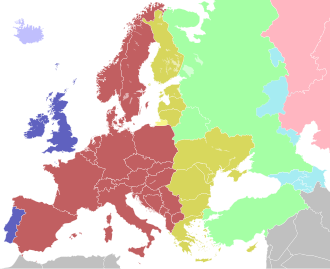
Key Facts
- Standard Offset: UTC+02:00 (EET).
- Summer Offset: UTC+03:00 (EEST) in regions observing Daylight Saving Time (DST).
- Major Hubs: Cairo (most populous overall) and Kyiv (most populous in Europe).
- Alternative Names: Often called Central Africa Time (CAT) in African nations.
- Technical Aliases: In Microsoft Windows, it may appear as FLE Standard Time or GTB Standard Time.
Regional Usage and Observance
The application of Eastern European Time varies significantly between countries, with some observing it year-round and others only during the winter.
Year-Round Observance
Certain territories maintain UTC+02:00 regardless of the season. These include:
- Libya: Since October 27, 2013.
- Kaliningrad Oblast (Russia): Since October 26, 2014.
Winter-Only Observance (DST Users)
Many countries use EET during the winter and switch to EEST (UTC+03:00) in the summer. This group includes:
- European Nations: Bulgaria, Cyprus, Estonia, Finland, Greece, Latvia, Lithuania, Moldova, Romania, and Ukraine.
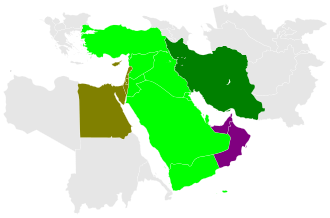
- Middle Eastern Nations: Israel, Lebanon, and Palestine.
- North Africa: Egypt (since 2023, with various periods of use since 1988).
![Time in Africa: Light Blue Cape Verde Time[a] (UTC−1) Blue Greenwich Mean Time (UTC) Red Central European TimeWest Africa Time (UTC+1)[b] Yellow Central Africa TimeEastern European TimeSouth African Standard Time (UTC+2) Ochre Egypt Standard Time (UTC+2) Egypt Summer Time (UTC+3) Green East Africa Time (UTC+3) Turquoise Mauritius Time[d]Seychelles Time[d] (UTC+4) a The islands of Cape Verde lie west of the African mainland. b In September 2026, Morocco will switch permanently to Greenwich Mean Time. d Mauritius and the Seychelles lie to the east and northeast of Madagascar, respectively.](/images/dd/c2/ddc252eec4cac936b4731a46d89b8cfaa93646b0ccd8e1b5daa00c025697629e.webp)
Historical Usage
Several regions have moved away from EET. Turkey used the zone from 1910–1978 and 1985–2016. Belarus used it from 1922–30 and 1990–2011. Additionally, Jordan and Syria both transitioned to permanent Daylight Saving Time in 2022. Crimea, which used EET as part of Ukraine, switched to Moscow Time following the 2014 annexation by the Russian Federation.
Time Zone Anomalies
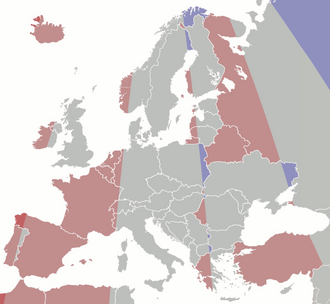
Time zones are often determined by political boundaries rather than strict geography. Geographically, the UTC+02:00 zone should span the area between meridians 22°30' E and 37°30' E. Because of political decisions, several anomalies exist.
Areas Using EET Outside Their Physical Longitude
Some regions use UTC+02:00 despite being located in the "physical" UTC+01:00 zone (west of 22°30' E). These include the westernmost parts of Greece, Romania, Bulgaria, and Ukraine, as well as western Lithuania, Latvia, Estonia, and the Åland islands of Finland. Most of Libya, including Tripoli, also falls into this category.
Conversely, some areas east of 37°30' E (physical UTC+03:00) still use UTC+02:00, such as eastern parts of Ukraine including Mariupol.
Areas Within EET Longitudes Using Other Zones
Some regions located between 22°30' E and 37°30' E do not use UTC+02:00:
- Using UTC+01:00: Parts of Poland, Serbia, North Macedonia, Hungary, Slovakia, and northern Norway and Sweden.
- Using UTC+03:00: Belarus, western Turkey (including Istanbul and Ankara), most of Jordan, and European Russia west of Moscow (excluding Kaliningrad).
Summary of Time Zone Data
| Category | Details |
|---|---|
| Standard Offset | UTC+02:00 |
| Summer Offset (DST) | UTC+03:00 |
| Primary European City | Kyiv |
| Primary African City | Cairo |
| Physical Boundaries | 22°30' E to 37°30' E |
Frequently Asked Questions
What is the difference between EET and EEST?
EET (Eastern European Time) is the standard winter time with an offset of UTC+02:00. EEST (Eastern European Summer Time) is the daylight saving version used in the summer with an offset of UTC+03:00.
Which African countries use Eastern European Time?
Egypt and Libya use the term Eastern European Time. Other African countries use the same UTC+02:00 offset but refer to it as Central Africa Time (CAT).
Why do some cities use EET even if they are not in the correct longitude?
Time zones are often drawn based on political and administrative criteria rather than strict geographical meridian lines to ensure consistency within a country or region.
Do Turkey and Jordan still use EET?
No. Turkey stopped using EET in 2016, and Jordan permanently switched to Daylight Saving Time in 2022.
What are FLE and GTB Standard Time?
These are technical designations used in Microsoft Windows to refer to Eastern European Time. FLE typically refers to Finland, Lithuania, and Estonia, while GTB refers to Greece, Turkey, and Bulgaria.