EA Networks: Powering the Ashburton District
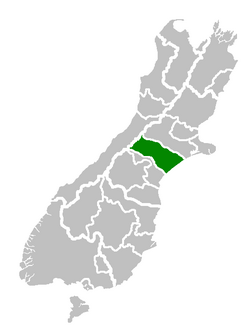
EA Networks manages a critical electricity subtransmission and distribution network serving the Ashburton District in the South Island of New Zealand. Spanning a vast area of 6,187 km² (2,389 sq mi), the network is geographically bounded by the Rakaia River to the north, the Rangitata River to the south, the Pacific Ocean to the east, and the Southern Alps to the west. Due to the rugged terrain, only three distribution lines extend beyond the foothills of the Southern Alps, following river gorges.
The infrastructure is designed to handle a diverse range of loads, from residential homes to heavy industrial operations. The network comprises 446 km (277 mi) of sub-transmission lines, 2,120 km (1,320 mi) of high-voltage distribution lines, and 632 km (393 mi) of low-voltage distribution lines and street light circuits.
Key Facts
- Service Area: Ashburton District, South Island, New Zealand.
- Customer Base: Over 21,000 connections, including major industrial plants and skifields.
- Peak Demand: Summer-peaking network reaching up to 172 MW.
- Energy Delivery: Approximately 635 GWh of energy delivered.
- Grid Connection: Supplied via Transpower's Ashburton substation at Elgin.
- Local Generation: Three hydroelectric plants: Highbank (26 MW), Montalto (1.8 MW), and Cleardale (1.0 MW).
Network Infrastructure and Operations
The network receives electricity from the national grid via Transpower's Ashburton substation in Elgin. Power is supplied at two voltages: 33 kV and 66 kV. To bridge these supplies, EA Networks operates a 33/66 kV transformer at its Elgin zone substation.
Voltage Distribution
The distribution of power is split based on geography and demand:
- 33 kV Supply: Powers the Ashburton township via the Ashburton and Northtown substations, as well as major industrial sites in Fairton and Seafield.
- 66 kV Supply: Serves the wider district, including Rakaia (via Overdale zone substation) and Methven. At the Methven 66 kV zone substation, power is stepped down to 33 kV to reach Mount Hutt, Mount Somers, and Montalto.
Major Customers and Demand
The network supports significant industrial and commercial entities, including RX Plastics, Silver Fern Farms (Fairton), Canterbury Meat Packers (Seafield), Talley's (Fairton), and Mount Hutt skifield. Additionally, a large water pumping station at Highbank draws water from the Rakaia River for the Rangitata Diversion irrigation race.
Demand is highly seasonal. Because of heavy irrigation requirements, the network peaks in summer (up to 172 MW) and drops significantly in winter (historically around 62 MW).
Network Statistics
| Parameter | Value |
|---|---|
| Regulatory Asset Base | $360 million |
| Line Charge Revenue | $47.0 million |
| Capital Expenditure | $16.6 million |
| Operating Expenditure | $15.5 million |
| Customer Connections | 21,105 |
| Energy Delivered | 635 GWh |
| Peak Demand | 172 MW |
| Total Line Length | 3,160 km |
| Distribution/Low-Voltage Overhead Lines | 1,970 km |
| Distribution/Low-Voltage Underground Cables | 801 km |
| Subtransmission Lines and Cables | 391 km |
| Poles | 27,118 |
| Distribution Transformers | 6,568 |
| Zone Substation Transformers | 32 |
| Average Interruption Duration (SAIDI) | 171 minutes |
| Average Interruption Frequency (SAIFI) | 1.57 |
Modernization and Future Developments
EA Networks is currently upgrading its infrastructure to increase efficiency and reliability. A primary focus is converting the subtransmission network to 66 kV and the rural distribution network to 22 kV.
Capacity Upgrades
To address overloading at the Transpower Ashburton substation—particularly during summer when irrigation is high and local generation at Highbank is limited—EA Networks has negotiated the installation of a third 120 MVA 220/66 kV transformer, targeted for around 2015.
Looking further ahead, plans were proposed for a second 66 kV grid exit point around 2020. This proposed substation at Thompsons Track would connect to the Livingstone-Islington and Tekapo B-Islington 220 kV lines, reducing the load on the primary Ashburton substation.
Technical Risk Management
The Highbank Power Station is embedded within the 66 kV system. To prevent out-of-phase synchronisation—a condition where a generator is connected to the grid when their waveforms are not aligned, potentially causing severe damage—EA Networks has historically avoided automatic reclosing on the 66 kV network.
To modernize this process, EA Networks plans to install phasor measurement units (synchrophasors) by 2025. These devices will allow for safe, automatic re-closing of circuit breakers by ensuring conditions are suitable for closure.
Frequently Asked Questions
What is the primary cause of peak electricity demand for EA Networks?
The network is summer-peaking, primarily due to the high electricity demand required for irrigation systems during the summer months.
How does EA Networks receive power from the national grid?
Electricity is supplied from the national grid via Transpower's Ashburton substation at Elgin, providing power at 33 kV and 66 kV.
What are SAIDI and SAIFI in the network statistics?
SAIDI (System Average Interruption Duration Index) measures the average outage duration per customer, while SAIFI (System Average Interruption Frequency Index) measures the average number of interruptions per customer.
Why is the Highbank Power Station at risk during network events?
The station is vulnerable to out-of-phase synchronisation, which can occur during manual or automatic switching on the 66 kV network, potentially leading to severe equipment damage.
What is the purpose of the proposed Thompsons Track substation?
The proposed second grid exit point is intended to supply the northern and western halves of the network and reduce the load on the existing Ashburton substation.