Dukedom of Rutland
The Dukedom of Rutland represents one of the most storied lineages in the British peerage. Established in 1703 when Queen Anne created the ninth Earl of Rutland as Duke of Rutland and Marquess of Granby, the title has been held by the Manners family, who have left an indelible mark on British military history, architecture, and geography.
Key Facts
- Creation: The dukedom was established by Queen Anne in 1703.
- Family Seats: The family owns the historic Belvoir Castle in Leicestershire and Haddon Hall in Derbyshire.
- Military Legacy: John Manners, Marquess of Granby, is renowned for his cavalry leadership during the Seven Years' War.
- Subsidiary Titles: Includes the Marquess of Granby, Earl of Rutland, Baron Manners, and Baron Roos of Belvoir.
- Cultural Impact: The name "The Marquis of Granby" is common among British pubs due to the generosity of John Manners.
The Marquess of Granby and Military Distinction
While many members of the family have held the title, John Manners (1721–1770), the eldest son of the third Duke, remains the most notable Marquess of Granby. An accomplished soldier, his career peaked during the Seven Years' War. He rose to the rank of colonel in 1745 and later served as Lieutenant-General and Commander-in-Chief, though the latter was primarily a political appointment.
Granby is particularly remembered for his bravery at the Battle of Warburg in 1760. During a cavalry charge that routed the French forces, he lost both his hat and wig. This event led to the English expression "going bald-headed" at something. Furthermore, the soldiers of the Blues and Royals—his former regiment—retain the unique privilege in the British Army of saluting without headgear in honor of this event.
Beyond the battlefield, Granby's legacy persists in the British landscape. He provided financial support to his most capable retired soldiers to help them start pubs, on the condition that they name the establishment "The Marquis of Granby." His name also extends globally, appearing in the names of towns in Canada (Quebec) and the United States (Massachusetts and Connecticut), as well as Fort Granby in Tobago and South Carolina.
Subsidiary Titles and Peerage
The dukedom is supported by several subsidiary titles. The most senior of these is the Marquess of Granby, which serves as the courtesy title for the Duke's eldest son and heir. Other titles include:
- Earl of Rutland (created 1525)
- Baron Manners of Haddon in the County of Derby (created 1679)
- Baron Roos of Belvoir of Belvoir in the County of Leicester (created 1896)
While the Baron Roos of Belvoir title is part of the Peerage of the United Kingdom, the other titles belong to the Peerage of England.
Family Seats and Architectural Heritage
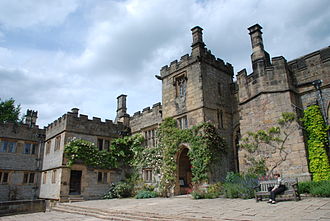
The Manners family maintains two primary historic residences: the medieval Haddon Hall in Derbyshire and Belvoir Castle in Leicestershire. Both estates were expanded and rebuilt through the 19th century and are designated as Grade I listed buildings. Their landscaped parks, woodlands, and central water features served as influential models for other estates.
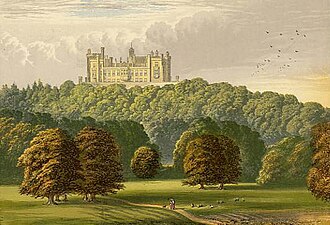
Belvoir Castle has remained in the family's occupancy for over five centuries. In 2009, this milestone was celebrated when two RAF Cranwell aircraft—a King Air from 45 (Reserve) Sqn and a Dominie from 55 (Reserve) Sdn—bore the Duke's coat of arms.
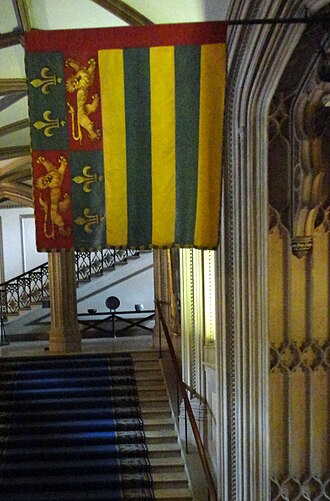
The family's heraldic history is further preserved through artifacts such as the 8th Duke of Rutland's banner as Knight of the Garter, which is currently on display at the castle.
London Residences and Urban History
For much of the 19th and early 20th centuries, the Dukes maintained a presence in London. From 1826 until 1925, the family resided at Rutland House (16 Arlington Street, Piccadilly). Following the death of the 8th Duke, the property was eventually sold in 1934 to the Royal Over-Seas League for £70,000.
Subsequent Dukes transitioned through various London properties, including 87 Avenue Road in Regent's Park and No. 5 Audley Square in Mayfair. By the mid-20th century, the 10th Duke of Rutland resided at No. 12 Chesterfield Street before moving to a duplex apartment in Belgrave Place, Belgravia, which he maintained for several decades.
Burials and Commemoration
Historically, the Manners family was buried at St Mary the Virgin's Church in Bottesford, Leicestershire. However, since the creation of the dukedom in 1703, most Dukes have been interred in the mausoleum at Belvoir Castle. This mausoleum was commissioned by the 5th Duke, John Henry Manners, following the death of his wife, Elizabeth Howard. Many 18th-century monuments were relocated from Belton Church to this site, establishing it as the primary family burial ground.
Cultural References
The prestige of the Rutland title has extended into literature. The author Jorge Luis Borges referenced the Duke of Rutland in his story "A Survey of the Works of Herbet Quain," featured in the collection The Garden of Forking Paths.
| Category | Details |
|---|---|
| Established | 1703 by Queen Anne |
| Primary Seats | Belvoir Castle (Leicestershire) & Haddon Hall (Derbyshire) |
| Key Figure | John Manners, Marquess of Granby (Military leader) |
| Main Burial Site | Belvoir Castle Mausoleum |
| Subsidiary Titles | Marquess of Granby, Earl of Rutland, Baron Manners, Baron Roos of Belvoir |
Frequently Asked Questions
Who was the most famous Marquess of Granby?
John Manners (1721–1770) was the most notable, known for his military success in the Seven Years' War and his generosity toward his soldiers.
Why are there so many pubs named "The Marquis of Granby"?
John Manners provided financial assistance to his retired soldiers to start pubs, provided they named the establishment after him.
What is the significance of the "bald-headed" expression?
The phrase originated from John Manners losing his hat and wig during a cavalry charge at the Battle of Warburg in 1760.
Where are the Dukes of Rutland buried?
While the family originally used St Mary the Virgin's Church in Bottesford, most Dukes since 1703 are buried in the mausoleum at Belvoir Castle.
Which properties are the family seats of the Manners family?
The family owns Belvoir Castle in Leicestershire and Haddon Hall in Derbyshire, both of which are Grade I listed architectural sites.