Dukedom of Newcastle: A History of Three Creations
The Dukedom of Newcastle represents a complex lineage of British nobility, characterized by three distinct creations and the strategic merging of powerful families. Spanning from the 17th to the 18th century, the title transitioned through the Cavendish, Holles, and Pelham families, reflecting the intricate nature of inheritance and royal grants in the British peerage.
The First Creation (1665)
The first iteration of the dukedom began with William Cavendish. A member of the prominent Cavendish family, William was the son of Charles Cavendish and Catherine Ogle, the 8th Baroness Ogle. His ascent through the peerage was gradual: he became Viscount Mansfield in 1620, Earl of Newcastle upon Tyne and Baron Cavendish of Bolsover in 1621, and Marquess of Newcastle upon Tyne in 1643. He also inherited the title of ninth Baron Ogle from his mother in 1629.
In 1665, William was elevated to the Dukedom of Newcastle upon Tyne. To provide a courtesy title for his heir apparent, he was also granted the title of Earl of Ogle.
![Arms of Cavendish, Sable three bucks' heads cabossed argent, a crescent for difference.[3]](/images/e6/08/e6081052af92749d29a4b5456bffecd27ef6aa3f9bcdda852a56a4b330eef455.webp)
The title passed to his son, the second Duke, a career politician. However, the lineage faced a crisis when the second Duke's only son and heir, Henry Cavendish (Earl of Ogle), died before his father. Upon the second Duke's death in 1691, most of the titles became extinct. The only exception was the barony of Ogle, which fell into abeyance—a state where a title has multiple equal claimants and remains dormant until the sovereign decides who should inherit it—between the second duke's four daughters.
The Second Creation (1694)
The dukedom was revived just three years later through marriage. Lady Margaret Cavendish, the third daughter of the second Duke, married her first cousin, John Holles, the 4th Earl of Clare. The Holles family had established roots in Nottinghamshire, with the first Baron Haughton created in 1616.
In 1694, John Holles was created Marquess of Clare and Duke of Newcastle upon Tyne. Despite the revival of the title, the second creation was short-lived. The Duke and Lady Margaret had only one daughter and no male heirs. Consequently, when the Duke died in 1711, all his titles became extinct once again.
![Arms of Holles, Ermine, two piles in point sable.[4]](/images/ca/f4/caf436b998a40d9f98534de803706a76707c1335888aba76d45442de1aff9210.webp)
The Third Creation (1715) and Newcastle-under-Lyne
The third creation emerged through the Pelham family. Lady Grace Holles, sister of the second Duke, had married Thomas Pelham, 1st Baron Pelham. Their son, Thomas Pelham, inherited the substantial Holles estates in 1711 and legally assumed the Holles surname and arms.
Thomas was created Viscount Haughton and Earl of Clare in 1714, and a year later, he was made Marquess of Clare and Duke of Newcastle upon Tyne. These titles were part of the Peerage of Great Britain and included a special remainder, allowing the titles to pass to his younger brother, Henry Pelham, if Thomas had no heirs.
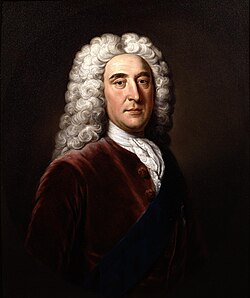
By 1756, it became clear that the Duke would have no children, and his brother had died without male issue. To ensure the continuation of the legacy, the Duke was created Duke of Newcastle-under-Lyne. This new title featured a different special remainder, designating his nephew-by-marriage, Henry Clinton (the 9th Earl of Lincoln), as the heir. Henry Clinton subsequently adopted the Pelham surname.
Following the first Duke's death in 1768, his primary titles became extinct. However, the barony of Pelham and the Pelham baronetcy passed to his first cousin once-removed, Thomas Pelham.
Key Facts
- Three Creations: The Dukedom of Newcastle was created three separate times (1665, 1694, and 1715).
- Family Lineages: The title was held by the Cavendish, Holles, and Pelham families.
- Special Remainders: The third creation used special legal clauses to allow the title to pass to brothers or nephews rather than direct descendants.
- Archival Records: Extensive papers of the dukes are preserved at the University of Nottingham's Department of Manuscripts and Special Collections.
| Creation | Year | Primary Family | Outcome |
|---|---|---|---|
| First | 1665 | Cavendish | Extinct 1691 (except Barony of Ogle) |
| Second | 1694 | Holles | Extinct 1711 |
| Third | 1715 | Pelham-Holles | Transitioned to Newcastle-under-Lyne (1756) |
Frequently Asked Questions
Why did the first creation of the dukedom become extinct?
The first creation became extinct in 1691 because the second Duke's only son and heir apparent, Henry Cavendish, predeceased him, leaving no male heir to inherit the titles.
How was the dukedom revived in 1694?
The title was revived when John Holles, 4th Earl of Clare, married Lady Margaret Cavendish, the daughter of the second Duke of Newcastle.
What is the difference between Newcastle upon Tyne and Newcastle-under-Lyne in this context?
Newcastle upon Tyne was the title used in the first and second creations. Newcastle-under-Lyne was a separate title created in 1756 with a specific remainder to allow the title to pass to the Duke's nephew-by-marriage, Henry Clinton.
What happened to the Barony of Ogle after 1691?
Unlike the dukedom, the Barony of Ogle did not become extinct; instead, it fell into abeyance between the four daughters of the second Duke.
Where can historical documents regarding the dukes be found?
Personal, transaction, and estate papers are held in the Portland (Welbeck) and Newcastle (Clumber) collections at the University of Nottingham's Department of Manuscripts and Special Collections.