Drum Kit Configurations: History, Components, and Setup
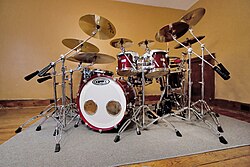
The drum kit—also known as a drum set, acoustic drum kit, or trap set—is a collection of percussion instruments designed to be played by a single musician. Unlike orchestral or military settings where drums and cymbals were historically played by separate percussionists, the modern kit integrates these elements into a single station, allowing one person to provide a full rhythmic foundation.
From the minimalist setups of early jazz to the massive arrays used in progressive rock and heavy metal, the drum kit is highly customizable. Whether acoustic or electronic, the core purpose remains the same: to deliver a cohesive blend of low-end punch, sharp accents, and steady time-keeping.
Key Facts
- Origin: Developed in the United States during the 1860s.
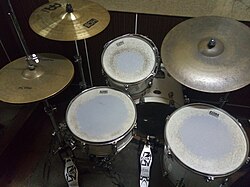
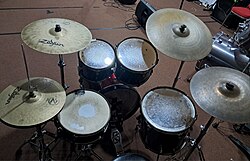
- Core Components: Typically includes a bass drum, snare drum, tom-toms, hi-hats, and ride/crash cymbals.
- Classification: Percussion instruments (Hornbostel–Sachs 211.212.11 and 111.24).
- Versatility: Configurations range from simple two-piece kits to massive extended setups with dozens of components.
- Evolution: Transitioned from the "trap set" of the late 1800s to the high-tech electronic and hybrid kits of today.
The Evolution of the Drum Kit
Early Development and the "Trap Set"
In the 1840s, percussionists began experimenting with foot pedals to play multiple instruments simultaneously. By the 1860s, these efforts coalesced into the first combined kits. This innovation was largely driven by the financial constraints of musical theater pit orchestras, which could not always afford a full team of percussionists.
Early drummers used a technique called "double-drumming," playing the bass and snare with sticks while using a "low-boy" (a precursor to the hi-hat) with their foot. This syncopated approach helped birth ragtime music. By the 1870s, overhang pedals appeared, and by 1904, patents like those from Edward "Dee Dee" Chandler formalized the bass drum pedal, leading to the term kick drum.
The 20th Century Transition
During the 1920s, drummers became essential for silent films, providing live sound effects. However, the advent of synchronized audio in films by 1930 displaced many of these specialists, some of whom transitioned into roles as Foley artists for motion picture soundtracks.
Essential Components of the Kit
The Drums
- Bass Drum: The largest drum, played with a foot-operated beater pedal to provide the low-end pulse.
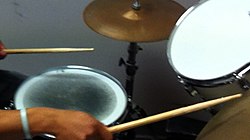
- Snare Drum: A sharp, piercing drum mounted on a stand, essential for backbeats and rudiments.
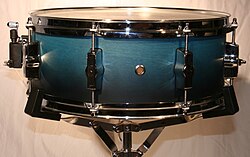
Snare drum on a modern light-duty snare drum stand. - Tom-toms: These include rack toms (mounted above the bass drum), floor toms (larger, lower-pitched drums on legs), and specialized versions like concert toms or rototoms.
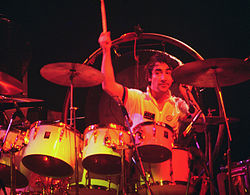
Keith Moon of The Who with a mixture of concert toms and conventional toms, 1975.
The Cymbals
Cymbals provide the high-frequency accents and time-keeping elements of the kit:
- Ride Cymbal: Usually 20"–22" in diameter, used for steady rhythmic patterns.
- Hi-hats: A pair of cymbals mounted on a pedal stand, allowing the drummer to open or close them for different sounds.
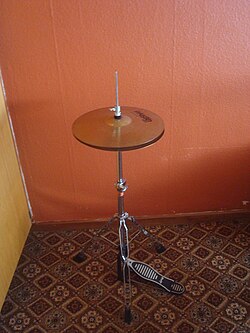
Two hi-hat cymbals mounted in a pedal-operated stand, which allows the drummer to close or open the cymbals. - Crash Cymbal: Used for loud, dramatic accents.
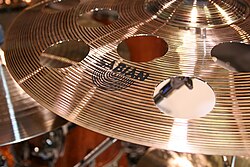
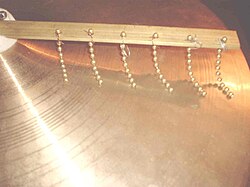
Sabian O-zone "vented" crash cymbal. - Effects Cymbals: Specialized options such as China cymbals, splash cymbals, and sizzle cymbals.
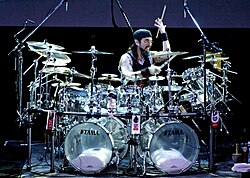
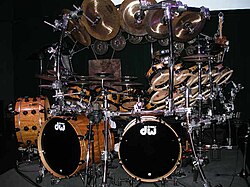
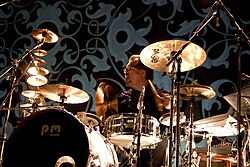
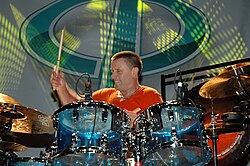
Mike Portnoy, drummer of Dream Theater, with a multitude of cymbals. Rio de Janeiro, 7 March 2008.
Hardware and Accessories
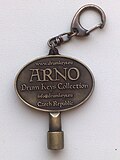
Hardware refers to the metal stands and tools that support the instruments. This includes cymbal stands, hi-hat stands, snare stands, and the drum key used for tuning.
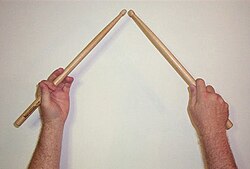
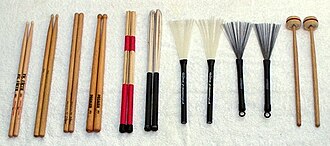
Drumsticks are typically made of hickory, maple, or oak. They vary in weight, ranging from 1 (heaviest) to 10 (lightest), with 5B being a common standard for beginners and 7N often used in jazz.
Common Kit Configurations
Drum sizes are typically expressed as diameter x depth (or depth x diameter, depending on the manufacturer) in inches.
| Kit Type | Typical Components | Common Use Case |
|---|---|---|
| Three-Piece | Bass, Snare, 1 Rack Tom, Hi-hat, 1 Cymbal | 1950s-60s styles, minimalist setups |
| Four-Piece | Bass, Snare, 2 Rack Toms, Hi-hat, Ride, Crash | Fusion, early rock |
| Five-Piece | Bass, Snare, 2 Rack Toms, 1 Floor Tom, Hi-hat, Ride, Crash | Pop, Rock, Jazz Fusion |
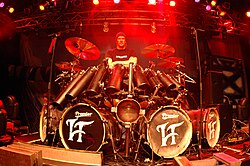
| Extended | Double Bass, Multiple Toms, Octobans, Cymbal Stacks | Heavy Metal, Progressive Rock |
Standard Setups
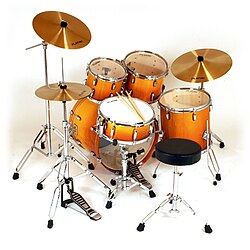
The five-piece kit is the most versatile and common configuration. It typically features a 22" bass drum and three toms (often 10", 12", and 16"), providing a full range of high, middle, and low pitches for fills and solos.
Extended and Specialized Kits
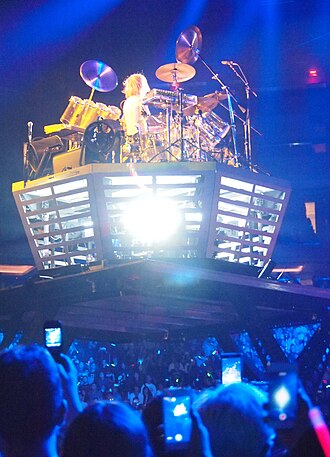
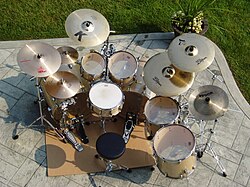
For genres like heavy metal or progressive rock, drummers often use double bass drums or a double pedal for rapid-fire low end. Other extensions include octobans, timbales, or even orchestral instruments like timpani and gongs.
Electronic and Hybrid Drums
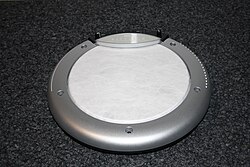
Electronic drums use trigger pads made of rubber or plastic. When struck, these pads send a signal to a drum module (or "brain"), which triggers a sampled sound.
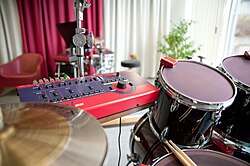
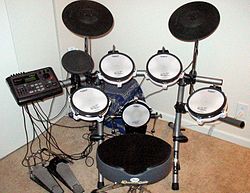
Hybrid kits combine acoustic drums with electronic triggers or pads, allowing drummers to blend natural resonance with synthesized sounds.
Frequently Asked Questions


What is the difference between a rack tom and a floor tom?
A rack tom is smaller and mounted above the bass drum or on a stand, producing a higher pitch. A floor tom is the largest tom, sits on its own legs on the floor, and produces the lowest pitch of the tom-toms.
What does "five-piece" actually refer to?
The "piece" count refers specifically to the number of drums in the kit (typically the bass drum, snare, and three toms). Cymbals and hardware are not included in this count.
What is a "trap set"?
"Trap set" is an older term for the drum kit, originating from the late 1800s when drummers used a variety of "traps" (percussion gadgets and effects) to replace multiple musicians.
How are drum sizes measured?
Drum sizes are measured in inches. Depending on the manufacturer (e.g., Tama vs. Pearl), they may be listed as diameter x depth or depth x diameter. For example, a 14" x 5" snare is 14 inches wide and 5 inches deep.
What is the purpose of a drum key?
A drum key is a small T-shaped tool used to tighten or loosen the tension rods on a drum, which allows the drummer to tune the drum head to a specific pitch.