Dromaeosaurids: The Specialized Predators of the Cretaceous
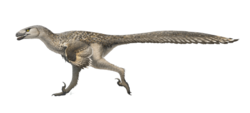
The Dromaeosaurids, commonly known as raptors, were a family of bird-like theropod dinosaurs that thrived during the Cretaceous period. Characterized by their agility, intelligence, and a highly specialized killing claw, these dinosaurs represent a critical link in the evolutionary transition between non-avian dinosaurs and modern birds.
From the small, feathered forms of Asia to the giant predators of North America and South America, dromaeosaurids occupied a wide variety of ecological niches, evolving diverse body plans to suit their environments.
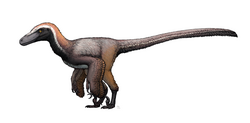
Key Facts
- Temporal Range: Existed during the Cretaceous period.
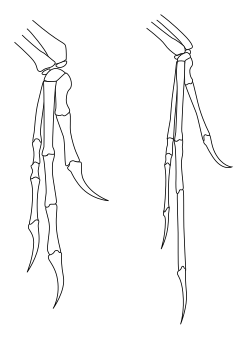
- Defining Feature: A large, hyperextendible sickle claw on the second toe of each foot.
- Size Diversity: Ranged from small species like Velociraptor (1.5–2.07 meters) to giants like Utahraptor (over 6 meters).
- Avian Links: Shared significant skeletal similarities with birds, including forelimb structure and the presence of feathers.
- Global Distribution: Found across various continents, including North America, Asia, and South America.
Physical Characteristics and Build
Dromaeosaurids were generally small to medium-sized theropods, though size evolution occurred independently in different lineages. While Velociraptor remained relatively small, giant forms evolved at least twice: once within the dromaeosaurines (such as Utahraptor and Achillobator) and again within the unenlagiines (such as Austroraptor, which reached 5–6 meters in length).
Evidence from isolated teeth found on the Isle of Wight suggests a possible third lineage of giant dromaeosaurids, potentially related to the velociraptorines.
The Specialized Foot and Tail
The most iconic feature of the dromaeosaurid is the sickle claw—a large, curved claw on the second digit of the foot. This claw was hyperextendible, meaning it could be held off the ground during normal walking to keep the edge sharp.
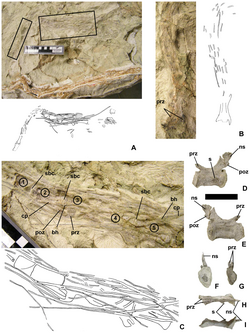
Their tails were often stiffened by bony tendons, which likely acted as a counterbalance during high-speed turns or while leaping onto prey.
Feathers and Avian Similarities
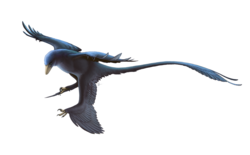
Dromaeosaurids were extensively feathered, a trait that underscores their close relationship with birds. This is evident in specimens like Sinornithosaurus and Microraptor. Their forelimbs also show striking similarities to those of early birds like Archaeopteryx.
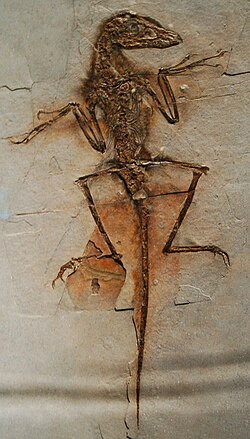
![The Thermopolis specimen of Archaeopteryx, which showed that it also had a hyperextendible second toe[41]](/images/fe/b8/feb8c965db06921f19f1d17479f37c9245df8fd1e9a74caa2cb6a611892672a5.jpg)
Taxonomy and Classification
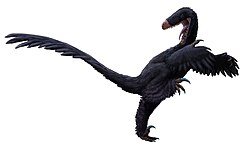
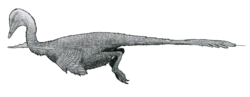
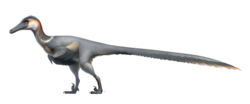
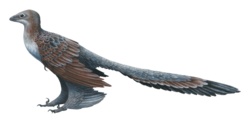
The family Dromaeosauridae is divided into several subfamilies and clades, reflecting their diverse evolutionary paths.
| Subfamily/Clade | Key Genera | Notable Characteristics |
|---|---|---|
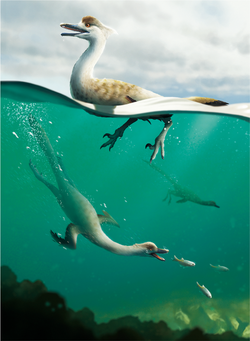
| Halszkaraptorinae | Halszkaraptor, Natovenator | Amphibious ecomorphology, swimming behavior. |
| Unenlagiinae | Austroraptor, Buitreraptor | Often larger or more elongated forms; found in Gondwana. |
| Microraptoria | Microraptor, Changyuraptor | Small size, often featuring four wings for gliding. |
| Eudromaeosauria | Deinonychus, Velociraptor, Utahraptor | The more "typical" raptors with powerful killing claws. |
Paleobiology and Behavior
The Function of the Sickle Claw
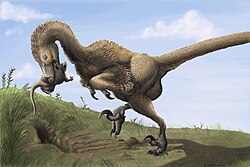
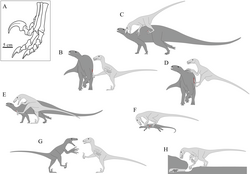
The exact use of the sickle claw has been a subject of scientific debate. While early theories suggested they were used to disembowel prey, modern musculoskeletal modeling and comparisons with modern birds (like the cassowary) suggest more nuanced uses. Supported behaviors include using the claws to pin prey, climbing, or as tools for tearing apart small prey items.
Locomotion and Environment
While most dromaeosaurids were terrestrial, some evolved specialized lifestyles. The halszkaraptorines exhibit amphibious traits, suggesting they were capable of swimming.
![Tracks of the ichnogenus Paravipus didactyloides, interpreted as representing two individuals that were moving in the same direction[74]](/images/47/46/4746e90ce2d9b46f41feb78c28e2ce4c6764986a9c1fcdab70b57df1d6e0263a.png)
Reproduction and Care
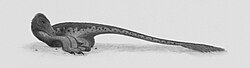
Evidence suggests that some dromaeosaurids may have engaged in brooding behavior, similar to modern birds, to protect their eggs.
Frequently Asked Questions
Were dromaeosaurids the ancestors of birds?
Dromaeosaurids are closely related to birds and belong to the clade Paraves. While they share many skeletal and integumentary (feather) similarities with birds, they are generally considered a sister group to the lineage that led to modern birds rather than direct ancestors.
How large did the biggest raptors get?
The largest dromaeosaurids, such as Utahraptor, Dakotaraptor, and Achillobator, could reach or exceed 6 meters (20 feet) in length.
Could all dromaeosaurids fly?
No. While some small members of the Microraptoria (like Microraptor) had aerodynamic feathers on both their arms and legs suggesting gliding or limited flight, the majority of dromaeosaurids were ground-dwelling predators.
What was the purpose of the sickle claw?
The sickle claw was a specialized tool used for various predatory and survival behaviors, including pinning down prey, climbing, and tearing food, though the theory that they were used primarily for disemboweling is less supported by modern evidence.