Diptera: The Evolutionary Success and Incredible Diversity of True Flies
From the tiny fruit fly in a laboratory to the massive 7 cm Gauromydas heros, the order Diptera—commonly known as true flies—represents one of the most successful lineages in the animal kingdom. With a temporal range stretching back approximately 245 million years, these insects have navigated massive geological shifts and biological revolutions to become a dominant force in almost every terrestrial habitat on Earth.
While many people view flies simply as household nuisances, they are actually complex biological marvels. Their history is a testament to evolutionary adaptation, moving from ancient ancestors in the Triassic period to the highly specialized species we see today.
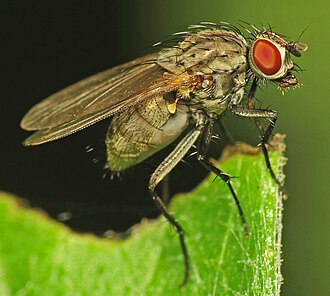
Evolutionary History and Radiation
The first true dipterans emerged during the Middle Triassic, roughly 240 million years ago. Interestingly, because modern flowering plants did not appear until the Cretaceous period (about 140 million years ago), early flies could not have relied on nectar for nutrition. Scientists suggest these ancient insects may have fed on honeydew—the sugary liquid excreted by sap-sucking bugs—using mouthparts specifically adapted to lap up crusted residues.
The evolutionary history of Diptera is marked by three distinct episodes of radiation:
- The Triassic: Approximately 220 million years ago, many species of "lower" Diptera emerged.
- The Jurassic: Around 180 million years ago, many lower Brachycera appeared.
- The Paleogene: At the start of this period, roughly 66 million years ago, a third major radiation occurred among the Schizophora.
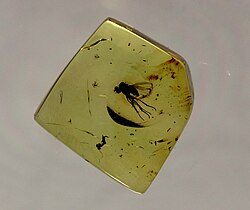
Understanding Fly Diversity
With more than 150,000 formally described species, the actual diversity of flies is likely much higher. They are categorized into two primary suborders based on their physical characteristics:
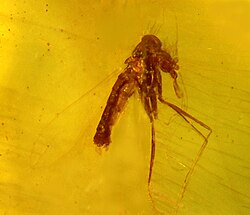
Nematocera
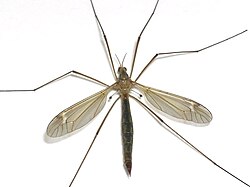
This group consists of generally small, slender insects characterized by long antennae. Familiar members include mosquitoes, gnats, midges, and crane flies. Many larvae within this suborder are aquatic.
Brachycera
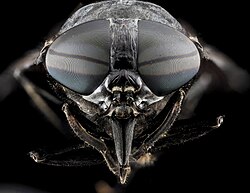
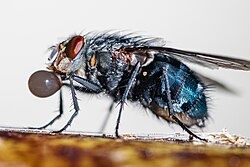
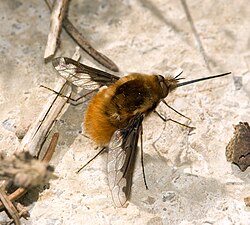
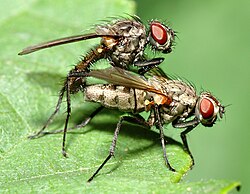
In contrast to the slender Nematocera, the Brachycera are typically broader and more robust, possessing shorter antennae. This group includes many of the more recognizable flies, such as house flies and blow flies.
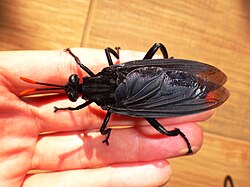
The scale of fly diversity is staggering. While the housefly (Musca domestica) is cosmopolitan, found worldwide, most species have much more restricted distributions. Size variation is also extreme: Gauromydas heros can reach lengths of 7 cm, whereas Euryplatea nanaknihali is a mere 0.4 mm—smaller than a single grain of salt.
Anatomy and Flight Mechanics
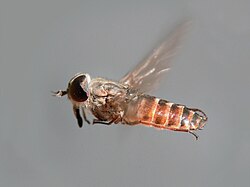
One of the most defining features of Diptera is their flight mechanism. Unlike many other insects, true flies possess only a single pair of functional flying wings. Their hindwings have evolved into small, club-like structures called halteres, which act as gyroscopic organs to aid in balance and stability during flight.
Flies are renowned for their rapid reflexes. For example, flies in the genus Condylostylus can respond to a visual stimulus, such as a camera flash, and take flight in less than five milliseconds. While historical claims suggested some flies could reach speeds of 600 mph, scientific correction has placed more realistic estimates, such as the deer fly, at approximately 25 mph.
Key Facts
- Temporal Range: Approximately 245 to 0 million years ago.
- Primary Suborders: Nematocera (slender, long antennae) and Brachycera (robust, short antennae).
- Unique Feature: A single pair of wings, with hindwings reduced to halteres for balance.
- Global Presence: Found in nearly all terrestrial habitats with high species counts in the Oriental (23,000) and Nearctic (22,000) regions.
- Size Extremes: Ranges from 0.4 mm (Euryplatea nanaknihali) to 7 cm (Gauromydas heros).
Summary of Regional Species Diversity
| Region | Estimated Species Count |
|---|---|
| Oriental | 23,000 |
| Nearctic | 22,000 |
| Afrotropical | 20,000 |
| Europe | 19,000 |
| Australasian | 19,000 |
Ecological and Human Interactions
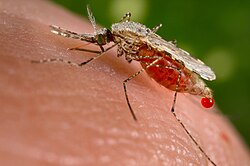
Flies play diverse roles in the ecosystem. Some are essential pollinators, while others serve as significant pests or disease vectors. For instance, the Anopheles stephensi mosquito is a known carrier of malaria.
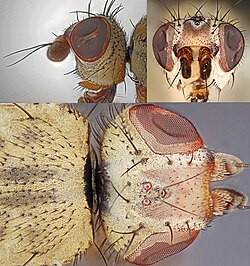
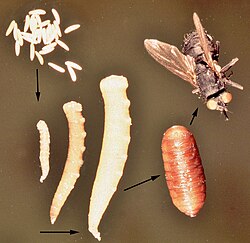
In human culture and industry, flies appear in various forms. They are vital tools in genetics research, particularly Drosophila melanogaster, which is bred in laboratories to study inheritance. Conversely, some species have economic impacts through food contamination or as pests in agriculture.



Frequently Asked Questions
What are halteres?
Halteres are small, club-like structures found in Diptera that are actually highly modified hindwings. They function as sensory organs to help the fly maintain balance during flight.
How do flies differ from other insects in terms of wings?
Most insects have two pairs of wings, but true flies (Diptera) are characterized by having only one pair of functional flying wings.
Are all flies pests?
No. While some flies are pests or disease vectors, many are essential to ecosystems as pollinators or as part of the food web, and some are even used in scientific research.
What is the difference between Nematocera and Brachycera?
Nematocera are typically slender flies with long antennae (like mosquitoes), whereas Brachycera are generally more robust with shorter antennae (like house flies).
How fast can flies actually fly?
While some historical estimates claimed extreme speeds, scientific research suggests more realistic speeds, such as approximately 25 miles per hour for certain species.