Dia Supermarkets: A History of Global Expansion and Strategic Restructuring
Founded in Spain, Dia has evolved from a single local store into a complex international retail entity. Its journey is marked by aggressive expansion across Europe, Asia, and the Americas, followed by a series of strategic divestments and structural transformations to maintain profitability in a competitive global market.
The Early Years and International Growth
The Dia chain began its operations in 1979 with the opening of its first store on Calle Valderrodrigo 10, located in the Saconia urbanization of Madrid, Spain. After establishing its domestic presence, the company shifted toward international growth during the 1990s.
This expansion phase began in 1993 with the acquisition of Minipreço in Portugal. This was followed by entries into Greece in 1995, Argentina in 1997, and Turkey in 1999.
The Carrefour Era and Rapid Scaling
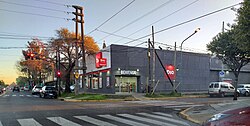
In 2000, the Carrefour Group acquired Dia. During this period, Carrefour integrated the French Ed supermarket chain—which it had acquired in 1999—into the Dia discount group. The early 2000s saw a surge in global reach, with Dia entering Brazil in 2001 and China in 2003. The expansion in China was particularly rapid, with the company opening 300 stores within a single year.
Further domestic growth in Spain occurred in 2007 when Carrefour purchased the Plus chain for €200 million to integrate it into the Dia network.
Independence and Market Volatility
The relationship with Carrefour shifted in 2010 when Dia Greece (80% owned by Carrefour) was transferred to the Carrefour Marinopoulos joint venture to be rebranded as Carrefour Marinopoulos or Carrefour Express. By July 2011, Dia officially demerged from the Carrefour Group, making its debut on the IBEX 35 stock market in Madrid on January 2, 2012.
Following its independence, Dia engaged in several high-profile acquisitions and sales:
- Schlecker Acquisition (2013): Dia purchased 1,127 stores in Spain, 41 in Portugal, and four distribution centers from the bankrupt German company Schlecker for €70.5 million. Many of these were converted into Clarel, a beauty and personal care brand.
- Turkish Exit (2013): The Turkish subsidiary, consisting of 1,200 stores, was sold to Yıldız Holding for €136.5 million.
- French Market Reversal (2014): In June 2014, Carrefour repurchased Dia's 800 struggling stores in France for €600 million.
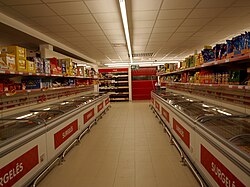
- Spanish Consolidation (2014): Dia acquired 455 regional supermarkets from El Arbor for a symbolic 1 euro and purchased 160 Eroski stores for €146 million.
Modern Transformation and Divestment
Between 2015 and 2019, Dia closed 700 supermarkets in Spain due to low sales or excessive proximity between locations. In 2018, the company exited the Chinese market by selling its subsidiary to Suning, following the closure of 160 stores in Beijing due to losses.
A major shift in ownership occurred in May 2019 when the investment firm LetterOne increased its stake to 69.76%, taking control of the company. Alongside major shareholder Gregoire Bontoux, a new board of directors launched a transformation plan focused on operational excellence and a refreshed commercial offer to regain competitiveness.
Under the leadership of Executive President Stephan DuCharme, who took office on May 20, 2020, Dia began streamlining its portfolio through several key sales:
- Alcampo (2022-2023): Dia sold 224 locations (originally 235) and two warehouses to Alcampo (controlled by Auchan) for €267 million.
- Clarel (2023): After a failed deal with C2 Private Capital, the 1,015 Clarel beauty stores were sold to Colombia's Grupo Trinity S.A.S. for an estimated €26.5 million.
- Minipreço (2023-2024): The Portuguese subsidiary with 489 stores was sold to Auchan for €155 million, with the deal closing on April 30, 2024.
- Brazil (2024): The Brazilian subsidiary was sold to MAM Asset Management on June 25, 2024, for a symbolic price of 100 euros.
Key Facts
- Founded: 1979 in Madrid, Spain.
- Major Ownership Shifts: Acquired by Carrefour (2000), demerged (2011), and later controlled by LetterOne (2019).
- Key Brands: Dia, Maxi Dia, Plaza del Dia, and Clarel (formerly owned).
- Global Reach: Historically operated in Spain, Portugal, Greece, Argentina, Turkey, China, Brazil, and France.
- Recent Strategy: Focus on operational excellence and divestment of non-core assets and international subsidiaries.
| Year | Asset/Entity | Buyer/Seller | Price |
|---|---|---|---|
| 2007 | Plus Chain (Spain) | Carrefour (Buyer) | €200 million |
| 2013 | Turkish Subsidiary | Yıldız Holding (Buyer) | €136.5 million |
| 2014 | French Stores | Carrefour (Buyer) | €600 million |
| 2014 | El Arbor Supermarkets | Dia (Buyer) | €1 |
| 2022/23 | 224 Spanish Stores | Alcampo (Buyer) | €267 million |
| 2023/24 | Minipreço (Portugal) | Auchan (Buyer) | €155 million |
| 2024 | Brazilian Subsidiary | MAM Asset Management (Buyer) | €100 |
Frequently Asked Questions
When was Dia founded and where was its first store?
Dia was founded in 1979 in Spain. Its first store opened on Calle Valderrodrigo 10 in the Saconia urbanization of Madrid.
What is the relationship between Dia and Carrefour?
Carrefour acquired Dia in 2000 and managed it for over a decade. Dia later demerged from the Carrefour Group in July 2011, though the two companies continued to trade assets in subsequent years.
What happened to the Clarel beauty stores?
Originally created from stores acquired from the bankrupt German company Schlecker, the 1,015 Clarel stores were eventually sold to Colombia's Grupo Trinity S.A.S. in December 2023 for an estimated €26.5 million.
Who currently controls the Dia Group?
Since May 2019, the investment firm LetterOne has effectively controlled the company, holding a 69.76% share.
Why did Dia sell its Brazilian and Portuguese subsidiaries?
These sales were part of a broader transformation plan to regain competitiveness and profitability, focusing the company's resources on operational excellence and its core commercial offer.