Department Stores: The Evolution of Retail Giants and Shopping Culture
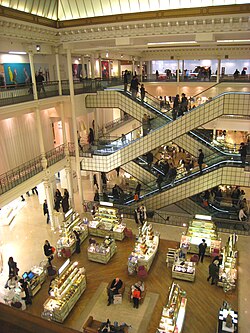
A department store is a retail establishment that offers a vast array of consumer goods organized into specialized sections, or "departments," all located under a single roof. By grouping diverse product categories—ranging from clothing and cosmetics to electronics and home appliances—these institutions have fundamentally reshaped how society approaches shopping, service, and luxury.
In modern major cities, these retail hubs serve as landmarks of commerce. While high-end traditional stores often feature dedicated sales counters within each department to provide personalized service, discount department stores typically utilize centralized checkout areas near the front of the building. Today, these retailers can exist as independent boutiques or as part of massive global retail chains.
Key Facts
- Core Concept: Multiple product categories (clothing, furniture, toys, etc.) sold under one roof.
- Historical Roots: Emerged in the mid-19th century, with significant developments in Paris, London, and New York.
- Modern Challenges: Since the 1980s, competition from discount retailers and the rise of e-commerce have transformed the industry.
- Global Leaders: Major flagship stores exist in South Korea, the U.S., Japan, and Europe, often spanning hundreds of thousands of square meters.
The History of Retail Innovation
Origins in Paris and the Magasin de Nouveautés
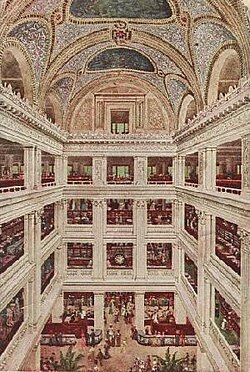
The foundations of the modern department store can be traced back to the Parisian magasin de nouveautés, or novelty stores. The Tapis Rouge, established in 1784, was one of the earliest examples. These stores flourished in the early 19th century, with their operations even being described in the literature of the time by authors like Balzac.
By the 1840s, the expansion of railroads in Paris brought a surge of shoppers. This growth led to significant retail innovations, including the introduction of large plate glass display windows, fixed pricing with visible price tags, and widespread advertising in newspapers.

American and Global Expansion
In the United States, the mid-19th century saw the rise of major players like Stewart's. A landmark moment occurred in 1877 when John Wanamaker opened what is considered the first "modern" department store in Philadelphia. Wanamaker revolutionized the industry by implementing fixed prices on every article and introducing cutting-edge technologies such as electrical illumination (1878), the telephone (1879), and pneumatic tubes for transporting cash and documents (1880).
As the 20th century progressed, the model expanded into the suburbs. In 1923, I. Magnin became the first suburban department store in the Los Angeles area, and by 1930, Suburban Square in Philadelphia became the first department store branch to anchor a suburban shopping center.
Classifying Retail Models
Not all large-scale retailers operate under the same model. Department stores can be categorized into several distinct types:
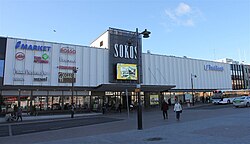
- Hypermarkets: These are discount superstores that combine a wide range of products with full grocery offerings, such as Walmart, Target, and Carrefour.
- Variety Stores: Often referred to in the U.S. as "five and dimes" or "dollar stores," these focus on a wide range of inexpensive items.
Global Flagship Stores and Scale
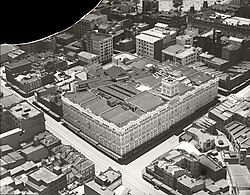
The scale of department stores varies immensely across the globe. Some historic giants once held the title of the largest in the world. For instance, Anthony Hordern & Sons in Sydney was once the largest department store globally, and Gimbels in Philadelphia was the world's largest when it opened its 12-story addition in 1927.
Today, the largest flagship stores are often found in Asia. The Shinsegae Centum City in Busan, South Korea, is recognized by Guinness as the largest in the world. In Japan, the Hankyu Umeda complex in Osaka stands as the largest department store complex in the country.
| Company | Branch/City | Country | Status | Approx. Area (Sq m) |
|---|---|---|---|---|
| Shinsegae | Centum City, Busan | S. Korea | Open | 293,905 |
| Macy's | Herald Square, NY | U.S. | Open | 232,258 |
| Gimbels | Center City, Philadelphia | U.S. | Closed | 202,343 |
| Marshall Field's | Chicago | U.S. | Open (as Macy's) | 185,806 |
| Harrods | London | UK | Open | 102,193 |
| Le Bon Marché | Paris | France | Open | 102,360 |
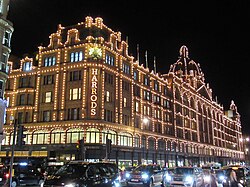
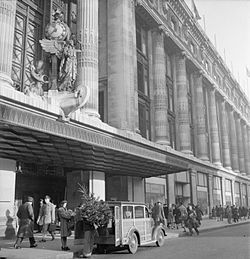
In Europe, Le Bon Marché remains a significant landmark, while Harrods in London continues to be a premier destination. In wartime Britain, stores like Selfridges were vital components of the urban landscape.
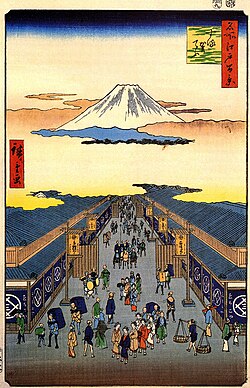
The history of these stores is also deeply intertwined with local culture. In Japan, the Mitsukoshi department store (formerly Echigoya) has such a long history that it was even featured in traditional ukiyo-e prints by artists like Utagawa Hiroshige.
Frequently Asked Questions
What is the difference between a department store and a hypermarket?
A department store focuses on specialized categories like clothing, cosmetics, and home goods. A hypermarket is a discount superstore that combines these categories with a full range of grocery offerings.
Why did department stores become popular in the 19th century?
The arrival of railroads increased the number of shoppers, while innovations like fixed pricing, large display windows, and newspaper advertising made shopping more accessible and engaging.
What are the main challenges facing department stores today?
Since the 1980s, department stores have faced intense competition from discount retailers and, more recently, the rapid growth of e-commerce businesses.
What was the first "modern" department store in the U.S.?
John Wanamaker's store in Philadelphia, opened in 1877, is often cited as the first modern department store due to its use of fixed pricing and advanced technologies like electricity and telephones.
Where is the largest department store in the world located?
According to Guinness, the Shinsegae Centum City in Busan, South Korea, is the largest department store in the world.